
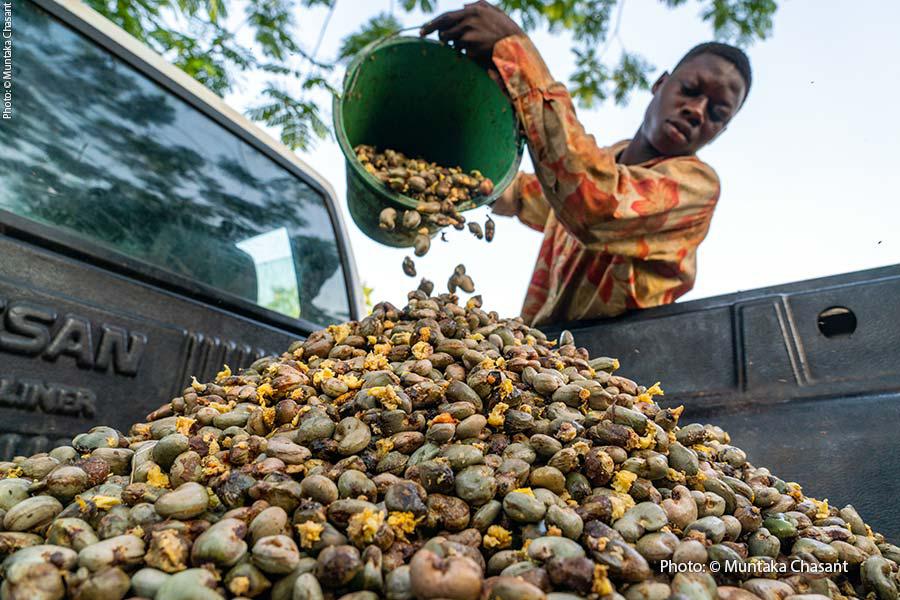
Ghana Cashew Export Restriction Petition: Traders Urge Mahama Withdrawal
Summary
- Cashew traders and farmer associations have petitioned President John Mahama to withdraw a proposed three-month ban on raw cashew exports.
- The petition, representing 3,500 stakeholders, warns the policy could threaten livelihoods, lower farmgate prices, and disrupt international contracts.
- The proposed restriction and an export levy were announced during the commissioning of the NADKANSCO processing factory on November 16, 2026.
- Petitioners support local processing but demand immediate withdrawal of the ban, comprehensive consultations, and protection for existing investments.
- They are open to a fair export levy if stakeholders agree on its structure and implementation to stabilize prices and protect farmers.
Traders Challenge Proposed Cashew Export Ban
The associations fear that such a Ghana raw cashew nuts ban could drastically reduce farmgate prices, diminish the bargaining power of farmers, and disrupt crucial international supply contracts.
Cashew traders, exporters, and various farmer-led associations in Ghana have formally submitted a petition to President John Mahama, urging the withdrawal of a proposed three-month restriction on raw cashew exports. This significant move, detailed in a petition dated November 17, 2026, and signed by Chairman Abdel Mumuni Musah and Secretary Adams Ayuba, represents the collective voice of approximately 3,500 traders and aggregators from key cashew-producing regions including Techiman, Nkoranza, and Kintampo, alongside numerous farmer associations. The petitioners contend that the proposed policy, if implemented, poses a severe threat to thousands of livelihoods and could significantly undermine existing investments within the sector.
The impetus for this Ghana cashew export restriction petition arose from an announcement made on November 16, during the commissioning of the NADKANSCO processing factory in Techiman. At this event, a three-month export restriction and an associated export levy were unveiled, sparking immediate concern across the industry. The associations fear that such a Ghana raw cashew nuts ban could drastically reduce farmgate prices, diminish the bargaining power of farmers, and disrupt crucial international supply contracts. Furthermore, they warn that traders and exporters could face substantial financial losses, jeopardizing the stability of the entire cashew value chain.
Economic Risks and Industry Stability
The core of the petitioners' argument against the Mahama cashew export policy centers on its potential to destabilize the market and inflict economic harm without adequate safeguards. While expressing support for the broader goal of local processing, the associations emphasize that these measures, absent comprehensive consultation, could negatively impact farmers' incomes, compromise traders' investments, and make it difficult for exporters to fulfill contractual obligations. A critical question raised by the petitioners is whether Ghana's current domestic processing and purchasing infrastructure possesses the capacity to absorb the nation's entire raw cashew production.
They caution that a blanket restriction on exports would inevitably reduce competition among buyers, leaving farmers vulnerable to lower prices for their produce. This scenario, they argue, would not only threaten existing investments but also jeopardize bank financing arrangements that are vital to the sector's operations. The cashew traders petition Ghana government not just for a withdrawal of the restriction but also for a thorough assessment of its economic implications, underscoring the need for policies that protect the financial health of all stakeholders.
Call for Consultation and Balanced Policy
In their appeal, the associations are demanding the immediate withdrawal of the proposed blanket restriction, advocating instead for comprehensive stakeholder consultations to precede any such measures. They have, however, indicated their openness to the introduction of a fair and reasonable export levy, provided its structure and implementation are mutually agreed upon by all stakeholders. Such a levy, they believe, if properly designed, could contribute to price stability, safeguard farmers' incomes, and foster a sustainable Ghana cashew industry regulations framework.
The petitioners also urged the government to implement protections for existing stocks, commercial contracts, bank facilities, and legitimate investments. They advocate for robust financial support and incentives for local processors, enabling them to compete effectively for raw cashew nuts without the need for broad export restrictions. Their stance is clear: they are not opposed to local processing or industrialization, but they believe Ghana can expand its domestic processing capabilities while simultaneously maintaining a competitive and sustainable raw cashew trading and export industry. To ensure future policy decisions reflect the industry's realities, they are calling for formal representation of recognized farmer, trader, and exporter associations in all relevant discussions and are seeking an urgent meeting with President Mahama or his representatives to present their concerns and propose practical alternatives.
Practical Implications
Lawyers advising clients in Ghana's agricultural export sector, particularly cashew, should monitor the proposed export restrictions and levies. They must assess potential impacts on existing contracts, supply chain agreements, and financial obligations, and be prepared to advise on compliance, risk mitigation, and participation in stakeholder consultations to influence policy outcomes.
Source
How does this affect you?
Get an AI analysis of this article grounded in your jurisdictions, practice areas, and any policy documents you've uploaded to Wansom.
Finish Reading the Full Story and the Expert Analysis.
Get the latest legal & regulatory intelligence in Ghana
Wansom is AI and can make mistakes.