
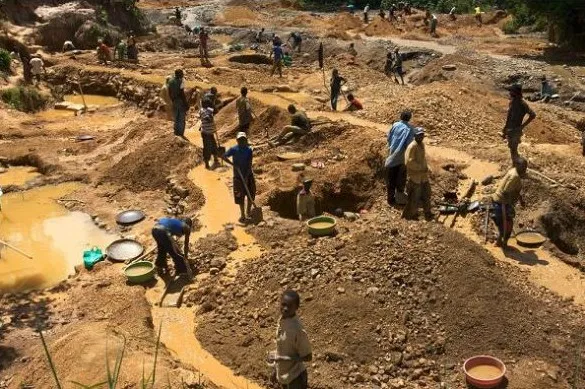
Ghana Archbishop Duncan-Williams Urges Church to Educate on Galamsey Risks
Summary
- Archbishop Nicholas Duncan-Williams has urged the Church to educate Ghanaians on the dangers of galamsey and gold smuggling.
- He believes that education is key in tackling the galamsey menace, alongside prayer and practical interventions.
- The Archbishop emphasized the importance of responsible mining practices and environmental protection in Ghana.
- He warned that the financial benefits of mining are meaningless if the environment is destroyed, leaving communities without safe water, productive farmland, or a healthy environment for future generations.
The Church's Role in Addressing Galamsey
Education. That is why I am bringing up this subject.
Archbishop Nicholas Duncan-Williams of Action Chapel International has emphasized the importance of education in tackling the galamsey menace. He believes that prayers alone are insufficient and that religious institutions must create awareness about responsible mining practices and environmental protection. According to Archbishop Duncan-Williams, educating church members can have a ripple effect beyond places of worship, influencing behavior in homes, communities, and workplaces.
The Archbishop's comments come at a time when the country is grappling with the environmental consequences of irresponsible mining. He warned that the financial benefits of mining are meaningless if the environment is destroyed, leaving communities without safe water, productive farmland, or a healthy environment for future generations. The long-term effects of polluting water bodies and degrading agricultural land must be taken into account.
Archbishop Duncan-Williams believes that the Church is well-positioned to contribute to the campaign against galamsey due to its reach and influence in communities across the country. He noted that church members are citizens who participate in the economy, politics, and public life, making religious institutions an important platform for civic and environmental education.
Galamsey Regulations and Responsible Mining
The Archbishop's advocacy is informed by a spiritual dimension to the galamsey crisis. He believes that prayer alongside practical interventions is necessary to address this issue. However, he emphasized that the Church's responsibility should extend beyond spiritual intervention to helping citizens understand their obligations to society and the environment.
Archbishop Duncan-Williams highlighted the importance of responsible mining practices in Ghana. He argued that mining can be conducted responsibly and in accordance with the law, ensuring that environmental protection is not compromised. The Archbishop called for greater awareness of the long-term consequences of activities that pollute water bodies and degrade agricultural land.
The Church's role in promoting responsible mining practices is crucial. By educating church members about the consequences of galamsey, the Archbishop hopes to influence behavior beyond places of worship and into homes, communities, and workplaces.
Why Education Matters
Education is a key intervention that the Church can pursue alongside prayer in addressing the galamsey menace. According to Archbishop Duncan-Williams, education is essential in helping church members understand the importance of responsible mining practices and environmental protection.
The Archbishop's emphasis on education is not about preventing people from engaging in mining but about ensuring that mining is conducted responsibly and in accordance with the law. He believes that educating church members can have a positive impact on behavior beyond places of worship, influencing behavior in homes, communities, and workplaces.
Archbishop Duncan-Williams' comments come at a time when there is growing concern about the environmental consequences of irresponsible mining in Ghana.
Practical Implications
Lawyers and compliance officers should be aware that Archbishop Duncan-Williams' comments may influence the Church's stance on responsible mining, potentially leading to increased awareness and education among citizens about environmental consequences and regulatory obligations.
Source
Source: Original reporting via HP News
How does this affect you?
Get an AI analysis of this article grounded in your jurisdictions, practice areas, and any policy documents you've uploaded to Wansom.
Wansom is AI and can make mistakes.