
Ghana Ahafo: Foreign Illegal Mining Enforcement Demanded
Summary
- Stakeholders in Ghana's Ahafo Region expressed disappointment over the failure of law enforcement to curb illegal mining, particularly by foreign nationals.
- Six foreign-owned companies, predominantly Chinese, are reportedly operating illegally in the region, with only one holding a valid permit.
- These operations violate Ghana's Minerals and Mining Act 2006, which reserves small-scale mining for citizens, and breach environmental laws like the EPA Act 1994 and Water Resources Commission Act 1996.
- The illegal mining causes severe environmental degradation, including infertile farmlands and contaminated water, leading to public health issues and undermining UN Sustainable Development Goals.
- A unified action plan was formulated, urging state institutions and security agencies to enforce statutory laws without compromise against illegal mining activities.
Stakeholders Demand Action in Ahafo Region
The presence and active involvement of foreign nationals in small-scale mining operations in Ghana constitute direct violations of several foundational statutory laws.
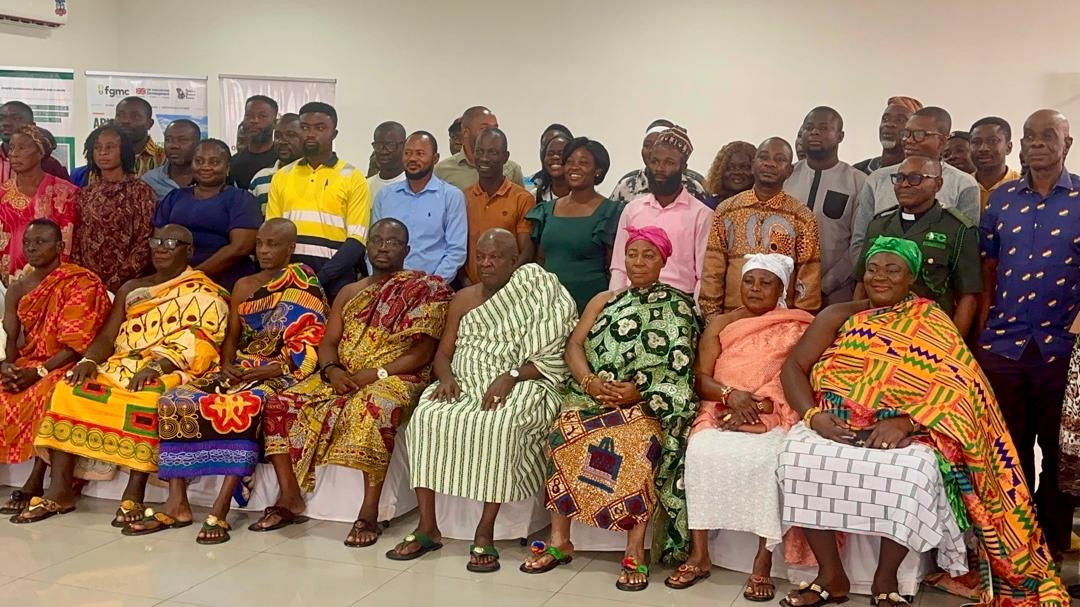
A recent Regional Multi-Stakeholder Mining Forum, convened in Goaso on Wednesday, September 26, 2026, brought to light significant concerns regarding unchecked illegal mining activities in Ghana's Ahafo Region. Participants, including community members, local authorities, civil society organizations, and advocacy groups, voiced profound disappointment with law enforcement agencies and state regulatory bodies, citing their perceived failure to curb widespread illicit operations.
The forum, organized by the Nature and Development Foundation (NDF) in collaboration with the Forestry Commission, the Environmental Protection Authority (EPA), and the Minerals Commission, specifically highlighted the pervasive issue of foreign nationals driving these illegal mining endeavors. Stakeholders identified six foreign-owned companies, primarily operated by Chinese nationals, as actively engaged in unauthorized mining across the region. A critical finding revealed that only one of these six entities possesses a valid legal permit to operate, underscoring a significant compliance gap.
Glen Asomaning, the NDF Operations Director, emphasized that the platform, themed “Reducing Deforestation Caused by Pervasive Irresponsible Mining,” aimed to facilitate constructive dialogue among key actors. The objective was to address the escalating destruction of forests and promote strict adherence to statutory compliance within the mining sector.
Legal Framework and Compliance Risks
The presence and active involvement of foreign nationals in small-scale mining operations in Ghana constitute direct violations of several foundational statutory laws. Under the Minerals and Mining Act, 2006 (Act 703), as subsequently amended by Act 995 in 2019, small-scale mining is explicitly reserved for Ghanaian citizens. Consequently, any participation by non-citizens in this sector is classified as a severe criminal offense under Section 99 of the Act, highlighting a critical area for Ghana Minerals and Mining Act 2006 enforcement.
Beyond the nationality restrictions, these illegal operations also breach environmental regulations. The Environmental Protection Act, 2025 (Act 1124), mandates approved Environmental Impact Assessments (EIAs) for mining activities, a requirement frequently ignored by non-compliant entities. Furthermore, the direct discharge of chemical waste into public rivers, a common practice in illicit mining, contravenes the Water Resources Commission Act, 1996 (Act 522). These infractions collectively expose the significant Ghana mining law compliance risks prevalent in the Ahafo Region Chinese illegal mining landscape.
Environmental Degradation and Public Health Crisis
The environmental consequences of these unregulated mining activities are severe and far-reaching, posing significant threats to both livelihoods and public health in the Ahafo Region. Extensive land degradation has rendered vast tracts of cocoa and food crop farms infertile, directly impacting the primary source of income for local farmers and jeopardizing regional food security. This widespread destruction also undermines key international commitments, specifically United Nations Sustainable Development Goals (SDGs) 13 (Climate Action) and 15 (Life on Land), by stripping forest carbon sinks and destroying terrestrial fauna.
Moreover, the unregulated runoff of heavy metals, including mercury and cyanide, into water bodies has led to a public health crisis. Residents are at increased risk of chronic kidney damage, neurological disorders, and respiratory illnesses. The contamination of essential community water sources with toxic waste directly sabotages SDG 3 (Good Health and Well-being) and SDG 6 (Clean Water and Sanitation). Additionally, heavy siltation resulting from these operations devastates aquatic life and destabilizes entire river ecosystems, while defying SDG 12’s call for responsible consumption and resource management.
Unified Call for Uncompromising Enforcement
In response to the escalating crisis, stakeholders at the forum formulated a unified action plan, delivering a clear and unequivocal message to state institutions and security agencies. The plan urges these bodies to enforce statutory laws without compromise, particularly concerning Ghana Ahafo foreign illegal mining enforcement. This collective demand underscores the urgent need for robust regulatory action against non-compliant operations.
The call for strict enforcement aims to address the systemic failures that have allowed foreign nationals to engage in illegal small-scale mining with apparent impunity. The unified action plan represents a significant push from local communities and advocacy groups for accountability and adherence to Ghana's mining and environmental laws, signaling a heightened risk of regulatory action and potential legal challenges for non-compliant operations.
Practical Implications
Lawyers advising foreign-owned mining entities or those involved in environmental compliance in Ghana should note the increased stakeholder pressure for strict enforcement of existing mining and environmental laws, particularly concerning foreign participation in small-scale mining and adherence to EIA requirements. This signals a heightened risk of regulatory action and potential legal challenges for non-compliant operations in regions like Ahafo.
Source
How does this affect you?
Get an AI analysis of this article grounded in your jurisdictions, practice areas, and any policy documents you've uploaded to Wansom.
Finish Reading the Full Story and the Expert Analysis.
Get the latest legal & regulatory intelligence in Ghana
Wansom is AI and can make mistakes.