
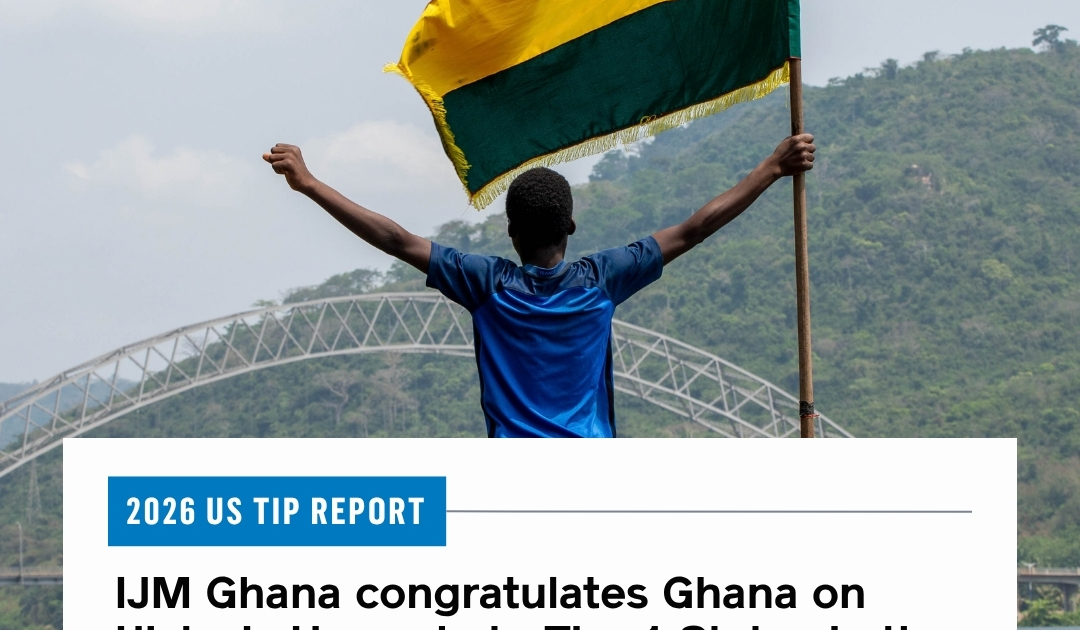
Ghana: Secures US TIP Report Tier 1 Upgrade in Anti-Trafficking Fight
Summary
- Ghana has been elevated to Tier 1 status in the U.S. Department of State’s 2026 Trafficking in Persons Report.
- This upgrade signifies that Ghana fully meets the minimum standards for eliminating human trafficking.
- Key achievements include 28 convictions for trafficking offenses and the identification of 2,331 victims.
- Despite progress, child trafficking, particularly on Lake Volta, and technology-facilitated exploitation remain significant concerns.
- IJM Ghana emphasizes the need for sustained investment in anti-trafficking efforts and child protection systems.
Ghana Achieves Top-Tier Ranking in Anti-Trafficking Efforts
Lawyers and compliance officers should note Ghana's improved standing in combating human trafficking, which may signal increased enforcement and scrutiny of supply chains for forced labor.
Ghana has achieved a significant milestone, moving from Tier 2 to Tier 1 in the United States Department of State’s 2026 Trafficking in Persons (TIP) Report. This upgrade signifies that the nation now fully complies with the minimum standards established for the elimination of human trafficking, marking a notable advancement in its efforts to combat this global crime.
International Justice Mission (IJM) Ghana, in a press release dated October 9, 2026, lauded this achievement, attributing it to the concerted actions of various governmental bodies, civil society organizations, and community stakeholders. The organization specifically commended the Ministry of Gender, Children and Social Protection, particularly its Human Trafficking Secretariat, for its pivotal role in coordinating national anti-trafficking initiatives and executing Ghana’s National Action Plan. Recognition was also extended to the Office of the Attorney-General and Ministry of Justice, the Ghana Police Service, the Ghana Immigration Service, the Economic and Organised Crime Office (EOCO), and the Ministry of Employment and Labour Relations for their contributions.
Enhanced Enforcement and Victim Support Drive Progress
The improved standing in the Ghana US TIP report Tier 1 upgrade is underpinned by concrete progress in law enforcement and victim support mechanisms. During the reporting period, Ghana anti-trafficking law enforcement agencies successfully prosecuted 212 alleged traffickers, resulting in 28 convictions. Furthermore, 2,331 victims of trafficking were identified and subsequently referred to appropriate support services, demonstrating a strengthened capacity for victim assistance.
Beyond prosecutions, the nation has increased its financial commitment to victim aid and anti-trafficking programs. This includes expanded training for frontline personnel and enhanced international cooperation. Notably, efforts to counter online scam operations linked to trafficking and forced labor were also cited as key areas of progress. The improved ability to identify and refer victims highlights the growing expertise among social welfare officers, law enforcement, labor inspectors, immigration officials, and civil society organizations in addressing human trafficking.
Enduring Vulnerabilities and Evolving Threats
Despite this significant achievement, human trafficking and exploitation persist as substantial challenges, particularly affecting children across various sectors. Children in Ghana continue to face forced labor in fishing, domestic service, street hawking, agriculture, artisanal mining, quarrying, and herding. Child trafficking Ghana Lake Volta remains a particularly acute concern, with children from Ghana and neighboring West African countries remaining highly vulnerable to exploitation.
Adding to these traditional forms of exploitation, traffickers are increasingly leveraging technology for recruitment and exploitation. This includes the use of fraudulent job offers, cybercrime schemes, online scams, and deceptive migration opportunities, posing new complexities for anti-trafficking efforts. IJM Ghana’s human trafficking statement underscores that these evolving threats necessitate sustained investment in child protection systems, survivor-centered services, community awareness campaigns, and robust, coordinated law enforcement responses.
Implications for Legal and Compliance Professionals
Ghana's elevation to Tier 1 in the 2026 Trafficking in Persons Report carries important implications for legal and compliance professionals. This upgrade signals a heightened commitment to combating human trafficking, which may lead to increased enforcement actions and greater scrutiny of supply chains for forced labor. Organizations operating in or sourcing from Ghana should recognize this improved standing as an indicator of a more robust regulatory environment.
However, continued vigilance is crucial. Despite the positive assessment, the persistent challenges of child trafficking, especially in sectors like fishing and mining, and the growing sophistication of online scam trafficking Ghana, demand ongoing attention. Lawyers and compliance officers must ensure their due diligence and risk mitigation strategies are updated to address these evolving risks, reflecting the need for continuous adaptation in the fight against human trafficking.
Practical Implications
Lawyers and compliance officers should note Ghana's improved standing in combating human trafficking, which may signal increased enforcement and scrutiny of supply chains for forced labor. Despite the upgrade, continued vigilance is crucial, particularly regarding child trafficking in sectors like fishing and mining, and the evolving use of technology by traffickers for recruitment and exploitation, requiring updated due diligence and risk mitigation strategies.
Source
How does this affect you?
Get an AI analysis of this article grounded in your jurisdictions, practice areas, and any policy documents you've uploaded to Wansom.
Finish Reading the Full Story and the Expert Analysis.
Get the latest legal & regulatory intelligence in Ghana
Wansom is AI and can make mistakes.