
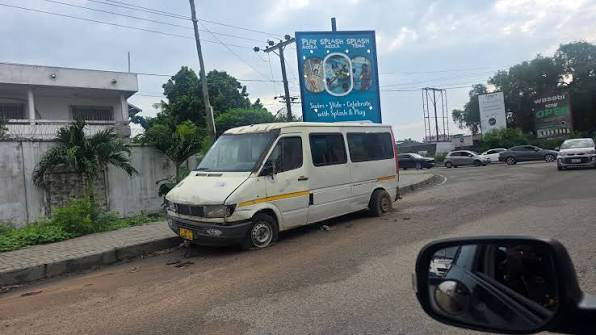
Ghana NRSA: New Abandoned Vehicle Auction Rules Mandate Towing, Insurance
Summary
- Ghana's National Road Safety Authority (NRSA) warns that abandoned vehicles will be auctioned under new regulations.
- Vehicle owners must now subscribe to a towing service or have insurance with towing cover.
- The new Road Traffic Regulations, 2026, eliminate the grace period, requiring immediate towing of disabled vehicles.
- Vehicles stored for more than seven days face judicial auction, with a 21-day timeline from storage to sale.
- Unsold vehicles will be confiscated by the state and potentially scrapped.
Ghana Implements Stricter Abandoned Vehicle Auction Rules
These measures underscore a fundamental shift towards proactive compliance, emphasizing that every vehicle owner must adhere to the basic rule of either subscribing to a towing service or securing an appropriate insurance policy.
The Ghanaian government has announced stringent new measures targeting vehicles left unattended on public roads, warning that such vehicles will be subject to auction if not promptly removed. This significant policy shift, overseen by the National Road Safety Authority (NRSA), mandates that all vehicle owners must either subscribe to a dedicated towing service or secure an insurance policy that incorporates towing coverage. The directive aims to enhance road safety and streamline traffic flow across the nation.
Kwame Koduah Attuahene, the Director of Regulations, Inspections and Compliance at the NRSA, emphasized that non-compliance with these new provisions will result in vehicles being compulsorily towed, with all associated costs borne by the owner. These regulations are part of a broader legislative framework, specifically the Road Traffic (Amendment) Act, 2025 (Act 1153), and the comprehensive Road Traffic Regulations, 2026 (L.I. 2519), which introduce a new era of accountability for vehicle owners in Ghana.
Immediate Towing and Owner Responsibilities
A key change introduced by the Road Traffic Regulations 2026 Ghana is the elimination of any grace period for vehicles that break down or become disabled on the road. Previously, motorists were afforded a window of 30 minutes to an hour to arrange for removal; however, the updated Ghana disabled vehicle regulations now require immediate towing as soon as a breakdown occurs. This immediate action is critical to preventing road obstructions and potential hazards.
Under these new rules, motorists whose vehicles are rendered inoperable must not only place an advance warning triangle to alert other road users but also promptly notify their designated towing service provider. The towing company, in turn, is responsible for informing either the police or the NRSA Ghana vehicle towing policy enforcement unit and arranging for the vehicle's transfer to an authorized storage facility. This chain of responsibility underscores the urgency and systematic approach now expected for managing disabled vehicles.
The Path to Auction and Confiscation
Once a vehicle is moved to a storage facility under these new Ghana abandoned vehicle auction rules, its owner has a limited window to reclaim it. Initially, the vehicle will be held for up to seven days, during which the owner is expected to retrieve it. Failure to do so initiates a process that could culminate in a judicial auction, a stark consequence for non-compliance.
Owners will be issued a seven-day notice prior to the scheduled auction. Should the vehicle remain unclaimed, it will proceed to auction after a total of 21 days from its initial placement in storage. In instances where the judicial sale proves unsuccessful, the state reserves the right to confiscate the vehicle outright. This Ghana abandoned vehicle confiscation can ultimately lead to the vehicle being scrapped, highlighting the severe implications for owners who neglect their responsibilities under the new regulations.
Enhancing Road Safety and Compliance
The primary objective behind these stringent new regulations, as articulated by the NRSA, is to significantly reduce the risks posed by broken-down and crashed vehicles left on Ghana's roads. Such vehicles are frequently cited as contributing factors to accidents and traffic congestion, creating additional hazards for unsuspecting motorists. By enforcing prompt removal, the authorities aim to create a safer and more efficient road network.
These measures underscore a fundamental shift towards proactive compliance, emphasizing that every vehicle owner must adhere to the basic rule of either subscribing to a towing service or securing an appropriate insurance policy. The national sensitisation programme, where Mr. Attuahene spoke, serves to educate the public on these critical updates, ensuring that all road users are aware of their obligations and the severe penalties for failing to comply with the new Ghana abandoned vehicle auction rules.
Practical Implications
Lawyers should advise clients, particularly vehicle owners and transport companies in Ghana, to review their towing service subscriptions or insurance policies to ensure compliance with the new Road Traffic Regulations 2026 and avoid vehicle auction or confiscation. Compliance officers must update internal procedures to reflect the immediate towing requirement and notification protocols to prevent asset loss.
Source
How does this affect you?
Get an AI analysis of this article grounded in your jurisdictions, practice areas, and any policy documents you've uploaded to Wansom.
Finish Reading the Full Story and the Expert Analysis.
Wansom is AI and can make mistakes.