
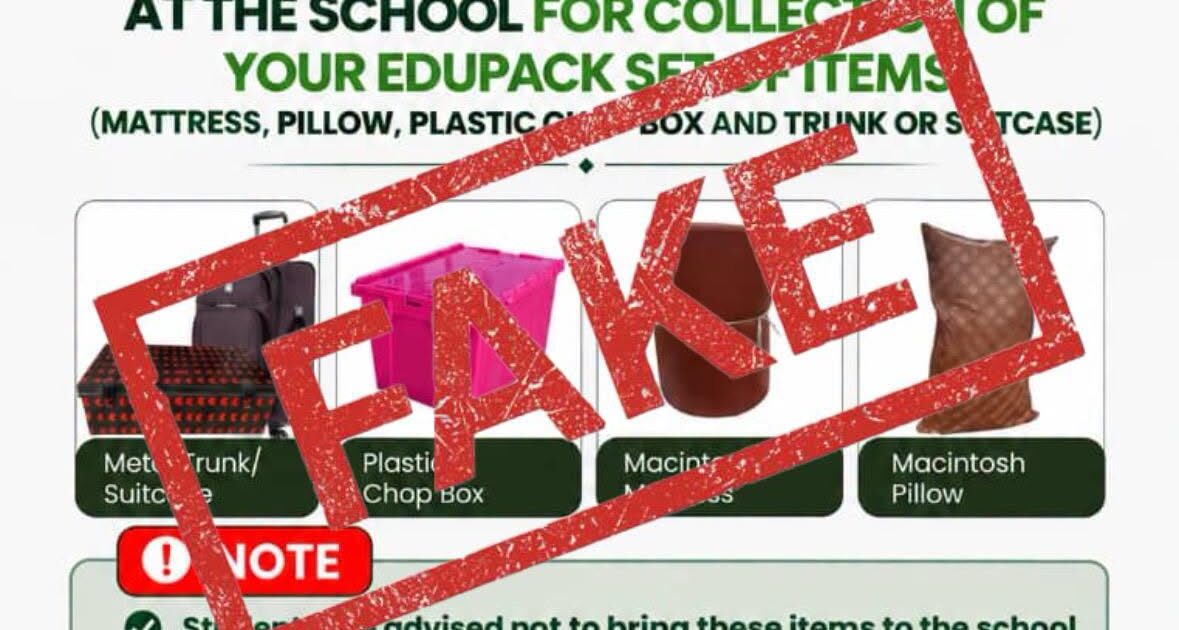
GES Disowns Fake EduPack Notice Ghana: Warns of SHS Payment Scam
Summary
- The Ghana Education Service (GES) has disowned a fake social media notice directing incoming SHS and TVET boarding students to pay for an "EduPack set."
- The fraudulent notice, bearing the GES name and logo, instructed students to pay for items like a mattress and pillow via ADB branches and online platforms.
- GES has cautioned parents and students against making any payments based on this deceptive communication, flagging it as entirely fake.
- The scam emerged as parents prepare for school reopening and seek information on required boarding items.
- This incident underscores the ongoing risk of public impersonation and payment fraud targeting the educational sector in Ghana.
What Happened
The incident highlights a critical need for robust communication protocols and verification processes within the educational ecosystem.
The Ghana Education Service (GES) has recently issued a strong repudiation of a fraudulent communication circulating widely on social media platforms. This fake notice, which bears the official name and logo of the GES while purporting to originate from an entity called "EduPack," falsely instructs incoming Senior High School (SHS) and Technical and Vocational Education and Training (TVET) boarding students to remit payment for a specific collection of items. The directive explicitly tells students to complete these payments prior to presenting their receipts at their respective educational institutions to claim the listed goods.
The deceptive communication details an "EduPack set" comprising essential boarding items such as a mattress, a pillow, a plastic chop box, and either a metal trunk or a suitcase. Furthermore, the notice provides what it claims are legitimate payment and registration channels, including transactions through various branches of ADB Bank and via online platforms. It also includes contact telephone numbers, ostensibly for the purported EduPack service, aiming to lend an air of authenticity to the scheme.
This urgent advisory from the GES comes at a critical juncture, as parents and newly placed students across Ghana are actively preparing for the imminent reopening of schools. Many are currently seeking precise information regarding the necessary items required for boarding students, making them particularly vulnerable to such misleading directives. The Ghana Education Service fake notice has thus emerged amidst a period of heightened information-seeking and financial preparation for families.
The Deceptive Scheme
The fraudulent notice represents a clear instance of public impersonation and payment fraud, specifically targeting the educational sector in Ghana. By leveraging the recognizable brand of the Ghana Education Service and attributing the scheme to "EduPack," the perpetrators sought to exploit the trust placed in official educational directives. The instruction for SHS and TVET boarding students to pay for an "EduPack set" before school entry is a classic tactic designed to extract funds under false pretenses, creating a significant SHS TVET boarding student payment fraud risk.
The detailed nature of the fake notice, including specific items like a mattress, pillow, and storage containers, along with purported payment methods through established banks and online portals, underscores the sophistication of the scam. The inclusion of contact numbers further attempts to legitimize the operation, potentially luring unsuspecting parents and students into making payments for non-existent services or items. This EduPack scam warning Ghana highlights the ongoing challenges faced by public institutions in combating digital misinformation and financial exploitation.
The GES has unequivocally flagged this communication as entirely fake, urging all stakeholders to exercise extreme caution. Their official stance is that no such directive has been issued by the Service, and any payments made based on this fraudulent notice would be entirely at the payer's risk. This incident serves as a stark reminder of the importance of verifying all payment advisories, especially those related to school fees or required items, directly through official channels.
Official Response and Safeguarding Measures
In response to the widespread circulation of the deceptive message, the Ghana Education Service promptly issued a public statement, unequivocally disowning the fake EduPack notice Ghana. The Service's primary objective was to safeguard parents and prospective students from falling victim to the scam, cautioning them explicitly against relying on the false information or proceeding with any payments suggested by the fraudulent communication. This swift GES student payment advisory underscores the institution's commitment to protecting its community.
The incident highlights a critical need for robust communication protocols and verification processes within the educational ecosystem. For legal and compliance teams advising institutions or individuals, this scenario emphasizes the importance of establishing clear, official channels for disseminating information, particularly concerning financial transactions like school fees or required supplies. Such measures are crucial to prevent similar scams from undermining legitimate directives and to protect the public from financial exploitation.
This Ghana school fees scam alert serves as a vital reminder for all parents and students to always cross-reference any payment requests or item lists with verified sources, such as official school websites, direct communications from school authorities, or the Ghana Education Service's official channels. The ongoing risk of public impersonation and payment fraud targeting educational sectors necessitates constant vigilance and a proactive approach to information verification to ensure that official instructions are not compromised by fraudulent schemes.
Practical Implications
This incident highlights the ongoing risk of public impersonation and payment fraud targeting educational sectors. Legal and compliance teams advising institutions or individuals should establish clear communication protocols and verification processes to protect against similar scams and ensure official directives are not undermined by fraudulent schemes.
Source
How does this affect you?
Get an AI analysis of this article grounded in your jurisdictions, practice areas, and any policy documents you've uploaded to Wansom.
Finish Reading the Full Story and the Expert Analysis.
Get the latest legal & regulatory intelligence in Ghana
Wansom is AI and can make mistakes.