
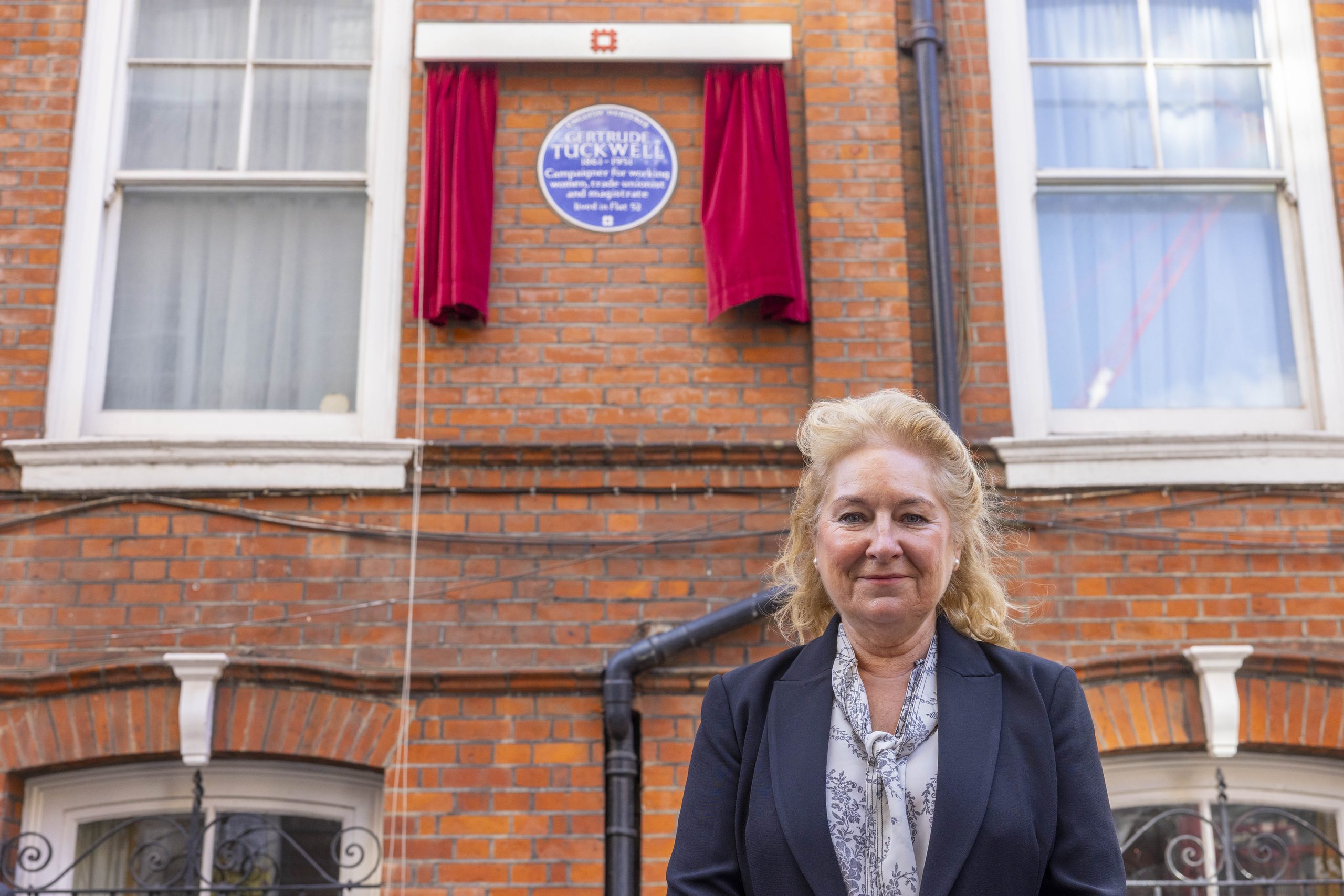
English Heritage: Gertrude Tuckwell Female Magistrate Blue Plaque Unveiled
Summary
- An English Heritage blue plaque was unveiled yesterday at Westminster Mansions to commemorate Gertrude Tuckwell, a pioneering female magistrate.
- Gertrude Tuckwell was a prominent campaigner for women’s and workers’ rights and was among the first seven women appointed as magistrates following the Sex Disqualification (Removal) Act 1919.
- She notably became the first woman sworn in as a magistrate for London, marking a significant moment for women in the justice system.
- The Lady Chief Justice, Baroness Carr, attended the ceremony and delivered a speech in Gertrude Tuckwell’s honor.
- Tuckwell advocated for crucial reforms within the magistracy, including greater training for magistrates, the use of probation, and specialized approaches for cases involving children and young people.
A Historic Commemoration at Westminster Mansions
Her influence extended further when she achieved the distinction of becoming the first woman sworn in as a magistrate specifically for the city of London, marking a significant milestone in the history of women in the UK judiciary.
A significant ceremony took place yesterday, October 14th, at Westminster Mansions, marking the unveiling of an English Heritage blue plaque dedicated to Gertrude Tuckwell. This event honored one of the earliest female magistrates in the United Kingdom, a figure whose contributions profoundly shaped both women's rights and the justice system. The occasion was graced by the presence of The Lady Chief Justice, The Right Honourable the Baroness Carr of Walton-on-the-Hill, who joined other distinguished speakers in celebrating Tuckwell's enduring legacy.
The blue plaque serves as a permanent public recognition of Gertrude Tuckwell's pioneering role. She was not only a dedicated campaigner for the rights of working women but also a pivotal figure in the broader movement for women's suffrage. Her appointment as a magistrate represented a groundbreaking moment, opening doors for other women to enter public service and the legal profession. The ceremony itself underscored the historical importance of her achievements and her lasting impact on the landscape of British justice.
Pioneering a Path in the Judiciary
Gertrude Tuckwell's entry into the judiciary was a direct consequence of the Sex Disqualification (Removal) Act of 1919, a landmark piece of legislation that dismantled barriers preventing women from holding public office. Following this pivotal act, Tuckwell was among the initial cohort of seven women appointed as Justices of the Peace (JPs), effectively becoming one of the nation's first female magistrates. Her influence extended further when she achieved the distinction of becoming the first woman sworn in as a magistrate specifically for the city of London, marking a significant milestone in the history of women in the UK judiciary.
Beyond her initial appointment, Tuckwell played a crucial role in shaping the future of the magistracy itself. She championed essential reforms, including calls for enhanced training for magistrates, the implementation of probation as a rehabilitative measure, and the adoption of a more specialized and sensitive approach when handling cases involving children and young people. Her advocacy laid foundational principles that continue to influence modern judicial practices, demonstrating her foresight and commitment to a more equitable and effective justice system.
Honoring a Lasting Legacy
The unveiling ceremony brought together a distinguished group of individuals to pay tribute to Gertrude Tuckwell's monumental contributions. Lady Chief Justice Baroness Carr delivered a speech in her honor, reflecting on the significance of Tuckwell's work for contemporary legal professionals. Other speakers included Dr. Mari Takayanagi, a renowned historian, archivist, and author, who provided historical context to Tuckwell's achievements, and David Ford JP, Chair of the Magistrates’ Association, who spoke to her impact on the magistracy. Jenny Kingsley JP, who initiated the nomination for the English Heritage blue plaque Gertrude Tuckwell, also shared insights into her importance.
The event, expertly chaired by Emily Gee, a member of the Blue Plaques Panel, culminated in the ceremonial unveiling of the plaque by Bridget Phill. This collective act of remembrance reinforces Gertrude Tuckwell's indelible mark on the history of women in the UK judiciary and her broader role as a social reformer. The English Heritage blue plaque serves not only as a memorial but also as an inspiration, reminding future generations of the perseverance and vision required to break down societal barriers and advocate for justice.
Practical Implications
This article is a historical commemoration and does not present a direct, actionable legal or compliance implication for lawyers or compliance officers.
Source
How does this affect you?
Get an AI analysis of this article grounded in your jurisdictions, practice areas, and any policy documents you've uploaded to Wansom.
Finish Reading the Full Story and the Expert Analysis.
Get the latest legal & regulatory intelligence in United Kingdom
Wansom is AI and can make mistakes.