
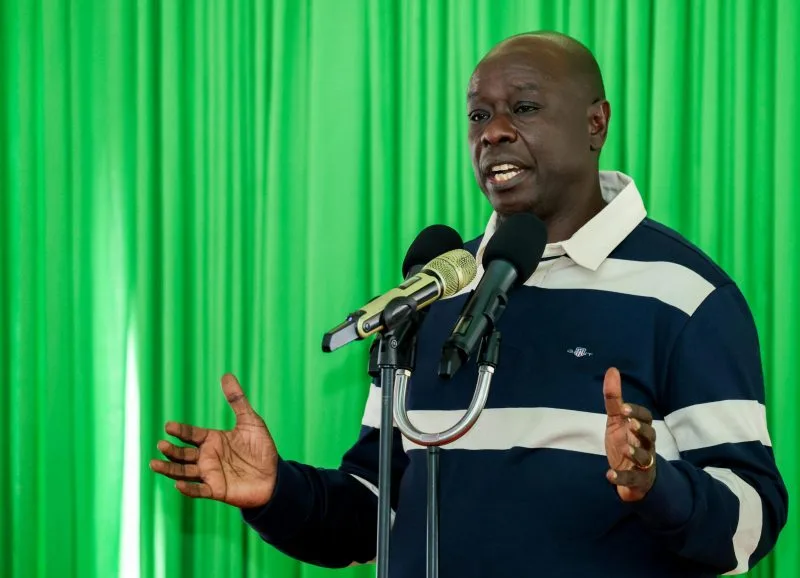
Gachagua Pushes IEBC for More Time in Smartmatic, ID Bias Talks
Summary
- Rigathi Gachagua welcomed an IEBC invitation for a consultative meeting but requested more time for thorough discussions.
- Gachagua urged the IEBC to dedicate a full day to discuss the technology for the 2027 polls, including the Smartmatic contract.
- He accused the Registrar of Persons of biased delays in issuing national identity cards to young Kenyans in opposition-leaning areas.
- Gachagua claimed ID applicants in perceived government strongholds receive documents in days, while those in opposition areas wait months.
- He plans to address the alleged ID issuance delays with the Registrar of Persons, citing potential voter registration disadvantages.
Electoral Technology Discussions
The integrity of the electoral framework, from voter identification to the technology used for casting and counting votes, forms the bedrock of a credible democratic exercise, making these Gachagua IEBC Smartmatic ID bias talks central to Kenya's political landscape.
Rigathi Gachagua, the former Deputy President and leader of the Democracy for the Citizens Party, has expressed approval for the Independent Electoral and Boundaries Commission's (IEBC) decision to invite opposition figures to a consultative session. He characterized this move as a positive development. However, Gachagua simultaneously pressed the commission to allocate more extensive time for political leaders to articulate their concerns effectively.
Gachagua specifically indicated that he personally requires a minimum of one and a half hours to convey to the commissioners the issues brought to his attention by Kenyan citizens. He deemed the proposed two and a half hours for the entire meeting insufficient for a thorough discussion. This request follows Gachagua's earlier call over the weekend for the IEBC to convene a meeting involving political parties and other stakeholders.
The primary objective of such a gathering, as articulated by Gachagua, would be to reach a consensus on the technological infrastructure to be deployed for the 2027 national elections. Key agenda items for these talks include evaluating whether to extend the existing agreement with election technology provider Smartmatic or to explore alternative methods for sustaining voter registration efforts. Gachagua formally requested the IEBC Chairman to consider dedicating an entire day to these consultations, underscoring that the procedural aspects are as crucial as the election itself for the nation's future.
National ID Issuance Controversy
Beyond the electoral technology discourse, Rigathi Gachagua has also urged the Registrar of Persons to engage in discussions with opposition leaders regarding a separate, but equally critical, matter. Gachagua has leveled accusations of systemic bias in the distribution of national identity cards, a document essential for voter registration and participation in the democratic process.
He specifically alleged that the Registrar of Persons is deliberately delaying the issuance of national identity cards to young Kenyans residing in regions perceived to be supportive of the opposition. This alleged pattern of delay is occurring in the lead-up to the 2027 General Election. Gachagua cited examples, claiming that applicants in areas considered aligned with President William Ruto's support base receive their identification documents within a mere two to three days.
Conversely, Gachagua asserted that individuals applying for IDs in what are considered opposition strongholds face waits extending up to seven months. These claims were made during a meeting with a delegation from Kiharu Constituency at his Wamunyoro residence, and later reiterated at the inauguration of his party’s Nairobi County offices in Kasarani. Gachagua affirmed his intention to directly address these concerns with the Registrar of Persons, arguing that such delays could significantly disadvantage young people in the affected areas as voter registration continues.
Implications for 2027 Elections
The convergence of these two distinct yet interconnected issues—the future of election technology and the fairness of national ID issuance—presents significant implications for the integrity and perceived legitimacy of Kenya's 2027 General Election. The discussions surrounding the potential renewal of the Smartmatic contract are pivotal, as the choice of electoral technology directly impacts the transparency and efficiency of voter registration and ballot counting.
Ensuring a robust and widely accepted technological framework is paramount for fostering public trust in the electoral process. Simultaneously, the allegations of discriminatory practices in national identity card issuance introduce a serious challenge to the principle of equal access to fundamental civic rights. If proven, such biases could disenfranchise a segment of the population, particularly young voters, by impeding their ability to register and participate in the upcoming polls.
These concerns collectively highlight the critical need for transparent and inclusive dialogue among all stakeholders. The outcome of the proposed IEBC meeting, alongside any actions taken regarding the Registrar of Persons ID delay, will be closely watched. The integrity of the electoral framework, from voter identification to the technology used for casting and counting votes, forms the bedrock of a credible democratic exercise, making these Gachagua IEBC Smartmatic ID bias talks central to Kenya's political landscape.
Practical Implications
Lawyers advising political parties or individuals on electoral law should closely monitor the outcome of these discussions, as they could impact the legal framework for election technology procurement and voter registration processes. The alleged bias in ID issuance also highlights a potential area for electoral disputes or human rights litigation, requiring vigilance from legal practitioners.
Source
How does this affect you?
Get an AI analysis of this article grounded in your jurisdictions, practice areas, and any policy documents you've uploaded to Wansom.
Finish Reading the Full Story and the Expert Analysis.
Get the latest legal & regulatory intelligence in Kenya
Wansom is AI and can make mistakes.