
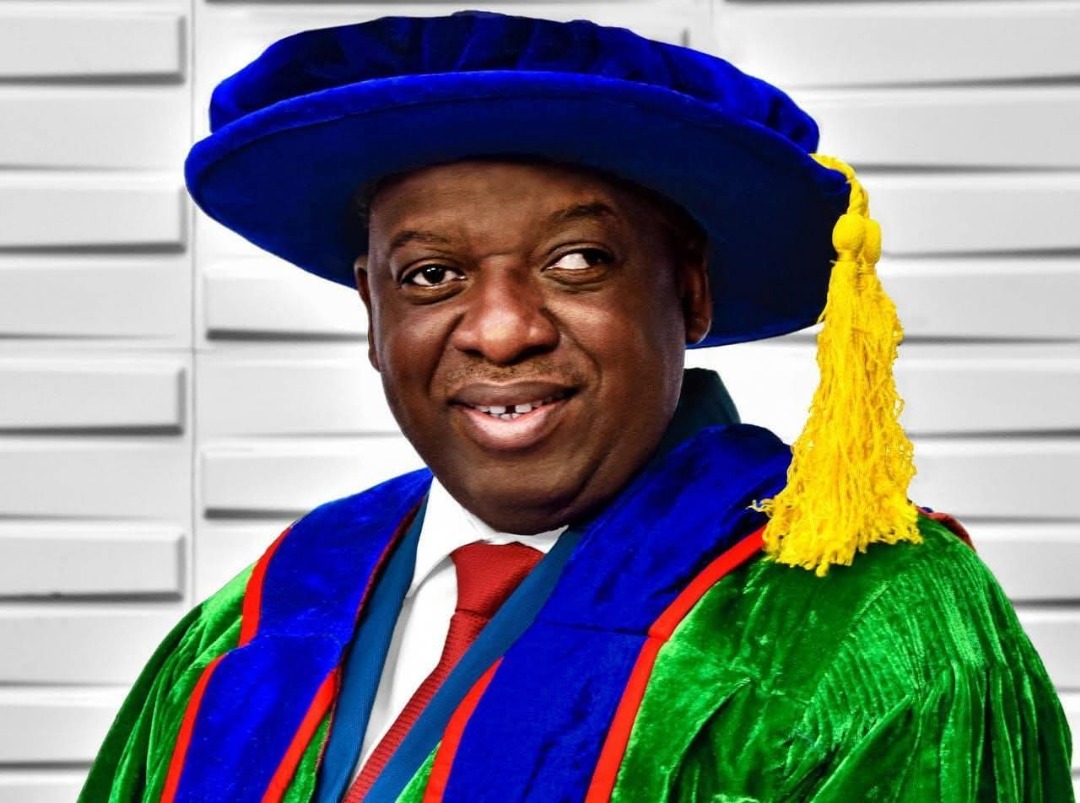
FUOYE VC: Alleged Police Arrest Attempt Foiled by Staff, Students
Summary
- Police officers allegedly attempted to arrest the Vice Chancellor of FUOYE at his Ado-Ekiti residence early Wednesday morning.
- The alleged operation occurred around 3 a.m., but the specific reasons for the attempted arrest remain undisclosed.
- Academic staff, non-academic staff, and students of the university community intervened, preventing the alleged arrest.
- The incident raises significant questions about police powers and due process concerning university officials in Nigeria.
The Alleged Incident
The incident prompts a broader examination of Nigeria university police powers and the extent to which law enforcement agencies can intervene in university affairs without clear legal justification or adherence to established protocols.
A significant disturbance reportedly unfolded at the residence of the Vice Chancellor of the Federal University Oye-Ekiti (FUOYE) in Ado-Ekiti during the early hours of Wednesday. Police officers are alleged to have arrived at the property around 3 a.m. with the stated intention of apprehending the university's top official. This purported attempt at a FUOYE VC alleged police arrest has immediately sparked concerns within the academic community and beyond, signaling a fresh wave of challenges for the institution.
The precise reasons for the police presence and their alleged objective to detain the Vice Chancellor remain undisclosed in initial reports, leaving a vacuum of information regarding the legal basis for such an action. This incident marks a notable escalation in what has been described as an ongoing period of instability for the institution, adding another layer to its complex administrative landscape.
Community Intervention
The alleged police operation, however, did not proceed as planned due to the swift and collective response from members of the university community. Academic staff, non-academic staff, and students reportedly converged at the Vice Chancellor's residence, effectively thwarting the officers' efforts to carry out the alleged arrest. This spontaneous FUOYE staff students intervention highlights a strong sense of solidarity and a collective determination to protect the institution's leadership. The unified front presented by various segments of the university population underscores the deep concern generated by the Ado-Ekiti police VC incident, demonstrating the community's readiness to act in defense of its perceived autonomy and the welfare of its principal officers.
Legal and Institutional Questions
This alleged FUOYE Vice Chancellor arrest attempt, while lacking specific legal details regarding warrants or charges, immediately brings to the forefront critical questions concerning the exercise of police powers and due process within Nigeria's university system. The early morning timing and the alleged nature of the operation raise eyebrows about standard police conduct, particularly when dealing with high-ranking officials of public institutions. The incident prompts a broader examination of Nigeria university police powers and the extent to which law enforcement agencies can intervene in university affairs without clear legal justification or adherence to established protocols.
For legal practitioners, this scenario presents a compelling case study on institutional autonomy versus state authority. The absence of public information regarding the legal grounds for the alleged arrest attempt makes it imperative for stakeholders to monitor any subsequent official statements or legal proceedings. Such developments could provide crucial clarity on the basis of the police's actions and their implications for the independence of universities. The reported Police conduct university officials Nigeria in this instance could set precedents or highlight existing ambiguities in the legal framework governing interactions between law enforcement and academic institutions, making it a situation of significant interest for those concerned with civil liberties and institutional governance.
Practical Implications
This incident, though lacking specific legal details, raises questions about the scope of police powers and due process when dealing with university officials in Nigeria. Lawyers should monitor for any official statements or legal proceedings that clarify the basis of the alleged arrest attempt and its implications for institutional autonomy.
Source
How does this affect you?
Get an AI analysis of this article grounded in your jurisdictions, practice areas, and any policy documents you've uploaded to Wansom.
Finish Reading the Full Story and the Expert Analysis.
Get the latest legal & regulatory intelligence in Nigeria
Wansom is AI and can make mistakes.