
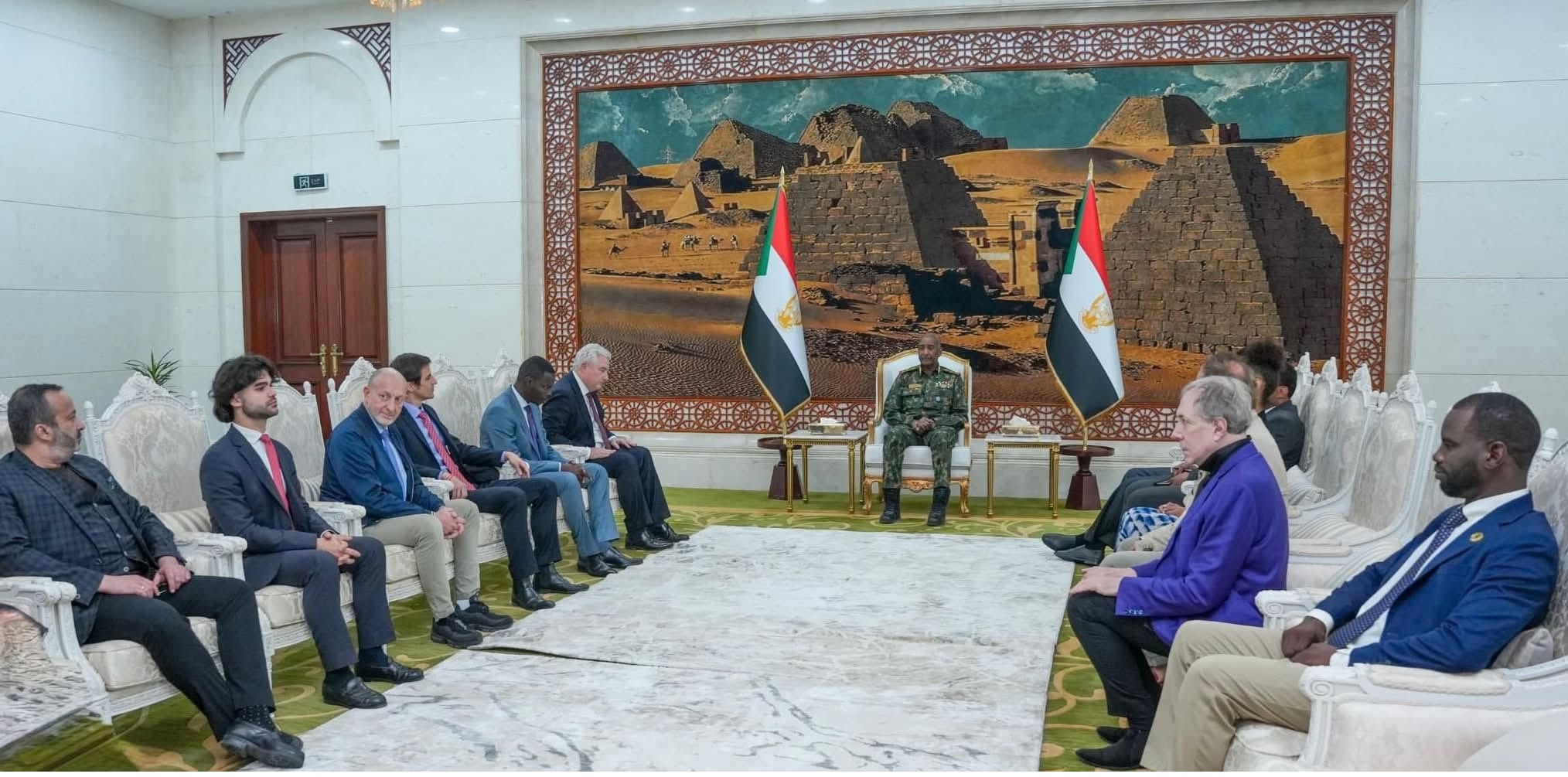
French Delegation Meets Al-Burhan, Assesses Sudan War Atrocities
On November 23, 2026, a French delegation, comprising civil society members, parliamentarians, journalists, businessmen, and intellectuals, met with Sudanese Sovereignty Council Chairman Abdel Fattah al-Burhan in Khartoum to assess the humanitarian situation and war atrocities in Sudan.
The delegation's visit, as articulated by spokesperson Charles Estevny, aimed to gain firsthand insight into the scale of violations and suffering endured by the Sudanese populace. This fact-finding mission is legally significant as it contributes to the international documentation of alleged war crimes and human rights abuses in Sudan, potentially influencing future international policy, aid allocations, and accountability mechanisms. The delegation's stated intention to inform French and European public opinion about external influences on the conflict underscores the geopolitical dimensions and the potential for increased diplomatic pressure or sanctions against parties deemed responsible for atrocities.
The legal context for such a visit primarily involves international humanitarian law (IHL) and international human rights law (IHRL), which govern the conduct of armed conflict and the protection of civilians. While the delegation itself is not a judicial body, its findings can serve as crucial evidence for future investigations by international tribunals, such as the International Criminal Court (ICC), which already holds jurisdiction over crimes committed in Darfur. The engagement with the Sudanese government, represented by Al-Burhan, highlights the complex interplay between national sovereignty and international efforts to address grave violations. Key parties involved include Sudanese Sovereignty Council Chairman Abdel Fattah al-Burhan, the French delegation (with Charles Estevny as spokesperson), Darfur Humanitarian Aid Commissioner Abdel Baqi Mohamed Hamid, and various victims, civil society organizations, and eyewitnesses.
For legal practitioners, this development signals the ongoing international scrutiny of the Sudanese conflict. Attorneys advising international organizations, human rights NGOs, or governments should closely monitor the reports emerging from such delegations for potential evidence of international crimes, which could inform advocacy efforts, sanctions regimes, or future legal proceedings. Businesses operating in or considering investment in Sudan must remain acutely aware of the severe human rights environment and associated reputational and legal risks, including potential complicity or exposure to sanctions. Legal professionals involved in international law or human rights advocacy should track these fact-finding missions as they are integral to building a comprehensive record of events and fostering accountability.
How does this affect you?
Get an AI analysis of this article grounded in your jurisdictions, practice areas, and any policy documents you've uploaded to Wansom.
Finish Reading the Full Story and the Expert Analysis.
Get the latest legal & regulatory intelligence in Sudan
Wansom is AI and can make mistakes.