
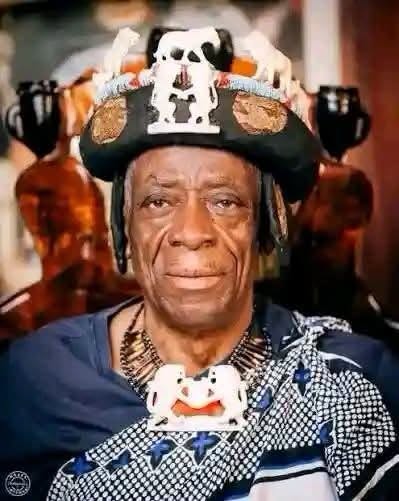
Fred M'membe: Paramount Chiefs' Historical Role In Zambia
Summary
- Fred M'membe, President of the Socialist Party of Zambia and a presidential candidate for 2026, recently published an opinion piece discussing the historical significance of Paramount Chiefs in Zambia.
- M'membe specifically highlighted Chief Mukuni as an old and honored institution with deep historical roots.
- The Leya people, under Chief Mukuni, have inhabited the Zambezi region for centuries, predating modern landmarks like Livingstone town, the railway, and the bridge.
- Their traditional authority was established before the formation of the modern Zambian state.
- M'membe's commentary contributes to the ongoing national discussion about the role and historical legitimacy of traditional leadership in Zambia.
Fred M'membe's Commentary on Traditional Authority
The Leya people's long-established residence along the Zambezi predates the very existence of Livingstone as a town, the construction of the national railway system, and the iconic bridge that spans the river.
Prominent Zambian political figure Fred M'membe, who is currently the President of the Socialist Party of Zambia and a presidential candidate for the 2026 general election, recently offered his perspective on the enduring significance of Paramount Chiefs within Zambia, specifically highlighting the institution of Chief Mukuni. In his commentary, M'membe underscored the deep-rooted and esteemed nature of this traditional leadership, framing it as a foundational element of Zambian heritage. His observations contribute to the ongoing Zambian traditional leadership debate, emphasizing the historical legitimacy that underpins such roles.
The Enduring Legacy of Chief Mukuni and the Leya People
Central to Fred M'membe's argument is the venerable history associated with Chief Mukuni, an institution he describes as both ancient and highly respected. This traditional authority is inextricably linked to the Leya people, who have continuously inhabited the stretch of land along the Zambezi River for many centuries. Their presence in this region predates numerous modern landmarks and administrative divisions, establishing a profound historical claim to their traditional territories.
The Leya people's long-established residence along the Zambezi predates the very existence of Livingstone as a town, the construction of the national railway system, and the iconic bridge that spans the river. Furthermore, their traditional authority was firmly in place even before the modern nation of Zambia was formed. This deep historical context, as articulated by M'membe, provides crucial insight into the Leya people traditional authority and the inherent legitimacy of the Chief Mukuni institution, distinguishing it as a pre-colonial and pre-modern entity.
Why Historical Context Matters for Traditional Leadership
Fred M'membe's emphasis on the ancient origins of institutions like Chief Mukuni highlights a critical aspect of the Zambian traditional leadership debate: the importance of historical continuity. By pointing out that the Leya people and their chiefs were established long before colonial boundaries or modern infrastructure, M'membe underscores that these traditional structures are not mere relics but living institutions with deep historical roots that predate the modern state.
Understanding the extensive history of traditional authorities, such as the Chief Mukuni institution, is vital for appreciating their current standing and influence. M'membe's opinion chiefs commentary suggests that any contemporary discussion about traditional leadership in Zambia must acknowledge this profound historical foundation, which has implications for how these leaders interact with governmental structures, local communities, and even external entities involved in land use or development projects within their traditional domains.
Practical Implications
This article, an opinion piece, provides political and historical context on the institution of Paramount Chiefs in Zambia, specifically Chief Mukuni. While not presenting a direct legal action, it offers insights into the ongoing discourse surrounding traditional leadership, which can be relevant for lawyers advising clients on land matters, community engagement, or corporate social responsibility in regions under traditional authority.
Source
How does this affect you?
Get an AI analysis of this article grounded in your jurisdictions, practice areas, and any policy documents you've uploaded to Wansom.
Finish Reading the Full Story and the Expert Analysis.
Get the latest legal & regulatory intelligence in Zambia
Wansom is AI and can make mistakes.