
Fourth Circuit: Noncitizen Bond Hearing Mandated Under IIRIRA
Summary
- The Fourth Circuit Court of Appeals ruled that noncitizens already residing in the U.S. are generally entitled to bond hearings under IIRIRA, rejecting mandatory detention without such a hearing.
- This decision aligns the Fourth Circuit with eight other federal appellate courts and contradicts a July 2025 Justice Department policy asserting mandatory detention for all noncitizens.
- The court distinguished between individuals seeking admission to the U.S. and those already present, finding that Section 1226 of IIRIRA, which allows for bond, applies to the latter.
- The ruling highlights a circuit split, as the Fifth and Eighth Circuits maintain that Section 1225, which mandates detention for applicants for admission, applies more broadly.
- Advocates from the ACLU praised the decision, asserting it upholds due process rights and prevents the government from implementing mass detention policies without judicial review.
Fourth Circuit Affirms Noncitizen Bond Hearing Rights
Accepting the government's construction would mean that Congress mandated the detention of millions of people and upended the longstanding distinction, grounded in the due process clause of the Constitution, between those arriving at our borders and those already present in our country.
In a significant legal development, the Fourth Circuit Court of Appeals recently joined eight other federal appellate courts in determining that the Illegal Immigration Reform and Immigrant Responsibility Act (IIRIRA) generally does not permit the mandatory detention of noncitizens residing within the United States without providing them a bond hearing. This ruling, issued on a Thursday, directly challenges a July 2025 Justice Department announcement that asserted all noncitizens were subject to mandatory detention, a stance that has been a point of contention in immigration policy discussions.
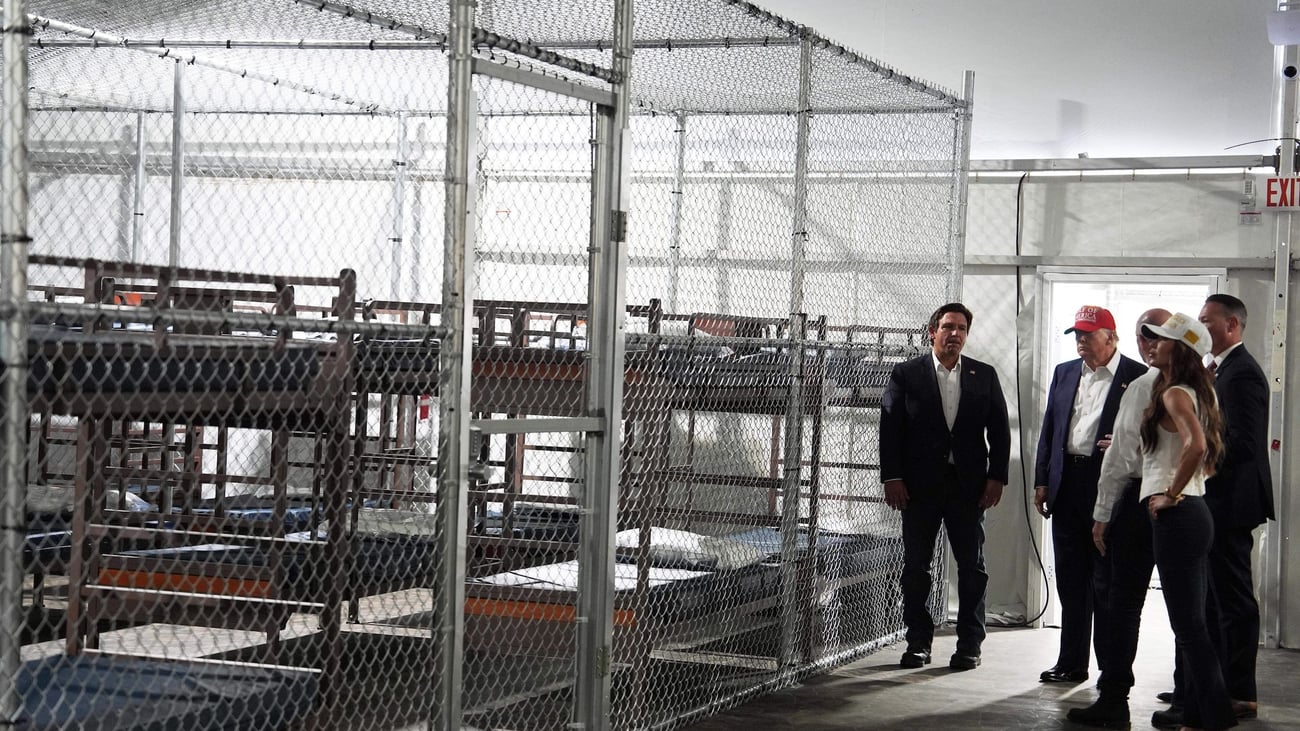
The court's decision arose from a case involving two petitioners, a Salvadoran and a Guatemalan national, both of whom have resided in the United States for over two decades. They successfully argued that IIRIRA mandates bond hearings before immigration judges for individuals in their situation. This outcome stands in contrast to a broader policy push, exemplified by events such as President Donald Trump, Florida Governor Ron DeSantis, and Homeland Security Secretary Kristi Noem touring a new migrant detention facility, dubbed "Alligator Alcatraz," at the Dade-Collier Training and Transition facility in Ochopee, Florida, on Tuesday, July 1, 2025, underscoring the ongoing debate surrounding immigrant detention practices.
Distinguishing Between Presence and Admission
U.S. Circuit Judge Nicole Berner, authoring the majority opinion, highlighted a crucial distinction in the application of IIRIRA. She noted that the government's recent interpretation, which conflates individuals seeking initial admission to the country with those already established residents, deviates from how the statute has been enforced over the past three decades. Judge Berner emphasized that five presidential administrations, including the first Trump administration, had previously adhered to the interpretation upheld by the court.
The court's analysis centered on two key sections of IIRIRA governing detention: Section 1225(b)(2)(A) and Section 1226. Section 1225(b)(2)(A) stipulates that an "applicant for admission" who is not clearly and beyond a doubt entitled to be admitted "shall be detained." Conversely, Section 1226 outlines provisions allowing the government to release noncitizens on bond while their removal proceedings are pending. Judge Berner concluded that Section 1226 was the appropriate governing statute for the petitioners' detention, reinforcing the long-standing legal and due process distinction between those arriving at U.S. borders and those already present within the nation.
Circuit Split and Due Process Implications
The Fourth Circuit's ruling on noncitizen removal proceedings bond hearing rights contributes to an existing circuit split on this issue. While the Fourth Circuit now aligns with eight other circuits in affirming the right to seek release through an immigration judge for those in removal proceedings, the Fifth and Eighth Circuits have adopted a different interpretation. These two circuits have held that Section 1225 applies to noncitizens who have not been legally admitted into the United States, effectively denying them the same bond hearing opportunities.
In a dissenting view, U.S. Circuit Judge Allison Rushing concurred with the government's argument, asserting that for the purposes of the act, there is no functional difference between individuals entering the country and those already present. Judge Rushing contended that terms like "applicant for admission" and "alien seeking admission" broadly encompass anyone requesting lawful entry. The majority, however, rejected this expansive view, underscoring that accepting the government's construction would necessitate the detention of millions of individuals and fundamentally alter the due process protections historically afforded to those already residing in the country.
Advocacy for Fair Detention Practices
The decision by the Fourth Circuit regarding IIRIRA mandatory detention bond hearings has been met with strong approval from immigrant rights advocates. My Khanh Ngo, a senior staff attorney with the ACLU's Immigrants' Rights Project, issued a statement praising the courts for consistently rejecting what she described as a "cruel policy" and a "blatant disrespect for the rule of law." She expressed delight for the clients and their families impacted by the ruling.
Sophia Gregg, a senior immigrants' rights attorney with the ACLU of Virginia, further emphasized the significance of the Fourth Circuit immigrant due process decision, stating that the government cannot unilaterally rewrite immigration law to support an "anti-immigrant agenda" by detaining people en masse. This ruling, she noted, makes that principle unequivocally clear. The core function of these bond hearings is to require the government to demonstrate that a noncitizen poses a danger to the community or presents a flight risk if it seeks to continue detention prior to the conclusion of removal proceedings.
Practical Implications
Lawyers representing noncitizens in removal proceedings within the Fourth Circuit can now confidently argue for bond hearings, leveraging this ruling which distinguishes between noncitizens seeking admission and those already present in the U.S. This clarifies due process rights under IIRIRA and challenges mandatory detention policies.
Source
Source: Original reporting via CN
How does this affect you?
Get an AI analysis of this article grounded in your jurisdictions, practice areas, and any policy documents you've uploaded to Wansom.
Finish Reading the Full Story and the Expert Analysis.
Wansom is AI and can make mistakes.