
Fourth Circuit: En Banc Hears Military HIV Ban Challenge
Summary
- The full Fourth Circuit Court of Appeals heard arguments challenging the military's ban on HIV-positive service members, following a prior panel decision upholding the policy.
- Plaintiffs, including HIV-positive individuals and Minority Veterans of America, argue the ban is discriminatory, unscientific, and applies even to those with undetectable viral loads.
- The legal challenge centers on alleged violations of the Fifth Amendment's equal protection clause and the Administrative Procedure Act, with plaintiffs citing a precedent where the military acted arbitrarily regarding HIV-positive service members.
- Judges debated the extent of judicial deference owed to military personnel decisions, especially concerning medical and scientific issues.
- Concerns were raised about the potential for this case to create a 'floodgate' for challenges to military policies based on other medical conditions, drawing courts into military affairs.
Fourth Circuit Considers Military HIV Ban
The core of the legal dispute centers on whether courts should defer to military judgments on medical and scientific matters that do not require specialized military expertise.
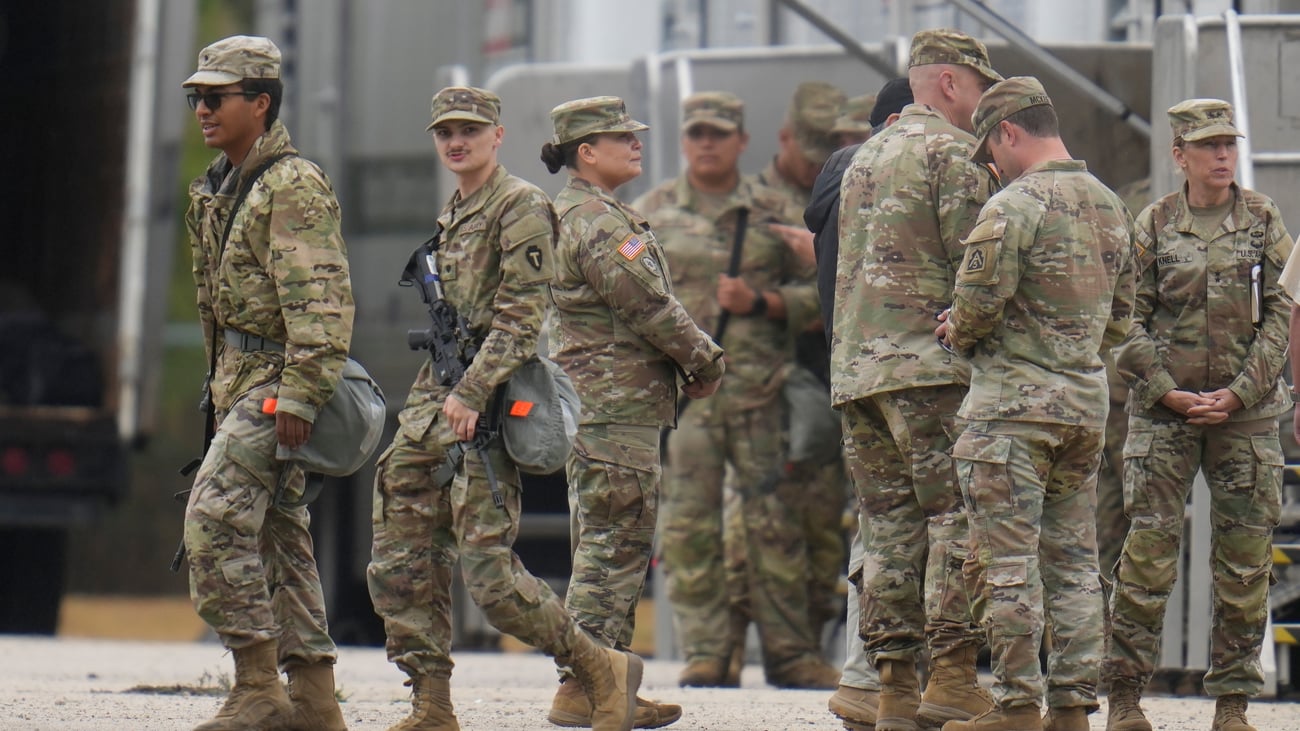
The full Fourth Circuit Court of Appeals recently convened to hear arguments challenging the military's prohibition on HIV-positive individuals serving. This en banc review by all 15 judges of the federal appeals court follows a February decision by a three-judge panel that had upheld the controversial policy. The panel, consisting of two appointees by Donald Trump and one by George H. W. Bush, had revived the ban after a federal judge, appointed by Bill Clinton, initially blocked it in 2024.
The plaintiffs in this significant case include a trans woman honorably discharged from the Army due to her HIV status, a gay man serving in the Georgia National Guard who is prevented from joining the Army, and a cisgender woman unable to enlist in the Army because she is HIV-positive. They are joined by the advocacy organization Minority Veterans of America. Their central contention is that the policy, which bars even those whose treatment has rendered the virus undetectable, is discriminatory and unsupported by modern scientific understanding.
During the en banc hearing, nine of the 15 Fourth Circuit judges, who were appointed by Democratic presidents, engaged attorneys in a robust discussion regarding the extent of deference courts should grant to the military in its personnel decisions. The military, for its part, maintains that the ban is a rational measure designed to control costs and preserve diplomatic relations with other nations. It also differentiates its policies for those already serving versus new enlistees.
Legal Arguments and Deference
The legal challenge asserts that the military's policy violates the equal protection component of the Fifth Amendment's due process clause and the Administrative Procedure Act. U.S. Circuit Judge Paul Niemeyer, a Bush appointee, had previously authored the majority opinion for the three-judge panel, finding the policy compliant with these legal standards.
Scott Schoettes, representing the plaintiffs, urged the full court to consider its prior ruling in *Roe v. Department of Defense*. In that case, the court determined that the military had acted arbitrarily, capriciously, and inconsistently with contemporary science when it discharged two HIV-positive service members. Schoettes argued that the court should not defer to the defendants on medical and scientific issues that do not involve specialized military knowledge unique to the armed forces, asserting that the military's rejection of objective facts stems from irrational fears surrounding HIV transmission.
Conversely, U.S. Circuit Judge Harvie Wilkinson, a Ronald Reagan appointee, framed the case as more complex than a simple medical issue, highlighting how medical conditions uniquely interact with military service. He suggested that medical conditions affecting military service are distinct from those encountered in civilian life. While the plaintiffs acknowledge the military's right to establish enlistment standards, they insist these standards must be applied rationally. Schoettes reiterated that misconceptions about HIV are deeply rooted in irrational fears of transmission.
Implications for Military Policy and Judicial Review
A significant concern raised during the proceedings, particularly by Judge Wilkinson, was the potential for this case to open a 'floodgate' for challenges from individuals with other medical conditions seeking to overturn military policies. Wilkinson expressed apprehension that such an outcome could draw courts into military personnel decisions, an area the Supreme Court has indicated courts should generally avoid. He warned that applying the same legal tools to this situation could lead to numerous challenges across various illnesses.
Schoettes countered this 'floodgate' argument by suggesting that while others might challenge their exclusion, they would likely be unsuccessful. He argued that, unlike the situation with HIV, the military possesses a rational basis for its policies concerning other medical conditions. The military reiterated its argument regarding financial and logistical burdens. The core of the legal dispute centers on whether courts should defer to military judgments on medical and scientific matters that do not require specialized military expertise, a decision that could significantly reshape the landscape for military HIV-positive service members and future enlistees.
Practical Implications
Lawyers advising clients on military enlistment or service, particularly those with medical conditions, should closely monitor the Fourth Circuit's en banc decision. This case could significantly impact the level of judicial deference afforded to military personnel policies and establish new precedents for challenging discriminatory regulations under equal protection or the APA, especially concerning medical conditions like HIV.
Source
How does this affect you?
Get an AI analysis of this article grounded in your jurisdictions, practice areas, and any policy documents you've uploaded to Wansom.
Finish Reading the Full Story and the Expert Analysis.
Get the latest legal & regulatory intelligence in United States
Wansom is AI and can make mistakes.