
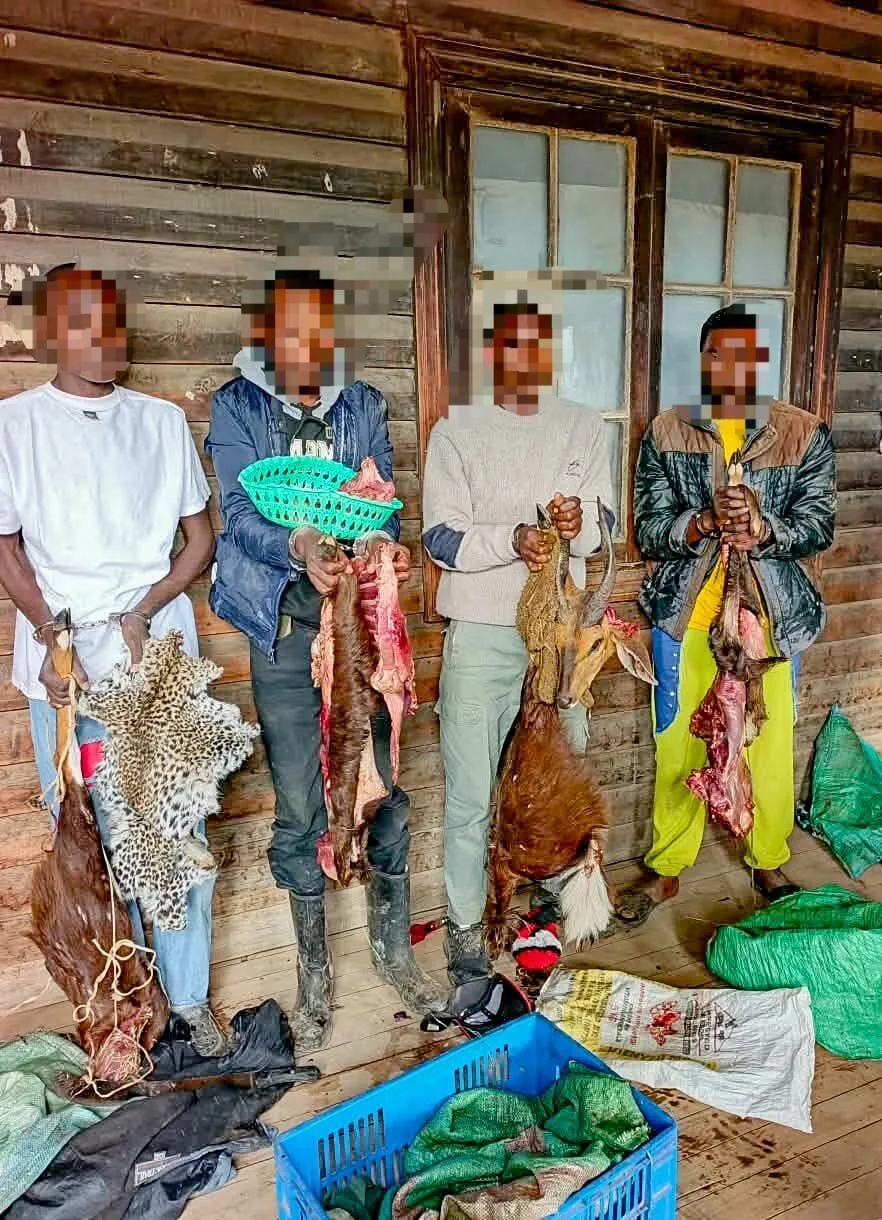
Laikipia: Four Arrested for Illegal Game Meat Possession
Summary
- Four suspects were arrested in Laikipia County with 38.6 kilograms of suspected game meat last Saturday.
- The arrests were part of an intelligence-led, multi-agency operation involving Matanya Police Station and other security agencies.
- Kenyan law strictly prohibits the possession, trade, and consumption of game meat, with severe penalties for offenders.
- The National Police Service emphasizes intensified enforcement and public cooperation to combat wildlife crime.
- Suspects from Weru-ine, Matanya Centre, Waguthiru, and Mitero areas are in custody awaiting court arraignment.
Recent Arrests in Laikipia
Under Kenyan law, there is an absolute prohibition against any involvement with game meat, which explicitly covers its possession, trade, and consumption.
Four individuals were recently apprehended in Laikipia County, specifically last Saturday, following a targeted intelligence-led operation that successfully uncovered 38.6 kilograms of suspected game meat. These significant Matanya Police Station arrests were executed by officers from the station in collaboration with other security agencies, underscoring a concerted effort to combat illegal wildlife activities within the region. The suspects, whose origins were traced to Weru-ine, Matanya Centre, Waguthiru, and Mitero areas, have been taken into custody.
They are currently awaiting the necessary processing procedures before their formal arraignment in court. This incident, involving four arrested illegal game meat Laikipia suspects, serves as a stark reminder of the persistent challenges posed by wildlife crime. It also highlights the proactive stance of law enforcement agencies in their ongoing surveillance and interdiction efforts across Kenya, aiming to disrupt the illicit trade of wildlife products.
Kenya's Stance on Wildlife Crime
Under Kenyan law, there is an absolute prohibition against any involvement with game meat, which explicitly covers its possession, trade, and consumption. This robust legal framework is meticulously designed to safeguard the nation's invaluable and diverse wildlife heritage, which remains under constant threat from organized poaching syndicates and illicit trafficking networks. The National Police Service (NPS) has consistently emphasized that participation in such prohibited activities will lead to severe legal penalties, as stipulated by the country's comprehensive wildlife conservation statutes.
The stringent Wildlife Conservation and Management Act penalties are a clear reflection of the gravity with which the Kenyan government regards offenses such as poaching and the illegal dealing in wildlife trophies. Individuals found guilty of illegal game meat possession Kenya face substantial repercussions, intended to act as a powerful deterrent to anyone considering engaging in the illegal wildlife trade. This unwavering legal position forms a fundamental pillar of Kenya's overarching conservation strategy, aiming to protect its natural resources.
Intensified Enforcement Operations
The recent apprehension of suspects in Laikipia is a direct manifestation of the intensified Kenya wildlife crime enforcement efforts being systematically undertaken by various security agencies across the nation. These operations are not random but are strategically designed to dismantle the complex supply chains of illegal wildlife products and effectively break down entrenched poaching networks. The National Police Service wildlife operations frequently leverage intelligence-led approaches, enabling highly targeted interventions against identified criminal elements involved in environmental offenses.
Such multi-agency collaborations are absolutely crucial in effectively combating the increasingly sophisticated and organized nature of wildlife crime. By strategically pooling diverse resources, expertise, and critical intelligence, law enforcement bodies can more efficiently identify, meticulously track, and successfully apprehend those individuals and groups deeply involved in the illegal trade. This proactive and coordinated approach represents a continuous commitment aimed at safeguarding Kenya's irreplaceable natural resources from exploitation and ensuring the long-term survival and thriving of its iconic wildlife species.
The Broader Fight for Conservation
Beyond the direct enforcement actions, the National Police Service actively champions and encourages broad public participation as a vital component in the ongoing fight against wildlife crime. Citizens are strongly urged to promptly report any suspicious activities they observe, including suspected poaching incidents or instances of illegal wildlife trade, to their nearest police station or by utilizing the designated toll-free emergency lines provided by the service. This explicit call for public cooperation is far more than a mere formality; it is recognized as an absolutely critical element for the sustained success of wildlife conservation initiatives across the country.
The combined and synergistic efforts of dedicated law enforcement agencies and an actively engaged, vigilant public are indispensable for effectively identifying and disrupting illegal wildlife-related activities before they can inflict irreversible damage upon ecosystems and animal populations. The profound responsibility for the protection and preservation of Kenya's precious wildlife is fundamentally a shared one, and every single report from a concerned citizen contributes significantly to the overarching goal of preserving biodiversity for the benefit of current and future generations. This collaborative model is undeniably vital in addressing the multifaceted and complex challenges presented by environmental crime in the modern era.
Practical Implications
Lawyers advising clients on wildlife conservation laws or representing individuals accused of wildlife offenses should note the intensified multi-agency enforcement efforts, particularly concerning illegal game meat. Compliance officers in relevant industries must ensure robust internal policies to prevent involvement in the illegal wildlife trade, given the strict prohibitions and severe penalties under Kenyan law.
Source
How does this affect you?
Get an AI analysis of this article grounded in your jurisdictions, practice areas, and any policy documents you've uploaded to Wansom.
Finish Reading the Full Story and the Expert Analysis.
Get the latest legal & regulatory intelligence in Kenya
Wansom is AI and can make mistakes.