
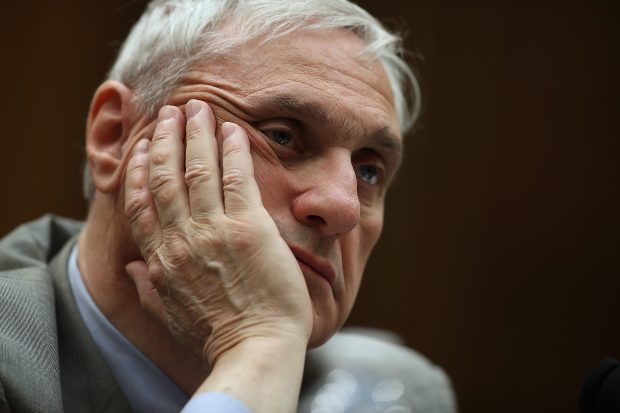
Alex Kozinski: Firing Squads Op-Ed Reignites Debate
Summary
- Former Ninth Circuit Judge Alex Kozinski recently published an op-ed in the Wall Street Journal titled "The Case for Firing Squads."
- The article's context is Secretary of War Pete Hegseth's plan to execute Nidal Hasan by firing squad on December 3, with a livestream.
- Kozinski retired in 2017 following sexual harassment allegations from 15 women, which halted a misconduct inquiry.
- Despite losing professional standing, he has actively sought to re-enter legal discourse, including representing Donald Trump.
- Mainstream outlets have continued to cite him as an expert since his retirement.
A Controversial Return to Public Discourse
The recurring platform given to Alex Kozinski, particularly for commentary on sensitive topics like capital punishment, raises important questions for the legal profession and the media.
Former Ninth Circuit Judge Alex Kozinski has once again published an opinion piece in the Wall Street Journal, reigniting questions about his continued presence in prominent media outlets. The op-ed, titled "The Case for Firing Squads," appeared this past Monday, drawing attention for its subject matter and its author. This publication marks another instance of Kozinski engaging publicly on significant legal and ethical debates.
The timing of Kozinski's article is directly linked to a recent announcement by Secretary of War Pete Hegseth. Hegseth has outlined a plan to execute Nidal Hasan, the Fort Hood shooter, by firing squad on December 3. Adding a further layer of controversy, the Secretary of War intends for this execution to be livestreamed, a detail that likely served as the primary impetus for Kozinski's commentary on capital punishment methods.
The Shadow of Past Misconduct
Kozinski's public appearances consistently prompt a review of the circumstances surrounding his abrupt departure from the judiciary. In 2017, he retired immediately following serious allegations of sexual harassment. A total of fifteen women came forward, accusing him of various forms of misconduct, including displaying pornography to clerks within his chambers and making inappropriate sexual remarks to female employees.
As additional accusations continued to surface, his decision to retire effectively halted a formal misconduct inquiry that was underway. This move allowed him to step down from his judicial role while retaining full benefits. Despite this outcome, the widespread allegations and his subsequent retirement significantly damaged his professional standing within the legal community.
Persistent Efforts at Rehabilitation
Since his 2017 retirement, Kozinski has made concerted efforts over nearly a decade to re-establish his reputation and influence in legal circles. His activities have included contributing to high-profile legal matters, such as co-authoring a brief in the "Shape of Water" copyright dispute. He has also maintained a presence at industry events, notably attending a dinner hosted by Jenner & Block.
Further demonstrating his attempts to re-engage with the legal system, Kozinski returned to the Ninth Circuit to argue a case. More recently, he took on the role of legal counsel for Donald Trump in a lawsuit aimed at restoring Trump's access to Twitter, and he also affixed his name to a legal brief that controversially likened Trump to Galileo. Despite his past, mainstream media outlets have continued to feature him as an expert, often without acknowledging the events of 2017.
Why It Matters
The recurring platform given to Alex Kozinski, particularly for commentary on sensitive topics like capital punishment, raises important questions for the legal profession and the media. His continued visibility, despite the serious sexual harassment allegations that led to his retirement and the subsequent cessation of a misconduct inquiry, challenges perceptions of accountability within the judiciary.
The pattern of his re-emergence, from contributing to significant legal briefs to offering expert opinions in mainstream publications, suggests a persistent effort to regain the professional legitimacy he lost. This ongoing narrative compels observers to consider the criteria by which individuals are deemed credible voices in public discourse, especially when their past actions have cast a long shadow over their professional conduct.
Source
How does this affect you?
Get an AI analysis of this article grounded in your jurisdictions, practice areas, and any policy documents you've uploaded to Wansom.
Finish Reading the Full Story and the Expert Analysis.
Get the latest legal & regulatory intelligence in United States
Wansom is AI and can make mistakes.