
Finnish Court Jails Russian Captain 3.5 Years for Baltic Cable Sabotage
Summary
- A Finnish court sentenced a Russian captain to three years and six months for aggravated sabotage of undersea cables.
- An Azerbaijani crew member received a sentence of two years and 10 months for the same offense.
- The cargo ship Fitburg, registered in Saint Vincent and the Grenadines, dragged an anchor for 80 miles, damaging two telecommunications cables and a gas pipeline.
- The incident occurred outside Finnish territorial waters, but the court asserted jurisdiction due to the consequences manifesting in Finland.
- This sabotage is seen as part of a broader pattern of "hybrid war" tactics in the Baltic Sea.
What Happened
However, the Helsinki court ultimately rejected this argument, ruling that it possessed jurisdiction because the case involved "intentional offenses whose consequences had manifested in Finland."
The Helsinki district court recently handed down sentences to a Russian captain and a senior crew member for their involvement in the deliberate damage of two critical undersea telecommunications cables connecting Finland and Estonia. The court determined that the 433-foot cargo vessel, named Fitburg, intentionally dragged its anchor across approximately 80 miles of seabed, causing significant harm to the vital infrastructure. This incident occurred outside Finland's territorial waters, but its consequences were felt within the nation.
Finnish authorities intercepted the Fitburg on December 31, 2025, following suspicions that the ship had been responsible for the cable damage in the Gulf of Finland. The vessel, registered in Saint Vincent and the Grenadines, was en route from Russia to Israel at the time of its apprehension. Investigations revealed that beyond the two primary telecommunications cables, the freighter had also traversed nine other telecommunications and power cables, as well as a gas pipeline, during its destructive path.
Legal Proceedings and Rulings
During the trial, which commenced in September, the Helsinki district court convicted both the captain and his deputy of "aggravated sabotage." The Russian captain received a sentence of three years and six months in prison, while the Azerbaijani crew member was sentenced to two years and 10 months. In addition to their prison terms, the court mandated that both defendants compensate for the damage inflicted upon the cables and the gas pipeline, and cover the associated investigation costs.
A central point of contention during the proceedings was the question of jurisdiction. The defendants vehemently denied the charges, asserting that the Finnish court lacked the authority to hear the case, given that the damaged cables lay beyond Finland's sovereign territorial waters. However, the Helsinki court ultimately rejected this argument, ruling that it possessed jurisdiction because the case involved "intentional offenses whose consequences had manifested in Finland." This decision aligns with a recent development in a similar case from the previous year, where the Helsinki district court initially declined jurisdiction in an incident involving three crew members from the Cook Islands-registered tanker, the Eagle S. That earlier ruling was subsequently overturned by the Helsinki court of appeal, which remanded the case back to the district court for further proceedings, indicating a broader legal trend towards asserting jurisdiction in such cross-border incidents.
Broader Context
This specific act of sabotage is not an isolated event but rather forms part of a disturbing pattern of suspected cable damage across the Baltic Sea in recent years. Many international experts and political figures have openly described these incidents as components of Russia's "hybrid war" strategy against Western nations, particularly in the context of its ongoing invasion of Ukraine. The increasing frequency and nature of these events underscore heightened geopolitical tensions in the region.
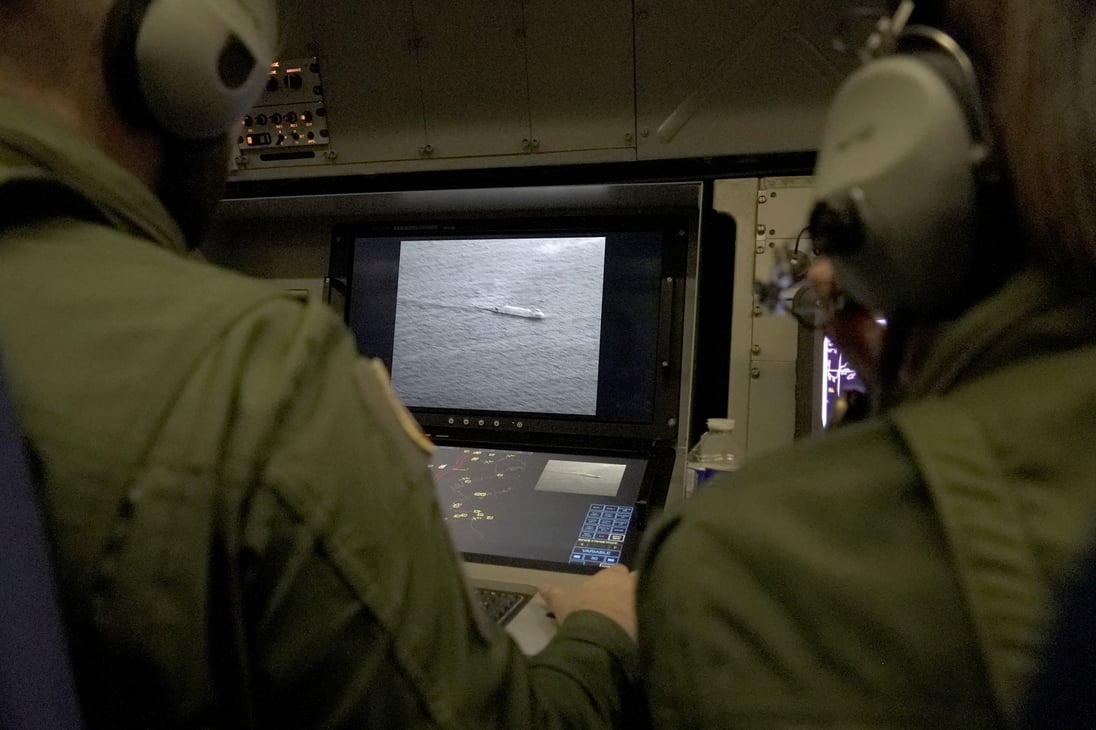
In response to these growing threats, surveillance efforts have been intensified. For instance, a French Navy Atlantique 2 surveillance plane was observed patrolling over the Baltic Sea on January 23, 2025, specifically tasked with protecting critical undersea cables and pipelines from potential sabotage. Such measures highlight the international community's concern over the vulnerability of vital underwater infrastructure and the perceived deliberate targeting of these assets.
Source
How does this affect you?
Get an AI analysis of this article grounded in your jurisdictions, practice areas, and any policy documents you've uploaded to Wansom.
Wansom is AI and can make mistakes.