
Fifth Circuit: Texas Pfizer Vaccine Lawsuit Jurisdiction Questioned
Summary
- Texas Attorney General Ken Paxton is appealing the dismissal of his lawsuit against Pfizer, which alleges the company lied about its COVID-19 vaccine's efficacy.
- The Fifth Circuit Court of Appeals is examining whether the district court had proper jurisdiction, a concern that could revive the case and send it back to state court.
- Pfizer removed the case to federal court based on federal officer removal, citing its contract with the U.S. government to produce the vaccine.
- Pfizer's attorney argued the removal is supported by the Supreme Court's *Chevron USA Inc. v. Plaquemines Parish* decision, linking vaccine statements to federal contract fulfillment.
- The appellate court is also reviewing the district court's finding that Pfizer is immune under the federal Public Readiness and Emergency Preparedness Act (PREP Act).
Texas AG Seeks Revival of Pfizer Lawsuit
This case holds the potential to significantly reshape the application of federal officer removal and the scope of PREP Act immunity for entities operating under federal contracts, particularly within the pharmaceutical industry.
Texas Attorney General Ken Paxton is currently seeking to reinstate a lawsuit against pharmaceutical giant Pfizer, alleging the company misrepresented the efficacy of its COVID-19 vaccine. The legal challenge, which claims Pfizer violated the Texas Deceptive Trade Practices Act by misleading the public and attempting to silence critics, was initially dismissed by Senior U.S. District Judge Sam Cummings in late 2024. The dismissal was predicated on Pfizer's asserted immunity under the federal Public Readiness and Emergency Preparedness Act (PREP Act).
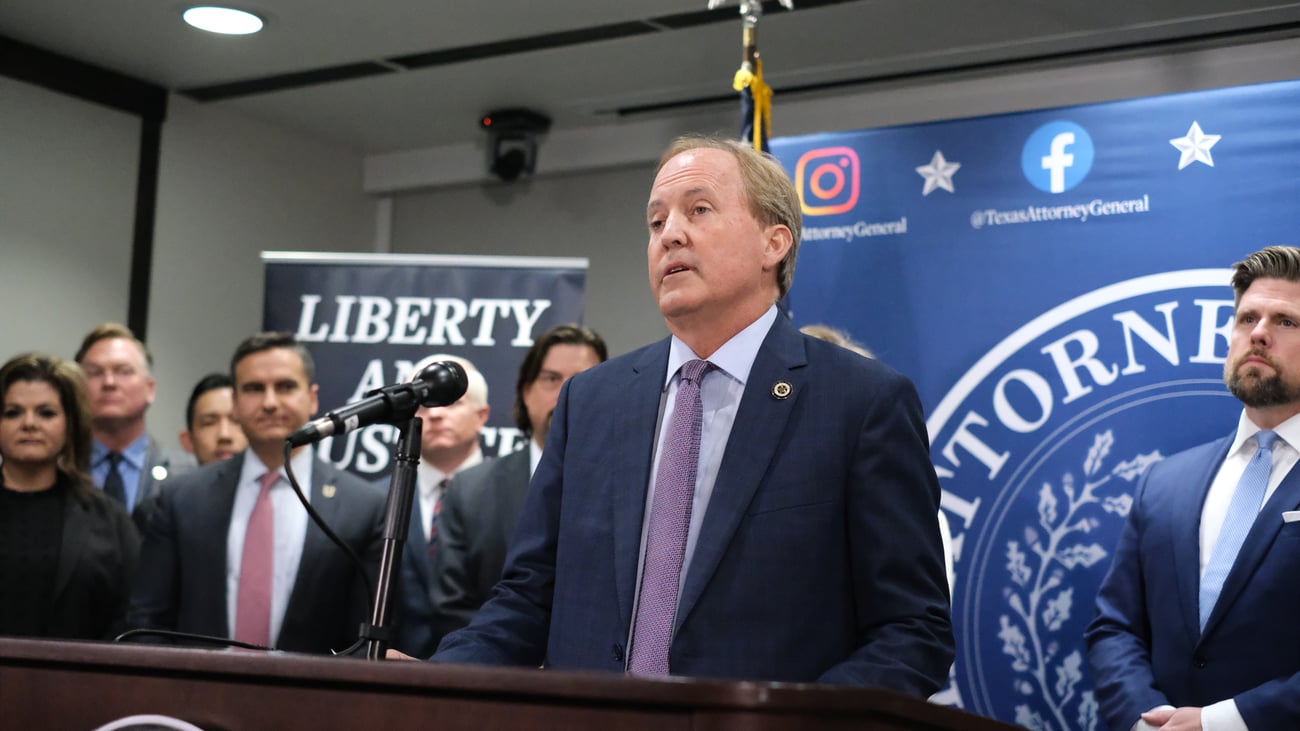
Paxton's appeal to the Fifth Circuit Court of Appeals has introduced a critical jurisdictional question that could significantly alter the case's trajectory. During recent proceedings, appellate judges expressed concerns regarding the district court's jurisdiction, suggesting that if the case was improperly removed from state to federal court, Judge Cummings would have lacked the authority to issue a dismissal. Such a finding by the Fifth Circuit would result in the lawsuit being revived and returned to a state court for further adjudication. Texas First Assistant Attorney General Brent Webster, who has been noted for his alleged involvement in efforts to undermine the 2020 elections, was present at a press conference alongside Paxton prior to the Attorney General's impeachment proceedings in May.
Jurisdictional Battle Over Federal Officer Removal
The core of the jurisdictional debate revolves around Pfizer's decision to move the case to federal court, citing federal officer removal. This mechanism permits federal officials and contractors to transfer lawsuits against them to a federal forum, a right Pfizer invoked due to its contractual obligations with the U.S. government for vaccine production. Pfizer's legal counsel, Kannon Shanmugam, contended before the appellate panel that this removal was justified, drawing parallels to the U.S. Supreme Court's precedent established in *Chevron USA Inc. v. Plaquemines Parish*.
In the *Chevron* decision, the Supreme Court affirmed that Chevron had legitimately removed a lawsuit brought by a Louisiana parish concerning coastline damage from decades of oil production. The high court determined that Chevron's World War II-era contracts to refine aviation fuel were sufficiently connected to its oil production activities during that period to warrant federal officer removal. However, U.S. Circuit Judge Edith Jones highlighted that the Supreme Court in *Chevron* distinguished this scenario from other cases where federal contracts did not support oil companies' attempts to remove lawsuits alleging they misled the public about fossil fuels' climate impact. Shanmugam countered that the key difference lies in the timing of the alleged misrepresentations; in the other cases, they were 'distinct in time' from the federal work, whereas in Pfizer's situation, the two elements are 'wrapped together.' He emphasized that Texas's claims target Pfizer's statements about study results essential for obtaining FDA emergency use authorization, without which the company could not have fulfilled its federal contract, deeming this sufficient justification following the *Chevron* ruling.
PREP Act Immunity and Broader Implications
Beyond the jurisdictional challenge, the appellate hearing also delved into whether Judge Cummings, a Ronald Reagan appointee, correctly determined that the PREP Act grants Pfizer immunity from Paxton's lawsuit. The PREP Act was enacted to incentivize the development and manufacturing of vaccines and other medical countermeasures during public health emergencies, empowering the Department of Health and Human Services secretary to issue necessary declarations. The panel overseeing the appeal included U.S. Circuit Judge Don Willett, a Donald Trump appointee; Judge Leslie Southwick, a George W. Bush appointee; and Judge Edith Jones, also a Ronald Reagan appointee.
Should the Fifth Circuit determine that the district court lacked proper jurisdiction, the lawsuit would be reinstated and returned to a state forum for further proceedings. This case holds the potential to significantly reshape the application of federal officer removal and the scope of PREP Act immunity for entities operating under federal contracts, particularly within the pharmaceutical industry. As U.S. Circuit Judge Leslie Southwick noted during the proceedings, the issue of jurisdiction cannot be conceded, underscoring the fundamental nature of this legal question.
Practical Implications
This case could significantly redefine the scope of federal officer removal and PREP Act immunity for federal contractors, particularly pharmaceutical companies. Lawyers and compliance officers should closely monitor the Fifth Circuit's decision, as it may open new avenues for state-level claims against entities fulfilling federal contracts, impacting litigation risk assessments.
Source
How does this affect you?
Get an AI analysis of this article grounded in your jurisdictions, practice areas, and any policy documents you've uploaded to Wansom.
Finish Reading the Full Story and the Expert Analysis.
Wansom is AI and can make mistakes.