
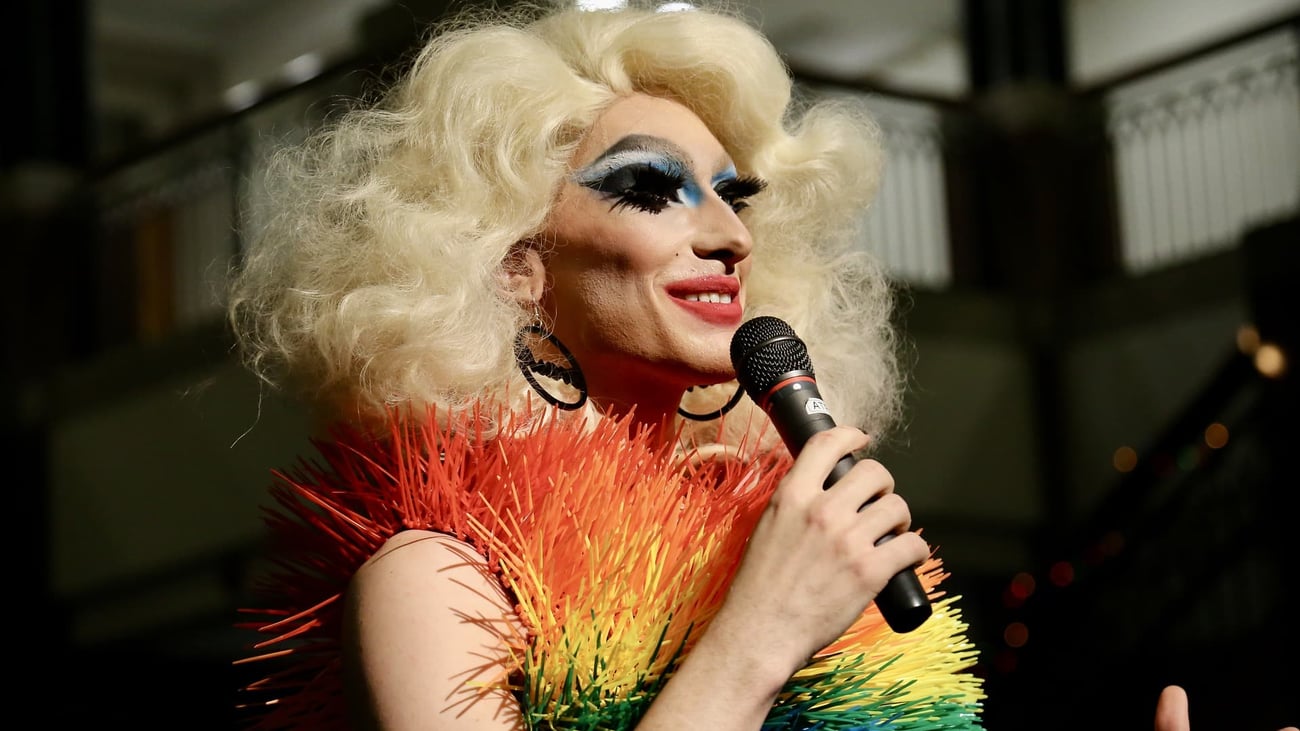
Fifth Circuit Texas A&M Drag Show Ban: Weighs Conflicting Lower Court Rulings
Summary
- LGBTQ student groups are challenging Texas A&M's policies banning drag shows at university venues, arguing they violate the First Amendment.
- The Fifth Circuit Court of Appeals is reviewing two conflicting lower court rulings on the constitutionality of these bans.
- One federal judge found the ban likely unconstitutional, while another upheld a ban, arguing drag shows may not be protected expressive conduct and venues are limited public forums.
- Plaintiffs argue the bans constitute unconstitutional viewpoint discrimination, even in limited public forums, citing university rationales about demeaning women and federal funding risks.
- Texas A&M contends the bans target discriminatory conduct, not viewpoint, referencing the *Christian Legal Society v. Martinez* precedent regarding university non-discrimination policies.
Fifth Circuit Considers Texas A&M Drag Show Ban
Compliance officers and legal counsel at public universities should closely monitor this decision, as it will offer essential insights into the scope of First Amendment protections for expressive conduct on campus and the legal framework governing university policies related to student events.
The Fifth Circuit Court of Appeals recently heard arguments in a significant challenge brought by LGBTQ student organizations against policies enacted by Texas A&M that prohibit drag shows at university facilities. These student groups are seeking a ruling from the full appeals court that such prohibitions infringe upon their First Amendment rights. The consolidated hearing addressed two distinct cases, each originating from federal district courts in Texas, where judges reached opposing conclusions regarding the constitutionality of these campus drag show policies.
This legal dispute centers on the extent to which public universities can regulate student-led expressive activities, particularly when those activities involve performances like drag shows. The outcome of the Fifth Circuit's deliberation is anticipated to provide crucial clarity on the scope of free speech protections for students within the Texas A&M system and potentially across other public higher education institutions within the circuit's jurisdiction.
Divergent Lower Court Rulings Set Stage for Appeal
The appeals court is tasked with reconciling two conflicting lower court decisions. In one instance, Senior U.S. District Judge Lee Rosenthal, an appointee of George H.W. Bush, determined last year that the Texas A&M Queer Empowerment Council was likely to succeed in its claim that a policy from the Texas A&M Board of Regents banning drag shows at on-campus venues violated the First Amendment. This ruling suggested that the university's prohibition on drag performances was constitutionally suspect.
Conversely, U.S. District Judge Matthew Kacsmaryk, an appointee of Donald Trump, upheld a separate decision by the president of West Texas A&M University to prevent the LGBTQ student group Spectrum WT from hosting a drag show at Legacy Hall, a university venue. Judge Kacsmaryk concluded that drag shows probably do not constitute expressive conduct protected by the First Amendment, asserting they lack a clear message. Furthermore, he reasoned that even if such performances were protected, Legacy Hall operates as a limited public forum, granting university officials broader authority to restrict content, especially since administrators review and approve events held there.
Arguments on Viewpoint Discrimination and Forum Access
During the Fifth Circuit hearing, JT Morris, an attorney representing the student groups through the Foundation for Individual Rights and Expression (FIRE), contended that even if the venues in question are considered limited public forums—a classification the plaintiffs dispute—the drag show bans remain unconstitutional. Morris emphasized that government entities cannot restrict speech based on viewpoint, even within limited public forums. He pointed to the university's stated justifications for the bans, which included concerns that drag shows demean women and could jeopardize federal funding due to a presidential executive order prohibiting federal funds for promoting 'gender ideology.' Morris argued these rationales demonstrate that Texas A&M is targeting drag shows specifically because of the viewpoints it perceives them to convey.
In opposition, Texas Principal Deputy Solicitor General Billy Cole, representing Texas A&M, asserted that the policies target discriminatory conduct rather than viewpoint, drawing a comparison to prohibiting a 'whites only' sign. Cole urged the court to consider the U.S. Supreme Court's 2010 decision in *Christian Legal Society v. Martinez*. This precedent established that a law school did not violate the First Amendment by denying official recognition to a Christian student group that failed to comply with a university policy requiring student groups to accept all members regardless of status or beliefs. Cole argued that university administrative decisions concerning access to campus forums should be deemed reasonable and respected by federal courts, particularly when they enforce university non-discrimination policies and state law proscriptions on discrimination within the context of a limited public forum.
Implications for Campus Free Speech
The Fifth Circuit's ultimate decision in this campus drag show policy challenge will carry significant weight for First Amendment protections at public universities. The outcome will provide critical guidance on the permissible limits of university policies regulating student events, especially concerning viewpoint neutrality in limited public forums. Should the court side with the student groups, it could reinforce the principle that public institutions cannot suppress expressive conduct simply because they disagree with its perceived message or potential to offend.
Conversely, a ruling in favor of Texas A&M could expand the authority of public university administrators to regulate student expression, particularly in spaces designated as limited public forums. Compliance officers and legal counsel at public universities should closely monitor this decision, as it will offer essential insights into the scope of First Amendment protections for expressive conduct on campus and the legal framework governing university policies related to student events.
Practical Implications
Compliance officers and legal counsel at public universities should closely monitor the Fifth Circuit's decision in this case, as it will provide critical guidance on the scope of First Amendment protections for expressive conduct on campus and the permissible limits of university policies regulating student events, particularly concerning viewpoint neutrality in limited public forums.
Source
How does this affect you?
Get an AI analysis of this article grounded in your jurisdictions, practice areas, and any policy documents you've uploaded to Wansom.
Finish Reading the Full Story and the Expert Analysis.
Get the latest legal & regulatory intelligence in United States
Wansom is AI and can make mistakes.