
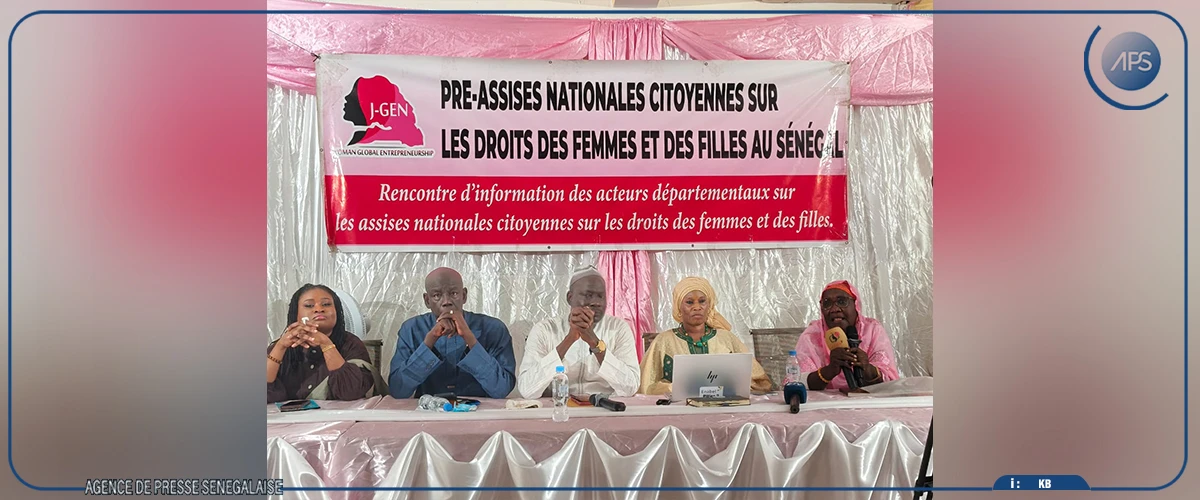
JGEN Sénégal: Advocates Urgent Réforme Code de la Famille
Summary
- Maimouna Astou Yade, Executive Director of JGEN Women Global Entrepreneurship (J-Gen Sénégal), advocated for a reform of Senegal's Family Code.
- Her call, made on Saturday, October 24, in Kaffrine, emphasized the need to revise certain provisions deemed discriminatory.
- JGEN Sénégal is an NGO focused on women's global entrepreneurship, extending its advocacy to legal reforms impacting women's rights.
A Call for Family Code Reform in Senegal
The revision of discriminatory provisions would represent a crucial step towards enhancing gender equality and ensuring that the nation's legal framework aligns more closely with principles of human rights and social justice.
Maimouna Astou Yade, who serves as the Executive Director for JGEN Women Global Entrepreneurship (J-Gen Sénégal), recently issued a strong appeal for a comprehensive overhaul of Senegal's Family Code. Speaking on Saturday, October 24, in Kaffrine, a central region of the country, Ms. Yade highlighted the urgent need to address specific elements within the existing legal framework. Her advocacy centers on the belief that certain provisions of the Code are inherently discriminatory and require immediate revision.
The call from JGEN Sénégal, an established non-governmental organization, underscores a growing sentiment among civil society groups regarding the necessity of modernizing national laws to better reflect contemporary societal values and international human rights standards. Ms. Yade's public statement marks a significant moment in the ongoing discourse surrounding legal reform in Senegal, particularly concerning the rights and status of women within the family structure. The organization's focus on global entrepreneurship for women suggests a broader commitment to empowering women, which naturally extends to advocating for equitable legal foundations.
Understanding Senegal's Family Code
The Code de la famille in Senegal, like similar legal instruments in many nations, governs a wide array of personal and familial relationships. This foundational legal text dictates critical aspects of civil life, including the conditions for marriage, the procedures for divorce, the allocation of parental rights and responsibilities, and the rules of inheritance. Its provisions profoundly shape the daily lives and legal standing of individuals, particularly women and children, within Senegalese society. Discussions surrounding the "Sénégal droit de la famille" are therefore deeply intertwined with the specifics of this Code.
Advocacy for the "révision dispositions discriminatoires Sénégal" within such a code typically targets clauses that may perpetuate gender inequality or disadvantage certain groups. Historically, family codes in various jurisdictions have contained provisions that, for instance, grant unequal rights to spouses in marriage or divorce, limit women's capacity to inherit property, or assign primary guardianship roles based solely on gender. While the specific provisions targeted by JGEN Sénégal were not detailed, the general nature of such calls for reform points to a desire for greater equity and fairness under the law.
Implications for Legal and Social Progress
The plea from Maimouna Astou Yade and JGEN Women Global Entrepreneurship for a "JGEN Sénégal réforme Code de la famille" carries substantial weight for the future of legal and social development in the country. Such high-profile calls from respected organizations can catalyze public debate and exert pressure on legislative bodies to initiate the complex process of legal amendment. Reforming a national Family Code is often a lengthy and intricate undertaking, involving extensive consultation, parliamentary debate, and careful consideration of cultural and religious sensitivities.
Should these advocacy efforts gain traction, the potential for significant legislative changes could emerge, directly impacting the legal landscape for families across Senegal. The revision of discriminatory provisions would represent a crucial step towards enhancing gender equality and ensuring that the nation's legal framework aligns more closely with principles of human rights and social justice. This ongoing dialogue, spearheaded by figures like Maimouna Astou Yade, highlights the dynamic nature of law and its continuous evolution in response to societal demands for fairness and equity.
Practical Implications
Lawyers specializing in family law or human rights in Senegal should monitor advocacy efforts by organizations like JGEN for potential future legislative changes to the Family Code, particularly regarding discriminatory provisions, as these discussions could lead to significant reforms impacting client cases.
Source
How does this affect you?
Get an AI analysis of this article grounded in your jurisdictions, practice areas, and any policy documents you've uploaded to Wansom.
Finish Reading the Full Story and the Expert Analysis.
Get the latest legal & regulatory intelligence in Senegal
Wansom is AI and can make mistakes.