
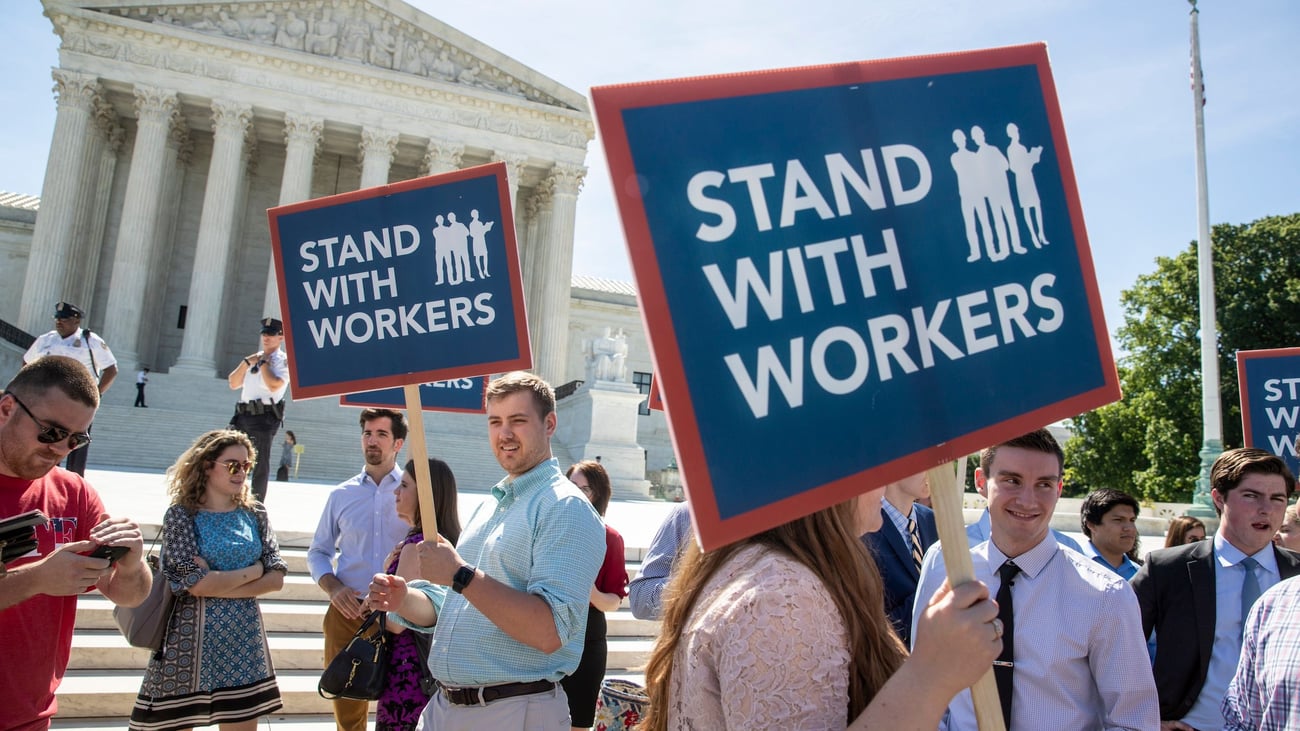
Federal Unions Challenge OPM Suitability Rule: Lawsuit Filed Over Firing Powers
Summary
- Seven federal employee unions have sued the Office of Personnel Management (OPM) in the Northern District of California.
- The lawsuit challenges OPM's new "Suitability Rule," which allows the agency to fire career federal employees and review its own termination decisions.
- Unions argue the rule weakens Civil Service Reform Act protections, replacing independent appeals to the Merit Systems Protection Board with internal OPM review.
- OPM projects half of all federal employee removals will now be reclassified under these new suitability actions, affecting approximately two million federal employees.
- Another challenged rule allows OPM to mandate standardized performance rating distributions, potentially forcing employees into categories based on peer ranking rather than objective performance.
Federal Unions Challenge OPM Suitability Rule
Under the challenged rule, OPM can now take "suitability actions" based on conduct occurring after an employee's appointment, eliminating the right to respond orally and replacing the traditional appeal route to the Merit Systems Protection Board and subsequent Federal Circuit review with an internal appeal to OPM itself.
Seven federal employee unions have initiated a significant legal challenge against the Office of Personnel Management (OPM), filing a lawsuit in the Northern District of California. The unions are seeking to invalidate new OPM regulations, primarily targeting a "Suitability Rule" that they contend grants the agency unprecedented authority to terminate career federal employees and then adjudicate its own termination decisions. This Office of Personnel Management lawsuit argues that OPM is overstepping its congressional mandate by applying a tool historically used for screening prospective federal employees to individuals already on the federal payroll.
Among the plaintiffs in this AFGE AFSCME OPM lawsuit are the American Federation of Government Employees (AFGE), the nation's largest federal union, and the American Federation of State, County and Municipal Employees (AFSCME). They are joined by two other national unions and four local AFGE chapters. These local unions represent a diverse range of federal workers, including Social Security claims processors, Environmental Protection Agency attorneys, and medical professionals such as doctors and nurses within the Veterans Affairs Palo Alto health system.
Altered Disciplinary Processes and Appeal Rights
The new Suitability Rule fundamentally alters established federal employee firing rules and disciplinary procedures. Historically, the Civil Service Reform Act of 1978 provided robust Civil Service Reform Act protections, generally requiring federal agencies to handle employee discipline through processes like Chapter 75 actions. These actions included a crucial right for the employee to respond and an appeal mechanism to the independent Merit Systems Protection Board (MSPB).
Under the challenged rule, OPM can now take "suitability actions" based on conduct occurring after an employee's appointment, eliminating the right to respond orally and replacing the traditional appeal route to the Merit Systems Protection Board and subsequent Federal Circuit review with an internal appeal to OPM itself. The unions' complaint highlights that OPM's own July 30, 2026, Suitability and Fitness Manual acknowledges that serious misconduct was previously addressed via Chapter 75 actions before this amendment, underscoring the significant Merit Systems Protection Board changes.
Broader Impact and Additional Regulatory Challenges
The unions emphasize the sweeping potential impact of these regulatory shifts, citing OPM's own projections. They assert that OPM estimates approximately half of all federal government employee removals, traditionally managed through standard disciplinary channels, will now be reclassified under these new suitability actions. This reclassification could affect a substantial portion of the roughly two million federal employees.
Beyond the Suitability Rule, the unions are also challenging another OPM regulation, issued on July 7. This separate rule permits OPM to mandate that agencies implement standardized distributions for federal worker performance ratings. The unions argue this could compel employees into specific performance categories based partly on their ranking relative to colleagues, rather than solely on objective performance criteria as required by federal law. They note that OPM had previously prohibited such forced distributions for decades.
Legal Framework and Union's Stance
The core of the legal challenge rests on the unions' assertion that OPM is exceeding its statutory authority, claiming Congress did not bestow upon the office the power to implement these new firing rules. They argue the regulations undermine the longstanding legal framework established by the Civil Service Reform Act, which was designed to protect civil servants from politically motivated decisions and ensure talented individuals are attracted to and retained in federal employment.
The unions' complaint explicitly states that the current administration seeks to weaken these protections. This lawsuit is not an isolated incident; the unions point to previous legal victories against mass firings and the cancellation of collective bargaining agreements under the current administration, as well as separate OPM rules that reclassified thousands of positions to facilitate easier employee removal. As of the report, neither OPM nor union representatives had provided immediate comments on the lawsuit.
Practical Implications
Lawyers advising federal agencies or federal employees must closely monitor this litigation, as its outcome will determine the validity and application of new federal employee disciplinary and termination procedures, potentially requiring adjustments to HR policies and employee defense strategies.
Source
How does this affect you?
Get an AI analysis of this article grounded in your jurisdictions, practice areas, and any policy documents you've uploaded to Wansom.
Wansom is AI and can make mistakes.