
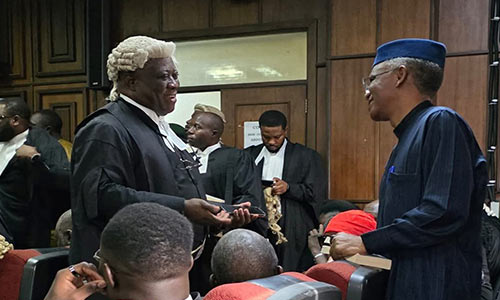
Federal High Court Abuja: El-Rufai ICPC N10bn Suit Judgment Set
Summary
- The Federal High Court in Abuja will deliver judgment on December 8 in a ₦10 billion fundamental rights suit.
- Former Kaduna State Governor Nasir el-Rufai filed the lawsuit against the Independent Corrupt Practices and Other Related Offences Commission (ICPC).
- Justice Chigozie Onah fixed the date after parties adopted processes and presented arguments.
- The court reviewed CCTV footage concerning claims that El-Rufai's family was unlawfully denied access.
- The lawsuit alleges violations of El-Rufai's fundamental rights by the anti-graft agency.
What Happened
The impending judgment in the El-Rufai ICPC N10bn suit judgment carries significant implications for both individuals and anti-corruption agencies across Nigeria.
The Federal High Court in Abuja has scheduled December 8 for the delivery of its judgment in a significant fundamental rights case. This legal action was initiated by Nasir el-Rufai, the former Governor of Kaduna State, against the Independent Corrupt Practices and Other Related Offences Commission (ICPC). The lawsuit seeks a substantial ₦10 billion in damages, alleging violations of his fundamental rights.
Justice Chigozie Onah, presiding over the Federal High Court Abuja El-Rufai case, confirmed the judgment date on a recent Wednesday. This decision followed the formal adoption of legal processes by all involved parties, who also presented their arguments before the court. A key aspect of the proceedings involved the court's review of CCTV footage, specifically addressing claims related to whether El-Rufai's family was lawfully denied access during an interaction with the anti-graft agency.
Legal Context
A fundamental rights suit, such as the one brought by Nasir el-Rufai, is a legal mechanism available to individuals in Nigeria to seek redress when they believe their constitutionally guaranteed rights have been infringed upon. These rights encompass various protections, including personal liberty, dignity of the person, and fair hearing, among others. The ICPC, as a primary anti-corruption agency, is empowered to investigate and prosecute individuals suspected of corrupt practices. However, its operations are expected to adhere strictly to the rule of law and respect the fundamental rights of all citizens, including those under investigation.
The core of the ICPC N10 billion lawsuit revolves around allegations that the commission's actions, particularly concerning access for El-Rufai's family, constituted an overreach of its powers and a breach of established legal protocols. The court's examination of the CCTV footage underscores the importance of procedural fairness and the scrutiny applied to the conduct of law enforcement and anti-corruption bodies during their investigative processes. This case highlights the delicate balance between the state's power to combat corruption and the imperative to safeguard individual liberties.
Why It Matters
The impending judgment in the El-Rufai ICPC N10bn suit judgment carries significant implications for both individuals and anti-corruption agencies across Nigeria. The outcome will provide crucial clarity on the scope of fundamental rights during investigations, particularly concerning the right to family access or legal representation in such contexts. A ruling in favor of the former governor could establish a precedent for substantial damages against government agencies found to have violated citizens' rights, potentially influencing future defense strategies in similar cases.
Conversely, a judgment upholding the ICPC's actions could reinforce the powers of anti-graft bodies, albeit within the bounds of legal propriety. The decision by Justice Chigozie Onah on December 8 will be closely watched by legal practitioners and human rights advocates alike, as it will shape the understanding of accountability for state actors and the protections afforded to citizens. The question of El-Rufai family access ICPC during its engagement remains a central point of contention, and the court's final determination will offer important guidance on permissible conduct during anti-corruption probes.
Practical Implications
Lawyers should monitor the December 8 judgment in this N10bn fundamental rights suit against the ICPC. The outcome will clarify the scope of individual rights, particularly regarding access during investigations, and could establish a precedent for damages against anti-corruption agencies for alleged rights violations, impacting future defense strategies and agency conduct.
Source
How does this affect you?
Get an AI analysis of this article grounded in your jurisdictions, practice areas, and any policy documents you've uploaded to Wansom.
Wansom is AI and can make mistakes.