
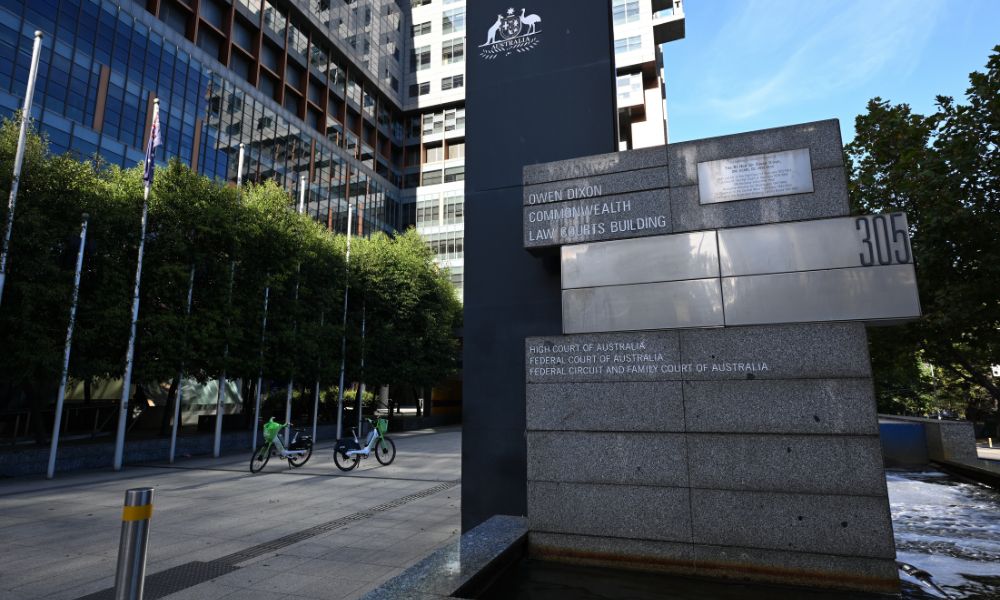
Federal Court: Unsuccessful Recusal Bid Costs Applicant Under Fair Work Act s. 570
Summary
- The Federal Court ordered an applicant to pay two respondents' costs after an unsuccessful judicial recusal application.
- The court found the recusal bid was an "unreasonable act" that caused the respondents to incur legal expenses.
- The costs order was made under Section 570(2)(b) of the Fair Work Act, which permits costs for unreasonable acts or omissions.
- The recusal application lacked evidentiary foundation and logical basis, despite the applicant's asserted genuine concerns.
- This ruling highlights the objective standard for assessing reasonableness in such applications, impacting Federal Court litigation costs.
Federal Court Orders Costs for Unsuccessful Recusal Bid
Even genuinely held client concerns do not negate the objective standard of reasonableness, making careful consideration of judicial recusal application costs paramount in Australia.
The Federal Court has mandated that an applicant cover the legal expenses of two respondents following an unsuccessful attempt to have a judge recused from a case. The court determined that the applicant's bid for recusal constituted an "unreasonable act" under the relevant legislation, directly causing the respondents to incur significant costs. Consequently, the applicant is now liable for these costs, which are to be either mutually agreed upon or formally taxed.
This costs order stems from a broader proceeding where the applicant is seeking an extension of time to lodge an originating application for judicial review. The underlying matter involves decisions made by the Fair Work Commission. While the proposed judicial review falls under the Administrative Decisions (Judicial Review) Act 1977 (Cth), the court recognized that the substantive rights the applicant aims to enforce originate from the Fair Work Act 2009 (Cth).
Fair Work Act's Strict Costs Regime Applied
Given the connection to the Fair Work Act, the Federal Court's discretion to award costs was guided by Section 570 of that Act, which places specific limitations on such orders. Unlike general litigation where courts often have broad discretion, Section 570(2)(b) permits a costs order only when a party's unreasonable act or omission has directly caused another party to incur expenses.
The court meticulously assessed the circumstances and concluded that the threshold stipulated by Section 570(2)(b) had been met in this instance. This finding underscores the particular scrutiny applied to costs applications within the Fair Work jurisdiction, emphasizing the need for parties to act reasonably throughout proceedings to avoid adverse costs orders.
Objective Standard for Unreasonableness Confirmed
The respondents successfully argued that the recusal application lacked both an evidentiary foundation and a logical basis, proving to be entirely unsuccessful. The applicant's stated concerns, including perceived procedural complexity and issues with the filing and consideration of evidence, were deemed insufficient to establish reasonable grounds for seeking recusal.
An earlier judgment concerning the recusal application had already highlighted that the applicant made grave accusations of conflicts of interest, corruption, and collusion involving the judge's chambers and the respondents, all without supporting evidence. Furthermore, that judgment noted the applicant's fundamental misinterpretation of the court's established practices, procedures, and its efforts to assist with material submission. The court explicitly stated that the assessment of reasonableness is an objective one; therefore, the applicant's asserted genuine concerns about receiving a fair hearing did not prevent the application from being characterized as unreasonable.
Implications for Federal Court Litigation Costs
The Federal Court characterized this as a "clear case" of unreasonableness, justifying the exercise of its discretion to award costs. The respondents demonstrably incurred expenses in both responding to and appearing at the hearing for the recusal application. This ruling serves as a significant warning regarding Federal Court costs for unsuccessful recusal bids, particularly within the Fair Work jurisdiction.
Practitioners must advise clients on the high bar for such applications, emphasizing the necessity of objective evidentiary and logical grounds to avoid adverse costs orders under the Fair Work Act's specific provisions. Even genuinely held client concerns do not negate the objective standard of reasonableness, making careful consideration of judicial recusal application costs paramount in Australia.
Practical Implications
This ruling serves as a warning for lawyers considering recusal applications, emphasizing the need for objective evidentiary and logical grounds to avoid adverse costs orders under the Fair Work Act's specific provisions, even if the client's concerns are genuinely held. Practitioners must advise clients on the high bar for such applications to prevent unnecessary litigation costs.
Source
How does this affect you?
Get an AI analysis of this article grounded in your jurisdictions, practice areas, and any policy documents you've uploaded to Wansom.
Finish Reading the Full Story and the Expert Analysis.
Wansom is AI and can make mistakes.