
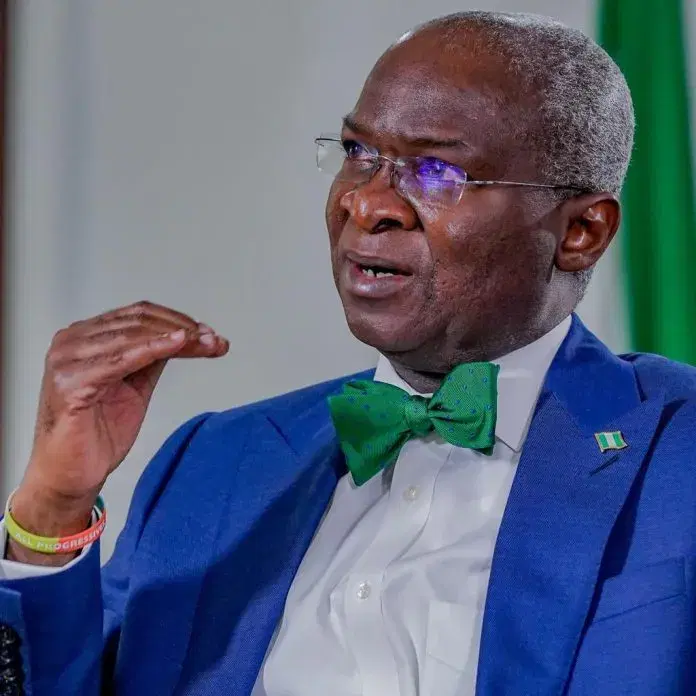
Fashola: Election Riggers Must Face Jail in Nigeria
Summary
- A former Minister of Works and Housing emphasized the legal punishment of electoral offenses.
- He stated that all electoral crimes must be addressed under the law.
- Even for offenses attracting capital punishment, the accused must be charged, tried, and allowed to defend themselves.
- This stance highlights the importance of due process in prosecuting electoral misconduct.
Recent Statement on Electoral Justice
He explicitly stated that any accused individual, regardless of the gravity of their alleged crime, must first be formally charged.
The former Minister of Works and Housing recently articulated a firm stance on the necessity of penalizing electoral offenses within Nigeria. His comments underscore a critical aspect of maintaining democratic integrity: that those who commit infractions during elections must face the full force of the law. This perspective highlights the ongoing national conversation about accountability for electoral misconduct, a topic of significant public and legal interest in the country. The minister’s remarks contribute to the discourse surrounding appropriate Fashola electoral offences punishment and the broader framework of Nigeria election rigging penalties.
His intervention comes at a time when the nation continues to grapple with challenges related to electoral integrity. By stressing the importance of legal consequences for such actions, the former minister reinforces the principle that no electoral crime should go unaddressed. This position is crucial for fostering public trust in the electoral system and deterring future attempts to subvert the democratic process through illicit means.
The Mandate for Legal Punishment
According to the former Minister, the legal framework must be rigorously applied to all electoral offenses, ensuring that every violation is met with appropriate sanctions. This insistence on lawful punishment is a cornerstone of a functional democracy, aiming to prevent impunity and uphold the sanctity of the ballot. His statement implicitly supports the idea that individuals involved in election rigging should face imprisonment, aligning with the sentiment that Fashola election riggers jail Nigeria is a fitting outcome for such crimes.
The emphasis here is not merely on punishment, but on punishment under the law. This distinction is vital, as it calls for adherence to established legal procedures and statutes rather than arbitrary measures. It reflects a commitment to a system where justice is administered through formal channels, providing a clear deterrent against electoral malpractices and reinforcing the rule of law.
Upholding Due Process in Severe Cases
A key element of the former Minister's argument centers on the unwavering requirement for due process, even when an electoral offense might carry the most severe penalty, such as capital punishment. He explicitly stated that any accused individual, regardless of the gravity of their alleged crime, must first be formally charged. Following this, a fair trial must be conducted, providing the accused with a full and unfettered opportunity to present their defense. This insistence on procedural fairness is paramount, ensuring that constitutional rights are protected even in the face of serious allegations like Fashola capital punishment electoral crimes.
This position underscores the fundamental principles of Nigerian electoral law due process, asserting that the legal system must guarantee every individual the right to a fair hearing. It serves as a reminder that the pursuit of justice for electoral offenses must never compromise the bedrock principles of legal equity and the right to a defense, irrespective of the political or public pressure surrounding the case.
Broader Implications for Nigerian Elections
The former Minister's comments carry significant weight for the future of elections in Nigeria. By advocating for strict adherence to legal punishment and due process for electoral offenses, he contributes to a national dialogue aimed at strengthening democratic institutions. His stance suggests a clear pathway for addressing electoral malpractices: through the established legal system, ensuring that justice is not only served but also seen to be served fairly. This approach is essential for building a robust electoral system where the outcomes genuinely reflect the will of the people.
Ultimately, the former Minister's remarks reinforce the idea that the integrity of the electoral process hinges on effective enforcement of laws and unwavering commitment to due process. This perspective is vital for legal practitioners and policymakers alike, as it highlights the continuous need to balance the imperative of punishing electoral crimes with the constitutional rights of the accused, thereby solidifying the foundations of democracy in Nigeria.
Practical Implications
This statement by a former minister reinforces the ongoing legal debate and public discourse surrounding the appropriate penalties for electoral offenses in Nigeria. Lawyers should note the emphasis on due process and fair trial, even for severe offenses, ensuring that constitutional rights are upheld for clients accused of electoral crimes, irrespective of political rhetoric.
Source
How does this affect you?
Get an AI analysis of this article grounded in your jurisdictions, practice areas, and any policy documents you've uploaded to Wansom.
Finish Reading the Full Story and the Expert Analysis.
Get the latest legal & regulatory intelligence in Nigeria
Wansom is AI and can make mistakes.