
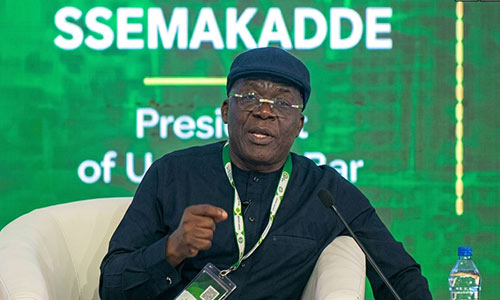
Femi Falana SAN: Nigeria State Electoral Guidelines Illegal
Summary
- State Governments and the Federal Capital Territory have issued their own campaign rules for elections.
- Legal expert Femi Falana SAN has declared these state-issued electoral guidelines to be illegal.
- The Independent National Electoral Commission (INEC) holds the exclusive constitutional power to set guidelines for all general elections in Nigeria.
- The shrinking of civic space by federal and state governments, alongside these unauthorized guidelines, contributes to political violence.
- Lawyers should advise clients to follow INEC's rules and challenge conflicting state directives due to INEC's exclusive mandate.
The Issue at Hand
Lawyers advising political parties, candidates, or civil society organizations must be aware that state-issued electoral guidelines are likely ultra vires and unconstitutional, given INEC's exclusive mandate.
The landscape of electoral governance in Nigeria is currently facing significant challenges, particularly concerning the proliferation of guidelines issued by various governmental bodies. A notable concern has emerged regarding the directives put forth by State Governments and the Federal Capital Territory, which have established their own sets of rules for election campaigns. These local regulations are increasingly being identified as problematic within the broader framework of Nigeria's electoral system.
Prominent legal expert Femi Falana SAN has highlighted that these specific campaign rules, originating from state and FCT authorities, are fundamentally illegal. This assertion underscores a critical divergence from established electoral law, raising questions about the legitimacy and enforceability of such localized directives. The existence of these parallel guidelines creates a complex environment for political actors navigating the electoral process.
Falana SAN further observes that the actions of both the Federal and State Governments in constricting the space for civic engagement have directly contributed to an escalation in political violence across the nation. This shrinking of civic freedoms, coupled with the issuance of unauthorized electoral guidelines, paints a concerning picture for the integrity and peaceful conduct of future elections in Nigeria. The interplay between restrictive policies and the emergence of conflicting electoral rules appears to exacerbate tensions within the political arena.
Legal Framework and Exclusive Mandate
At the heart of this controversy lies the constitutional mandate of the Independent National Electoral Commission (INEC). Under Nigerian law, INEC possesses the sole and exclusive authority to formulate and disseminate guidelines for the comprehensive conduct and management of all general elections. This "INEC exclusive power elections" is a cornerstone of the nation's electoral jurisprudence, designed to ensure uniformity, fairness, and independence in the electoral process.
Consequently, any attempt by State Governments or the Federal Capital Territory to issue their own electoral directives, especially those pertaining to campaign rules, directly encroaches upon INEC's constitutionally defined powers. Such state-issued guidelines are considered ultra vires, meaning they exceed the legal authority of the issuing bodies and are therefore void. The principle here is clear: only INEC has the legal standing to dictate the operational parameters for national elections, including campaign regulations.
The implication of this exclusive mandate is profound. It means that any "Nigeria illegal state electoral guidelines" are not merely procedural irregularities but represent a fundamental challenge to the established legal order governing elections. Adherence to a fragmented set of rules, where state directives conflict with INEC's comprehensive framework, undermines the very foundation of a free and fair electoral system.
Implications for Nigerian Democracy
The emergence of these unauthorized electoral guidelines carries significant implications for the democratic process in Nigeria. When state entities impose their own campaign rules, it can be perceived as a form of "Nigerian state government electoral interference," potentially skewing the playing field and creating an uneven environment for political competition. This interference can lead to confusion among political parties, candidates, and the electorate, complicating compliance and enforcement.
The legality of "Nigeria election campaign rules legality" becomes paramount in this context. If state-issued rules are indeed illegal, as posited by Femi Falana SAN, then political actors must prioritize adherence to INEC's directives, which are the only legally binding ones. Lawyers advising political parties, candidates, or civil society organizations must be aware that state-issued electoral guidelines are likely ultra vires and unconstitutional, given INEC's exclusive mandate. They should counsel clients to adhere strictly to INEC's regulations and be prepared to challenge any conflicting directives from state governments.
Ultimately, the proliferation of conflicting electoral guidelines, coupled with the observed shrinking of civic space, poses a tangible threat to the stability and credibility of Nigeria's elections. The consistent application of a single, legally sound set of rules, as provided by INEC, is essential to foster public trust, reduce political friction, and mitigate the risk of increased political violence that has been linked to these governmental actions.
Practical Implications
Lawyers advising political parties, candidates, or civil society organizations in Nigeria must be aware that state-issued electoral guidelines are likely ultra vires and unconstitutional, given INEC's exclusive mandate. They should counsel clients to adhere strictly to INEC's regulations and be prepared to challenge any conflicting directives from state governments.
Source
How does this affect you?
Get an AI analysis of this article grounded in your jurisdictions, practice areas, and any policy documents you've uploaded to Wansom.
Finish Reading the Full Story and the Expert Analysis.
Get the latest legal & regulatory intelligence in Nigeria
Wansom is AI and can make mistakes.