
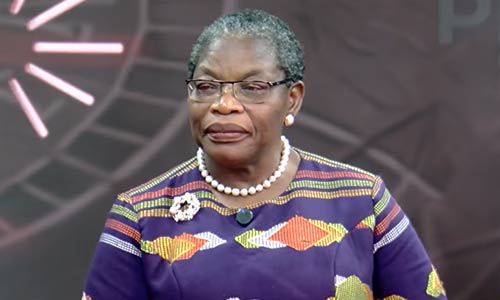
Ezekwesili Rejects INEC Voter Register Cleanup, Calls for Independent Audit
Dr. Oby Ezekwesili, a former Minister of Education and World Bank Vice President for Africa, has publicly rejected the Independent National Electoral Commission's (INEC) leadership in cleaning up Nigeria's voter register, instead calling for an independent audit and comprehensive cleanup ahead of the 2027 general elections, citing concerns that INEC cannot be trusted to address irregularities it allegedly perpetrated.
This development highlights profound concerns about the integrity and credibility of Nigeria's electoral process, particularly regarding the voter register, which is a foundational element of free and fair elections. Ezekwesili's call for an independent audit underscores a lack of public trust in INEC's ability to self-regulate and address allegations of compromise. For practitioners, this signifies potential legal challenges to electoral outcomes based on voter register irregularities, and the ongoing debate about institutional independence and accountability in electoral management. The principle of "nemo judex in causa sua" (no one should be a judge in their own cause) is central to her argument, emphasizing the need for impartiality.
The legal framework governing elections in Nigeria is primarily the Constitution of the Federal Republic of Nigeria, 1999 (as amended), and the Electoral Act, 2022. These laws empower INEC with the responsibility for voter registration, maintenance of the register, and the conduct of elections. While INEC is an independent body, its actions are subject to judicial review. The Electoral Act 2022 contains provisions for the continuous update and cleaning of the voter register, but the method and oversight of such processes are critical. Allegations of a "compromised" register could lead to pre-election litigation challenging INEC's processes or post-election petitions challenging results based on the validity of the register. The courts, particularly the Election Tribunals and appellate courts, play a crucial role in interpreting these laws and adjudicating electoral disputes.
The primary parties involved are Dr. Oby Ezekwesili, who is advocating for the independent audit; the Independent National Electoral Commission (INEC), which is the body responsible for the voter register and the subject of the call for an independent cleanup; and implicitly, the Nigerian electorate and political parties who are stakeholders in the integrity of the electoral process.
Attorneys specializing in electoral law and public interest litigation should closely monitor developments regarding the voter register cleanup. This issue is likely to be a significant point of contention leading up to the 2027 general elections. Practitioners should advise political parties and candidates on the legal avenues available to challenge perceived irregularities in the voter register, including pre-election litigation. Furthermore, understanding the legal requirements for voter registration, objections, and appeals, as well as the powers and limitations of INEC, will be crucial. The call for an independent audit also suggests a potential for legislative advocacy or judicial intervention to compel greater transparency and accountability in INEC's processes.
How does this affect you?
Get an AI analysis of this article grounded in your jurisdictions, practice areas, and any policy documents you've uploaded to Wansom.
Finish Reading the Full Story and the Expert Analysis.
Get the latest legal & regulatory intelligence in Nigeria
Wansom is AI and can make mistakes.