
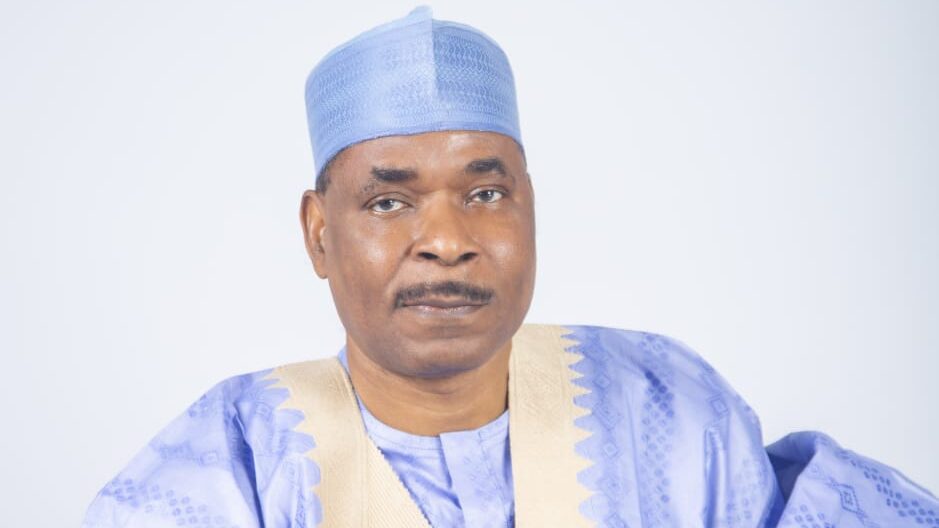
Mohammed Adamu: Nasarawa SDP Candidate Affirms Status Post-Supreme Court
Summary
- Former Inspector-General of Police, Mohammed Adamu, asserts his continued status as the Social Democratic Party (SDP) governorship candidate for Nasarawa State.
- This declaration follows a Supreme Court ruling, indicating an ongoing dispute despite the highest court's involvement.
- Adamu's statement highlights the complex interplay between judicial decisions and political assertions in Nigeria's electoral landscape.
What Happened
This situation brings into focus the intricate dynamics of party politics and candidate selection processes in Nigeria, especially when subjected to legal scrutiny.
Former Inspector-General of Police, Mohammed Adamu, has publicly affirmed his position as the Social Democratic Party (SDP) governorship candidate for Nasarawa State. This declaration comes in the wake of a Supreme Court ruling, suggesting an ongoing legal or political contestation surrounding the candidacy. Adamu's insistence highlights a complex scenario where judicial pronouncements at the highest level may not immediately resolve all aspects of an electoral dispute, particularly concerning the Mohammed Adamu Nasarawa SDP candidate status.
The assertion by Mohammed Adamu, a prominent figure given his past role as the nation's top police officer, underscores a persistent challenge within the political landscape of Nasarawa State. His statement directly addresses his continued claim to the SDP ticket for the governorship, indicating a resolve to maintain his candidacy despite recent judicial developments. This situation brings into focus the intricate dynamics of party politics and candidate selection processes in Nigeria, especially when subjected to legal scrutiny.
Legal and Electoral Context
Nigeria's electoral system is frequently characterized by extensive litigation, with candidate disputes often reaching the Supreme Court. As the apex judicial body, the Supreme Court's decisions are typically considered final and binding, intended to bring definitive closure to legal battles. However, the current stance taken by Mohammed Adamu, following a Supreme Court ruling concerning his candidacy, suggests that even the highest judicial pronouncements can be met with continued assertions from involved parties. This scenario highlights the often-protracted nature of election litigation in Nigeria, particularly in states like Nasarawa.
The legal framework governing elections in Nigeria provides multiple avenues for challenging candidate eligibility and party primaries, often culminating in appeals to the Supreme Court. When a matter reaches this level, the expectation is that the court's judgment will settle the dispute conclusively. The declaration by the former Inspector-General of Police, Mohammed Adamu, regarding his status as the Nasarawa SDP candidate, therefore, introduces an element of continued uncertainty, prompting questions about the practical implementation and acceptance of judicial outcomes in politically charged environments. This ongoing dispute, even after a Mohammed Adamu Supreme Court ruling, exemplifies the challenges in achieving absolute finality in electoral matters.
Implications for Party and State
The persistence of the Nasarawa governorship candidate dispute, as evidenced by Mohammed Adamu's declaration, carries significant implications for the Social Democratic Party (SDP) and the political stability of Nasarawa State. Such continued assertions post-judgment can create internal divisions within the party, potentially affecting its cohesion and public image. For the electorate, it can lead to confusion and erode confidence in the electoral process, especially when a definitive legal outcome appears to be challenged or reinterpreted by a key political actor.
An ongoing legal challenge or political assertion, even after a Supreme Court decision, can prolong uncertainty surrounding the legitimate candidate for a crucial election. This situation demands careful monitoring by electoral bodies and political observers, as it speaks to the broader issue of adherence to judicial pronouncements in a democratic system. The SDP candidate legal challenge, as framed by Adamu's statement, underscores the intricate balance between legal finality and political maneuvering that often characterizes Nigeria's electoral landscape.
Practical Implications
This article highlights that even a Supreme Court ruling may not immediately settle candidate disputes, indicating potential for continued legal or political challenges. Lawyers advising political parties or candidates should monitor post-judgment declarations for ongoing contention.
Source
How does this affect you?
Get an AI analysis of this article grounded in your jurisdictions, practice areas, and any policy documents you've uploaded to Wansom.
Finish Reading the Full Story and the Expert Analysis.
Get the latest legal & regulatory intelligence in Nigeria
Wansom is AI and can make mistakes.