
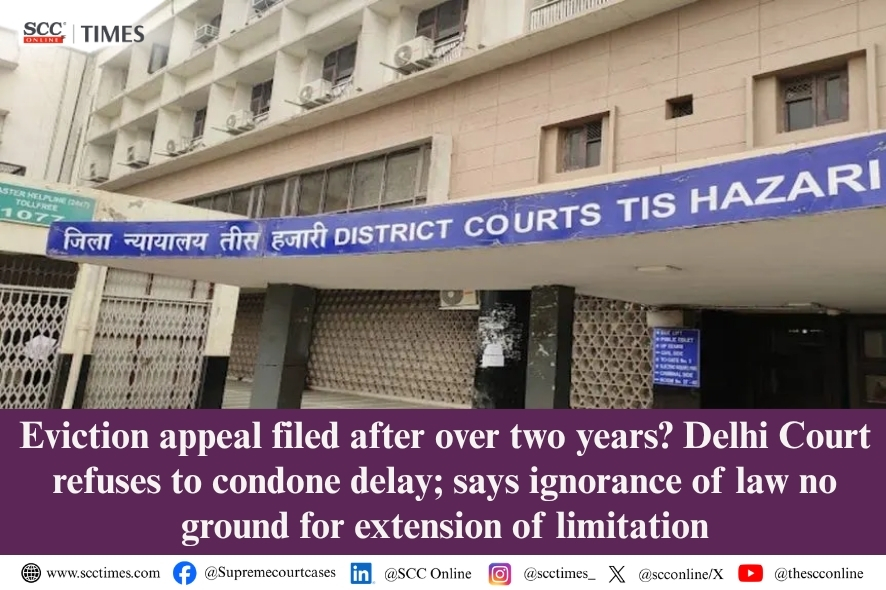
Eviction appeal filed after over two years? Delhi Court refuses to condone delay; says ignorance of law no ground for extension of limitation
Summary
- A Delhi Court recently refused to condone a delay in an eviction appeal.
- The appeal was filed over two years after the prescribed limitation period.
- The court ruled that ignorance of law is not a valid ground for condoning delay.
- A bona fide mistake was also deemed insufficient, especially given the inordinate delay.
- This decision emphasizes strict adherence to statutory limitation periods for appeals.
What Happened
The Delhi Court explicitly stated that 'ignorance of law' cannot be considered a valid ground for granting condonation of delay.
A recent ruling from a Delhi Court has underscored the critical importance of adhering to statutory deadlines for legal proceedings. The court specifically declined to condone a significant delay in the filing of an eviction appeal, which had been submitted more than two years beyond its prescribed limitation period. This decision highlights the judiciary's firm stance against laxity in legal filings, particularly when substantial time has elapsed.
The appellant in the eviction matter sought an extension for their filing, but the Delhi Court found the grounds presented insufficient. The refusal to grant condonation of delay means the appeal was dismissed solely on procedural grounds, without a review of its substantive merits. This outcome serves as a stark reminder of the procedural hurdles that can prevent a case from being heard if deadlines are not meticulously observed.
Legal Context: Condonation of Delay
The concept of condonation of delay is primarily governed by Section 5 of the Limitation Act, 1963, which grants courts discretionary power to accept an appeal or application filed after the expiry of the prescribed limitation period, provided the applicant can demonstrate "sufficient cause" for the delay. This provision is designed to prevent injustice where a party has been genuinely prevented from filing within time due to circumstances beyond their control. However, the discretion under Section 5 is not unfettered and must be exercised judiciously.
Courts across India, including those in Delhi, generally require a convincing explanation for any delay, emphasizing that every day of delay must be accounted for. The underlying principle is to balance the need for justice with the need for finality in litigation and to prevent stale claims from being revived indefinitely. The present Delhi Court ruling reinforces a strict interpretation of "sufficient cause," particularly in the context of eviction appeals, where timely resolution is often crucial for both parties.
Rationale Behind the Ruling
In its decision, the Delhi Court explicitly stated that "ignorance of law" cannot be considered a valid ground for granting condonation of delay. This principle is deeply rooted in legal jurisprudence, which posits that individuals are presumed to know the law. To accept ignorance of legal provisions, such as limitation periods for filing appeals, as a justifiable excuse would undermine the very purpose of statutory deadlines and could open floodgates for belated filings.
Furthermore, the court also rejected "bona fide mistake" as a sufficient reason for the delay, especially given the "inordinate delay" involved in this particular eviction appeal. The fact that the appeal was filed after more than two years likely played a significant role in the court's assessment, indicating that the delay was not a minor oversight but a substantial lapse. Such a prolonged delay, whether attributed to ignorance or a purported mistake, was deemed unacceptable by the Delhi Court, reinforcing the stringent application of limitation periods.
Why It Matters
This ruling by the Delhi Court carries significant implications for litigants and legal practitioners operating within its jurisdiction and beyond. It serves as a clear precedent that courts will not readily excuse substantial delays in filing appeals, even when arguments of "ignorance of law" or "bona fide mistake" are presented. The specific mention of an eviction appeal, a category of cases often requiring swift resolution, underscores the court's commitment to procedural discipline in matters affecting property rights.
The decision reinforces the need for meticulous attention to statutory limitation periods, particularly under the Limitation Act, 1963. Lawyers advising clients on potential appeals must ensure that all filings are made well within the stipulated timelines, as the window for seeking condonation of delay based on common excuses appears to be narrowing, especially when the delay is as protracted as over two years. This ruling solidifies the principle that procedural diligence is paramount and that the burden of proving "sufficient cause" for delay is a high one, particularly in Delhi.
Practical Implications
This ruling reinforces the strict application of limitation periods under the Limitation Act, particularly in Delhi. Lawyers must advise clients that ignorance of the law or a bona fide mistake will not be accepted as grounds for condoning significant delays in filing appeals, necessitating meticulous adherence to statutory deadlines to avoid dismissal.
Source
How does this affect your business?
Get an AI analysis of this article grounded in your jurisdictions, practice areas, and any policy documents you've uploaded to Wansom.
Wansom is AI and can make mistakes.