
EU tightens rules on ‘forever chemicals’ in food packaging
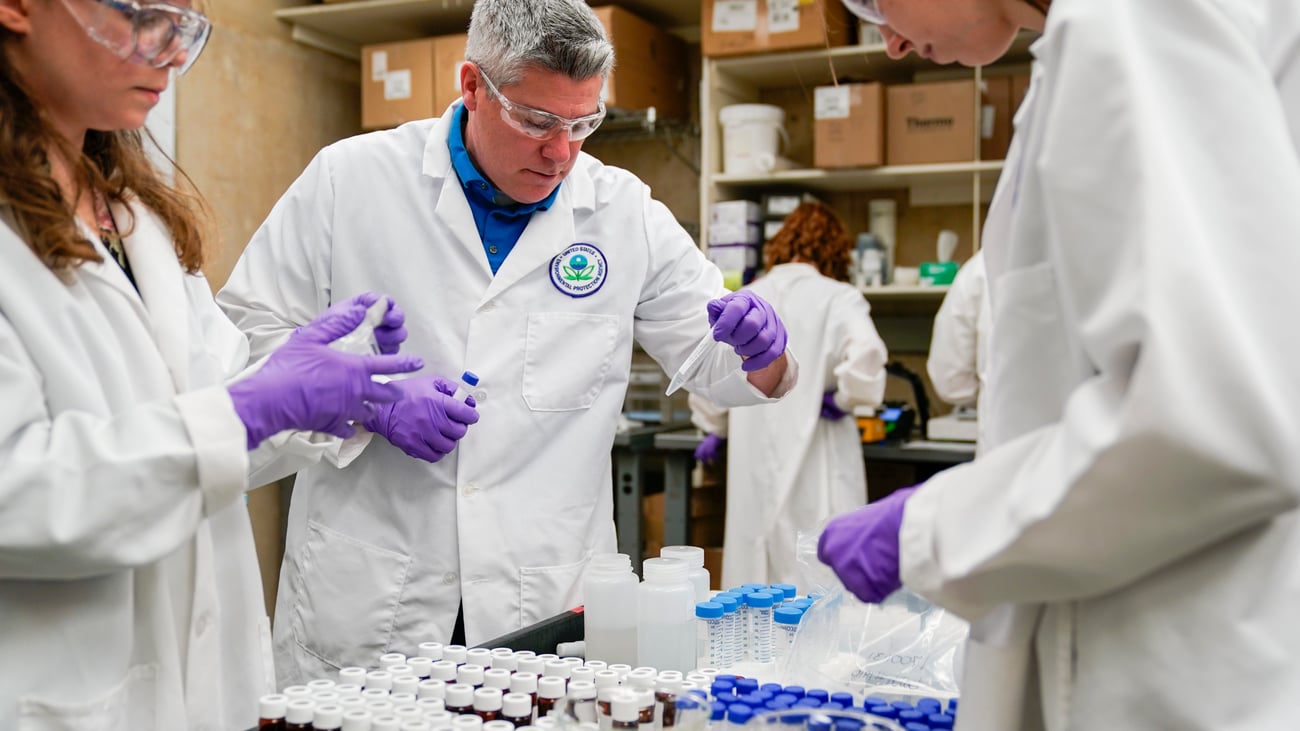
Single-use packaging will also be banned in 2030 where it is considered unnecessary or where more sustainable alternatives are available. Eric Kleiner, center, sorts samples for experimentation as part of drinking water and PFAS research at the U.S. Environmental Protection Agency Center For Environmental Solutions and Emergency Response in Cincinnati on Feb. 16, 2023. (AP Photo/Joshua A. Bickel) (AFP) — New EU restrictions on toxic substances known as “forever chemicals” in food packaging took effect Wednesday, along with broader rules aimed at cutting packaging waste in the bloc. A class of synthetic chemicals that take an extremely long time to break down, per- and polyfluoroalkyl substances (PFAS) face rising restrictions worldwide because of their adverse health effects. “From now on, food-contact packaging containing PFAS above strict limits can no longer be placed on the EU market,” the European Commission said in a statement. The European Union wants to cut packaging waste, which has soared alongside the rise in online shopping and on-the-go consumption in the 27-country bloc. Under the rules, which will take effect in several stages, the EU requires all packaging to be recyclable by 2030. Single-use packaging, such as small sauce packets and mini shampoo bottles in hotels, will also be banned in 2030 where it is considered unnecessary or where more sustainable alternatives are available. There are also targets to reduce packaging waste in the bloc by 5% by 2030 and 15% by 2040, compared with 2018 levels. The rules include better labeling to make it easier for Europeans to sort their waste for recycling, with information about what it is made of, where to throw it away and how to return it for reuse. The EU is under pressure to enact a broader ban on “forever chemicals,” with experts warning they pose a growing risk to health and the environment. Chronic exposure to even low levels of PFAS has been linked to liver damage, high cholesterol, reduced immune responses, low birth weights and several types of cancer. But PFAS are popular in food packaging, such as pizza boxes, paper bakery bags and wrapping paper, because of their water- and grease-resistant properties. Although a legislative proposal on PFAS has been promised, it is not expected before the end of 2026, European officials said earlier this year. Our weekly newsletter Closing Arguments offers the latest about ongoing trials, major litigation and rulings in courthouses around the U.S. and the world, while the monthly Under the Lights dishes the legal dirt from Hollywood, sports, Big Tech and the arts.
How does this affect you?
Get an AI analysis of this article grounded in your jurisdictions, practice areas, and any policy documents you've uploaded to Wansom.
Wansom is AI and can make mistakes.