
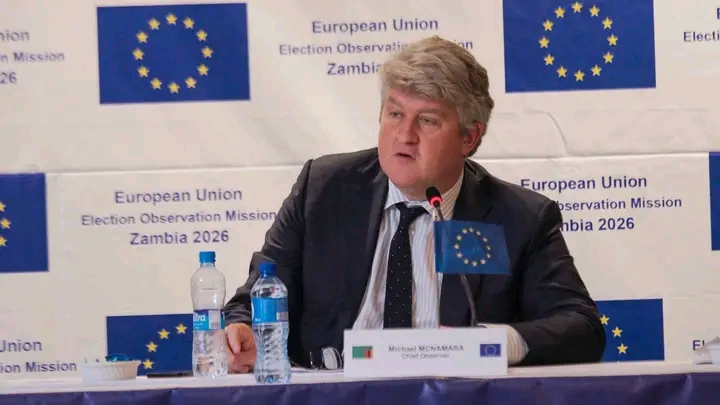
EU EOM Zambia: Lethal Force Concerns Raised After Mundubile Raid
Summary
- The European Union Election Observer Mission (EU EOM) has raised concerns about a raid linked to former opposition leader Brian Mundubile.
- The EU EOM specifically highlighted the alleged use of lethal force during the raid and a lack of information surrounding it.
- Concerns were also expressed regarding the arrest of Makebi Zulu, contributing to what the mission described as mounting public anxiety.
- The EU EOM's statement signals heightened international scrutiny on human rights and due process in Zambia.
- These events raise questions about law enforcement accountability and potential violations of fundamental rights.
International Body Raises Alarm Over Law Enforcement Actions
The intervention by the EU EOM serves as a clear indicator of heightened international scrutiny on human rights and due process in Zambia, with a particular focus on the actions undertaken by law enforcement agencies.
The European Union Election Observer Mission (EU EOM) has formally voiced significant apprehension regarding recent occurrences in Zambia, specifically drawing attention to a raid conducted at a private residence linked to the former main opposition leader, Brian Mundubile. The mission expressed particular concern over the alleged application of lethal force during this operation, simultaneously highlighting a perceived lack of transparency and information surrounding the incident. This direct statement from the EU EOM Zambia lethal force concerns brings critical international scrutiny to the operational methods of law enforcement within the nation, signaling a potential deviation from established human rights standards.
Further compounding these worries, the EU EOM's statement also encompassed concerns about the arrest of Makebi Zulu, an incident contributing to what the mission characterized as mounting public anxiety across Zambia. These developments, as observed by the election observer mission Zambia, collectively suggest a pattern of events that could erode public trust in both due process and state institutions. While the primary mandate of an election observer mission typically involves monitoring electoral processes, its scope often extends to evaluating the broader political and human rights environment that forms the bedrock of free, fair, and credible elections, making these observations particularly salient.
Heightened Scrutiny on Due Process and Human Rights
The intervention by the EU EOM serves as a clear indicator of heightened international scrutiny on human rights and due process in Zambia, with a particular focus on the actions undertaken by law enforcement agencies. The mission's explicit mention of the alleged use of lethal force during the Brian Mundubile raid lethal force incident, coupled with the reported absence of comprehensive information, raises fundamental questions about adherence to legal standards, accountability mechanisms, and the protection of civil liberties. Such pronounced concerns emanating from an influential international body like the EU EOM can significantly influence a nation's global standing and its perceived commitment to democratic governance and the rule of law.
For legal professionals operating within or observing Zambia, these observations by the EU EOM underscore potential violations of fundamental rights during arrests and raids. The alleged Zambia police excessive force, if substantiated through further investigation, could indeed form a robust basis for legal challenges, thereby significantly impacting client representation in cases involving state actors. The EU EOM's focused attention on these specific incidents, including the Makebi Zulu arrest, functions as a crucial reminder that international observers are diligently monitoring not only the mechanics of election day but also the overarching environment of civil liberties, judicial fairness, and the consistent application of the rule of law.
Broader Implications for Governance and Reputation
The EU EOM's public declaration concerning these incidents reflects a more expansive concern about the operational environment in which political activities and legal processes are conducted within Zambia. When an election observer mission explicitly highlights issues such as alleged lethal force and a critical lack of transparency, it inherently suggests potential systemic weaknesses within a nation's accountability frameworks and its capacity to uphold justice. The mounting public anxiety, as cited by the mission, indicates a tangible and widespread impact on the populace, which can have profound and enduring consequences for social cohesion, public confidence, and the overall legitimacy of governance.
Beyond the immediate legal ramifications for individuals involved, these concerns carry substantial reputational risks for both the Zambian government and for international entities operating within the country. International bodies, foreign governments, and potential investors frequently factor a nation's human rights record and its consistent adherence to the rule of law into their decision-making processes. The EU EOM's observations, therefore, extend beyond mere electoral integrity to encompass the entirety of the governance framework, serving as an urgent call for greater transparency and robust accountability from state institutions to effectively address the alleged use of lethal force and to unequivocally ensure due process for all citizens.
Practical Implications
This report from the EU EOM signals heightened international scrutiny on human rights and due process in Zambia, particularly concerning law enforcement actions. Lawyers should be aware of potential violations of fundamental rights during arrests and raids, which could form the basis for legal challenges or impact client representation in cases involving state actors. Compliance officers should note the increased reputational risk for entities operating in Zambia if human rights concerns escalate.
Source
How does this affect you?
Get an AI analysis of this article grounded in your jurisdictions, practice areas, and any policy documents you've uploaded to Wansom.
Wansom is AI and can make mistakes.