
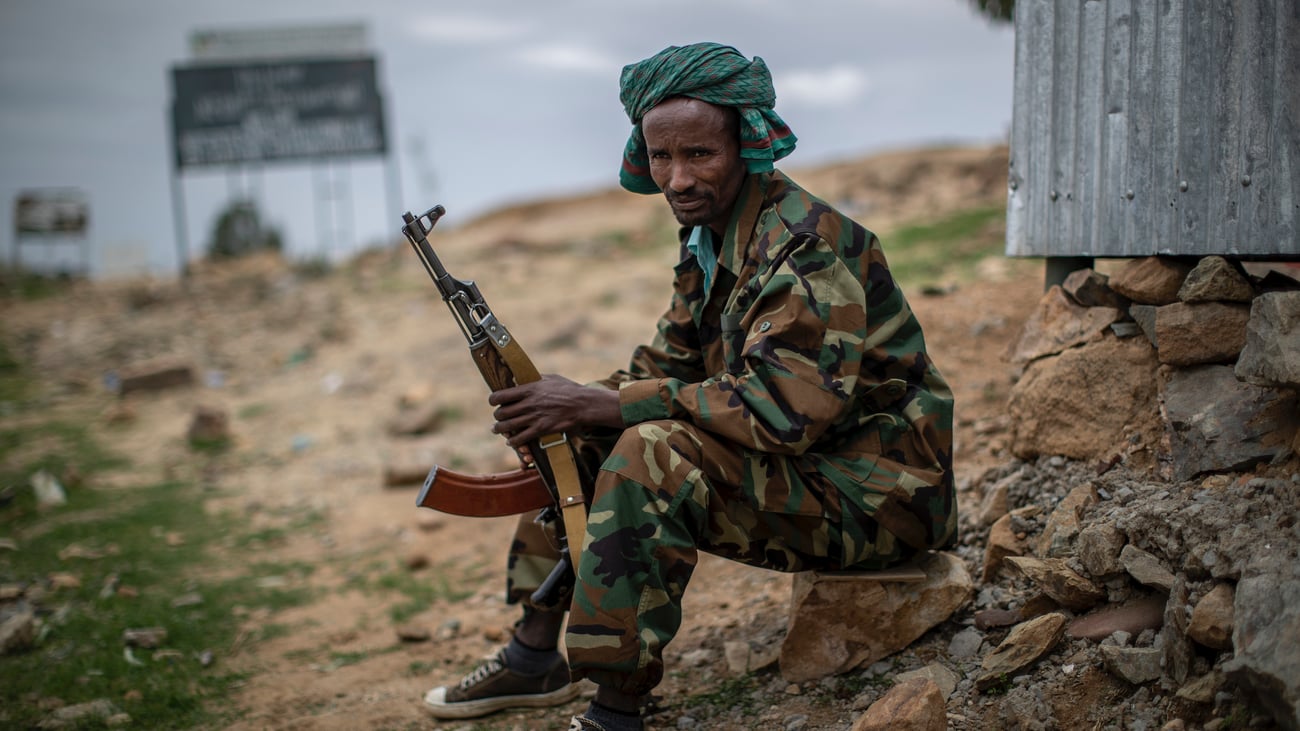
Ethiopia: Tigray Rebels Seize Airports, Clashes Intensify
Summary
- Tigrayan rebels have seized airports in Mekelle, Shire, and Axum, taking federal police officers prisoner.
- The Tigray People’s Liberation Front (TPLF) is clashing with Ethiopian federal forces in the Afar and Amhara regions.
- The TPLF claims its actions are a response to intensive bombardments by federal forces, with a TPLF official declaring it "the beginning of the war."
- This escalation follows a period of uneasy calm after a 2020-2022 civil war, but the Pretoria Peace Agreement has been shattered by the current offensive.
- The African Union has called for an immediate de-escalation of hostilities amid concerns over regional instability.
Escalation in Ethiopia: Rebels Seize Airports, Clash with Federal Forces
The recent escalation, marked by the seizure of key air infrastructure and widespread clashes, signals a potential unraveling of the fragile peace established by the Pretoria Agreement.
The Tigray People’s Liberation Front (TPLF), a prominent rebel group in northern Ethiopia, has reportedly seized control of several key airports and engaged in direct confrontations with Ethiopian federal forces across multiple regions. This significant escalation, confirmed by various sources on Wednesday, marks a dramatic shift in the country's volatile security landscape. The **Ethiopia Tigray rebels seize airports** in the regional cities of Mekelle, Shire, and Axum, effectively neutralizing critical air transport hubs.
The **Mekelle Shire Axum airport seizure** involved the capture of federal police officers who were guarding these facilities. In response to these developments, Ethiopian Airlines promptly announced the suspension of all flights to the three affected cities, disrupting air travel and commercial operations. An employee at Mekelle's Alula Aba Nega Airport recounted being informed by a supervisor that the airport had been taken over by Tigray forces, leading to the cancellation of duties.
Beyond the airport takeovers, **TPLF clashes Ethiopian federal forces** have intensified in neighboring territories. In the Afar region, the town of Abala was attacked overnight, with humanitarian workers reporting ongoing **Afar region fighting Ethiopia** in both Abala and Erebti, located approximately 100 kilometers further into the region. A foreign security source corroborated the TPLF's control over Abala. Simultaneously, **Tigray forces Amhara region attack** positions, reportedly collaborating with a local insurgent group known as Fano, indicating a coordinated expansion of their operations.
The Tigray regional government, via a Facebook statement, asserted that its actions were a direct response to "intensive bombardments" by federal forces on Tuesday, which allegedly involved aircraft, drones, and artillery. Amanuel Assefa, Vice President of the TPLF, declared this new phase as "the beginning of the war," stating that ground forces had attacked from southern and eastern Tigray, prompting the Tigray Defence Forces to defend. He expressed pessimism regarding any immediate de-escalation. The federal government in Addis Ababa has not yet issued a public statement concerning these recent clashes, despite possessing significant military advantages, including an increased production of military drones since the last conflict.
Historical Context and Shifting Alliances
This renewed conflict follows a period of uneasy calm that succeeded a devastating civil war between the TPLF and the federal government, which raged from 2020 to 2022. That earlier conflict resulted in an estimated 600,000 fatalities, according to African Union figures. The **Pretoria Peace Agreement** had previously brought an end to those hostilities, but the current offensive has shattered the four-year-old peace deal, with the TPLF declaring it no longer valid.
The TPLF's current offensive appears to be part of a broader strategic realignment. The group has recently forged alliances with various armed factions across Ethiopia, including the Fano insurgent group in the Amhara region. Conflict-monitoring group ACLED noted that this new alliance could prompt other allied agents to act in their respective areas, although it also suggested that some of these groups possess limited capabilities. This expanded network of opposition forces was further formalized with the announcement of a new "Alliance for Survival" over the weekend, which reportedly includes the largest insurgent groups from the Oromia and Amhara regions.
Historically, the TPLF held significant power, governing Ethiopia from 1991 until 2018, when Prime Minister Abiy Ahmed's ascent to power led to their marginalization and ultimately, the previous civil war. Ethiopian authorities have also accused the TPLF of forming an alliance with neighboring Eritrea, an allegation the Tigrayan rebels deny. These complex historical grievances and shifting alliances underscore the deep-seated political fragmentation contributing to the current instability.
Regional Stability and International Response
The immediate humanitarian impact of the escalating conflict is already evident. In the Afar region, aid workers have reported an expectation of the fighting expanding and have dispatched food supplies to assist displaced populations. Such developments highlight the severe risks to civilian populations and the potential for a rapidly worsening humanitarian crisis across the affected regions.
Internationally, the African Union, headquartered in Ethiopia's capital, Addis Ababa, has promptly called for an "immediate de-escalation" of hostilities. This plea reflects widespread concern over the potential for further destabilization in a country already grappling with multiple insurgencies, including those in its most populous regions, Oromia and Amhara. The current events underscore the fragility of peace in Ethiopia and the significant challenges facing regional stability. The renewed fighting threatens to undermine any progress made towards national reconciliation and could have far-reaching consequences for the Horn of Africa.
Practical Implications
Clients with operations or interests in Ethiopia, particularly those reliant on air transport or operating in the affected regions, need to assess immediate operational risks and potential force majeure implications. Compliance officers should monitor for escalating conflict and potential international responses that could impact sanctions or trade.
Source
Source: Original reporting via AFP
How does this affect you?
Get an AI analysis of this article grounded in your jurisdictions, practice areas, and any policy documents you've uploaded to Wansom.
Finish Reading the Full Story and the Expert Analysis.
Get the latest legal & regulatory intelligence in United States
Wansom is AI and can make mistakes.