
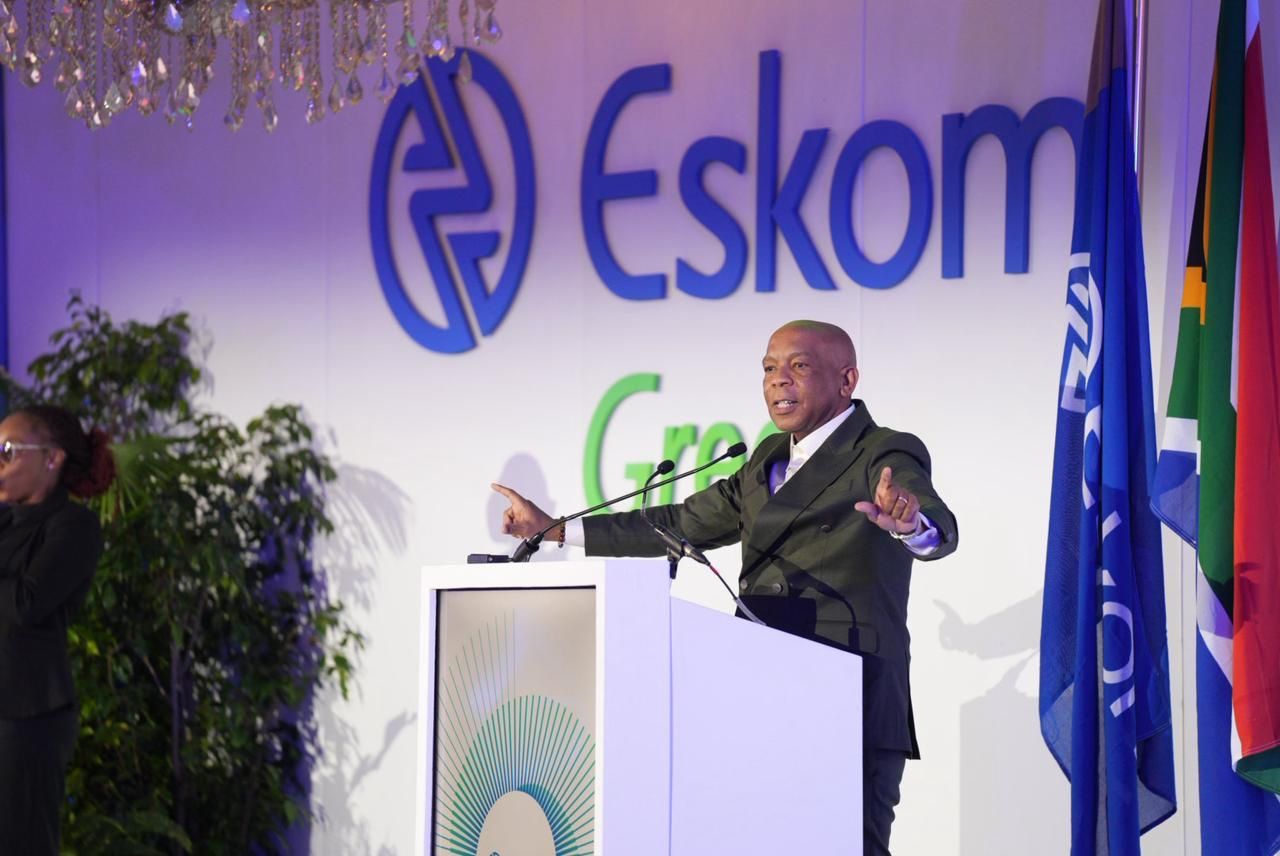
Eskom Green RFQ: Local Renewable Energy Developers Locked Out
What Happened
On 2 October 2026, Eskom issued a request for qualification (RFQ E3612GXR) to select strategic partners for Eskom Green, its new renewable energy subsidiary. The aim is to establish a five-year panel of partners to co-develop, finance and build up to 6GW of solar PV, wind and battery storage capacity, with Eskom contributing at least 2GW of solar PV and 1GW/4GWh of battery storage on its own land and sites. Responses close on 12 January 2027. The opportunity is significant. But the qualifying rules are drawn so that virtually every indigenous South African developer and IPP fails before its submission is even considered. The resulting grievance is real, and it sounds very much like what we heard a year ago about the Independent Transmission Projects (ITP) programme. The eligibility rules There is no explicit requirement for the size of a responding company. Size is imposed through four pass-or-fail mandatory criteria, and failure to meet any one of them results in disqualification. As amended by four briefing notes, these are: The detail is where local developers come unstuck. Only projects in commercial operation count – not those at financial close or under construction. Smaller projects, phases or clusters at the same site cannot be combined to reach 240MW. The company must have been the developer, co-developer or sponsor, not a passive shareholder. Criteria 1 and 2 must be met by the lead member alone, or by a parent company that controls it. The 240MW requirement is the killer. In its own published clarification responses, Eskom records the point made by a respondent: only one operational solar PV or wind project of that size exists in South Africa. This project is the 240MW Mooi Plaats solar PV plant near Noupoort, which reached commercial operation in March 2026. It belongs to Envusa Energy, the joint venture of Anglo American and Frances EDF, with black-owned Pele Green Energy holding 20%. Even Envusa fails on its South African assets alone: its Koruson 2 cluster of Mooi Plaats and two 140MW wind farms totals 520MW, short of the 800MW portfolio test. The others fare worse: The same applies to black-owned equity platforms such as African Rainbow Energy, H1 Holdings and Hulisani, and to other players whose projects were built to Reipppp sizes. A gap of the states own making The irony is that local developers fail not for lack of capability, but because of the way the state procured renewable energy in the past. For most of its history, Reipppp capped individual projects – typically at 75MW for solar PV and 140MW for wind. Bid Window 5, awarded in 2021, still procured exactly those sizes. Local developers responded rationally. They built many projects of the size government asked for. South Africas renewable fleet is a portfolio of mid-sized plants, not giant single-site facilities. Read: Curtailment, conflicts of interest and cash flow: Eskom’s tightening grip on IPPs The larger projects came only recently, through private wheeling and later bid windows. Many have now reached financial close or are under construction but have not yet reached commercial operation. Red Rockets Overberg, Noas Khauta South and Mulilos Beaufort West will all clear the 240MW bar – but only some months after the closing date. When asked directly whether Criterion 1 was intended to exclude South African IPPs from leading a response, Eskom said no. But it refused every remedy proposed, including recognising projects at financial close, combining phases at one site, or aligning the threshold with South African project sizes. It also declined to create a separate category for local developers. The exclusionary effect is the same, whatever the intent. The Eskom eligibility criteria work in favour of companies with large global portfolios. Experience anywhere in the world counts, and no South African experience is needed to pass Stage 1. The RFQ was later amended to accept offshore wind projects, which do not exist in South Africa, and the track reco
Source
Source: Original reporting via Moneyweb
How does this affect you?
Get an AI analysis of this article grounded in your jurisdictions, practice areas, and any policy documents you've uploaded to Wansom.
Finish Reading the Full Story and the Expert Analysis.
Get the latest legal & regulatory intelligence in South Africa
Wansom is AI and can make mistakes.