
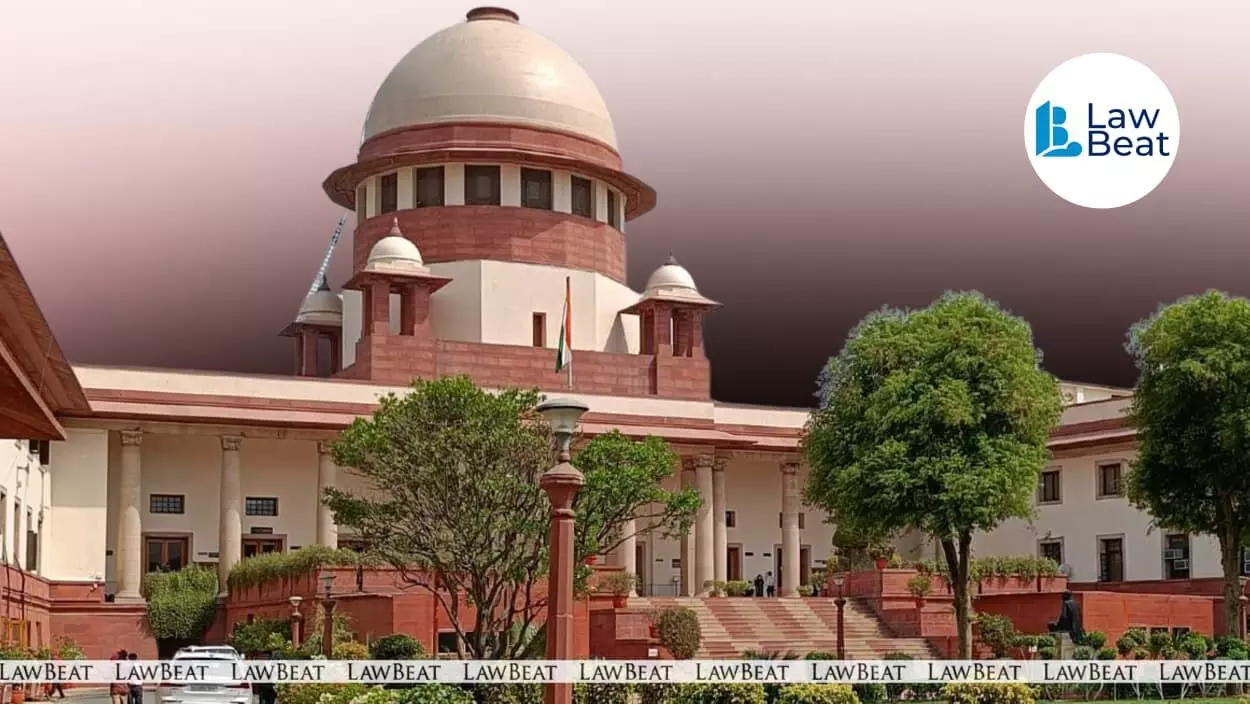
Employee of Government Instrumentality Does Not Ipso Facto Become Government Servant: SC
What Happened
Home / Top Stories / Supreme Court Judgments Employee of Government Instrumentality Does Not Ipso Facto Become Government Servant: SC X Public sector employees not automatically entitled to prosecution protection, says Supreme Court. The Supreme Court ruled that employees of government instrumentalities do not automatically qualify for Section 197 CrPC protection merely because they are public servants under the Electricity Act, 2003. The Supreme Court has held that employees of government instrumentalities do not automatically become government servants entitled to protection from prosecution under Section 197 of the Code of Criminal Procedure, 1973 (Section 218 of the Bharatiya Nagarik Suraksha Sanhita, 2023), merely because they are treated as public servants under the law. A Bench of Justices Prashant Kumar Mishra and Shree Chandrashekhar allowed appeals filed by Jodhpur Discoms against a Rajasthan High Court judgment that had discharged three employees from charges under Sections 135 to 138 and Section 150(1) and (2) of the Electricity Act , 2003. The case arose from a 2012 FIR registered at the Police Station APT (Prevention of Electricity Theft, Rural), Jodhpur, alleging that the employees had abetted the theft of electricity by tampering with the electricity meter installed at Balim Steel Pvt. Ltd. The alleged electricity theft was valued at Rs 12,99,64,800. On April 2, 2025, the high court allowed the employees' criminal revision petitions against the framing of charges by a Special Court. It held that prosecution against them could not proceed without prior sanction under Section 197 of the CrPC (Section 218 of the BNSS). Examining the challenge, the Supreme Court noted that the three respondents, Lalit Soni, executive engineer, Nema Ram, assistant engineer, and Vikash Jhanjadiya, junior engineer, were employees of Jodhpur Discoms. They were neither appointed by the State Government nor could they be removed from service by it. Court acknowledged that the employees were public servants under Section 169 of the Electricity Act, 2003. However, it clarified that this status did not change their appointing authority or satisfy the requirements for protection under Section 197 of the CrPC (Section 218 of the BNSS). "No doubt that the said respondents are the public servants in view of Section 169 of the Act, 2003 yet, by virtue of the said provision, their appointing authority or the per-requisites of law attracting Section 197 of CrPC, will not change," the Bench said. Court also relied on its decision in Mohd Hadi Raja v. State of Bihar and Anr (1998), which held that even if employees of a government corporation or instrumentality perform public functions and qualify as public servants under Section 21 of the Indian Penal Code, 1860 [Section 2(28) of the Bharatiya Nyaya Sanhita, 2023], their actions in the discharge of official duties cannot automatically be treated as actions taken by or on behalf of the government for the purpose of Section 197 of the CrPC (Section 218 of the BNSS). "It is, thus, fairly well settled that an employee of a Government instrumentality, does not ipso facto becomes a Government servant so as to be entitled for protection under Section 197 of CrPC, merely because an employee is a public servant," the Bench said. Court held that the basis on which the Rajasthan high court had extended protection under Section 197 of the CrPC (Section 218 of the BNSS) to the three employees was flawed and contrary to the Supreme Court's settled precedents. Accordingly, it set aside the high court judgment insofar as it had discharged the three employees from the charges. However, since the high court had not examined their challenge to the framing of charges on merits, the Supreme Court remitted the criminal revision petitions for fresh consideration. "However, since the High Court has not examined the case of the said three respondents against framing of charge on merits, we remit the matters back to the Hig
Source
Source: Original reporting via LawBeat
How does this affect you?
Get an AI analysis of this article grounded in your jurisdictions, practice areas, and any policy documents you've uploaded to Wansom.
Finish Reading the Full Story and the Expert Analysis.
Get the latest legal & regulatory intelligence in India
Wansom is AI and can make mistakes.