
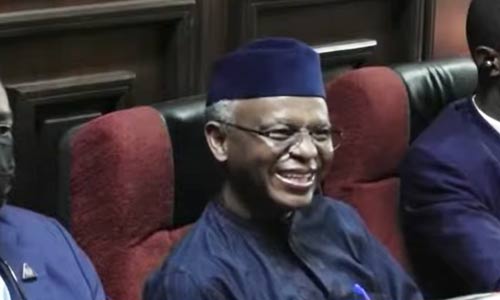
El-Rufai Denies Ribadu Phone Tapping in Federal High Court Abuja
Summary
- Former Kaduna State Governor Nasir El-Rufai has denied unlawfully tapping the phone of National Security Adviser Nuhu Ribadu.
- El-Rufai told the Federal High Court in Abuja that his previous remarks about listening to officials' calls were merely political rhetoric.
- He asserted that these past statements should not be considered an admission of criminal conduct.
- The case highlights the legal scrutiny public statements by political figures can face in court.
The Courtroom Denial
This case brings to the forefront the significant legal implications of public statements, particularly when they are later presented as evidence in court.
Former Kaduna State Governor, Nasir El-Rufai, has formally refuted allegations of unlawfully intercepting the telephone communications of National Security Adviser (NSA) Nuhu Ribadu. Appearing before the Federal High Court in Abuja, El-Rufai explicitly stated that he never engaged in tapping Ribadu’s phone. This direct denial comes in response to claims suggesting his involvement in such activities.
El-Rufai’s defense hinges on characterizing his prior public remarks, which had indicated he and others listened to calls made by government officials, as mere political rhetoric. He asserted that these statements should not be construed as an admission of any criminal conduct. The former governor is seeking to differentiate between the often-charged language of political discourse and legally actionable confessions, presenting his past comments as part of a broader political narrative rather than factual declarations of illegal acts.
Political Speech Under Scrutiny
The core of the legal dispute in the Federal High Court Abuja El-Rufai case centers on the interpretation of public statements made by political figures. Nasir El-Rufai's defense strategy relies on the argument that comments made in a political context, even if seemingly incriminating, do not automatically equate to a confession of unlawful interception. His assertion that his earlier remarks were "political rhetoric" rather than an admission of crime highlights a critical legal distinction.
This approach underscores the challenge courts face in discerning intent and factual accuracy from statements delivered within the often-heated arena of political discourse. The former governor's position is that his comments about listening to government officials' calls were part of a broader political narrative, designed to convey a message rather than to confess to specific illegal acts like the alleged Nuhu Ribadu phone tapping. This defense aims to shield public figures from having their political pronouncements used as direct evidence of criminal activity without further corroboration.
Legal Implications of Public Statements
This case brings to the forefront the significant legal implications of public statements, particularly when they are later presented as evidence in court. Lawyers frequently advise clients on the potential for public comments, even those framed as 'political rhetoric,' to be meticulously scrutinized in legal proceedings. The defense employed by El-Rufai, asserting his comments were not an admission of criminal conduct, exemplifies a strategy to mitigate such risks.
The judiciary's role here involves determining whether a public utterance constitutes a factual admission of guilt or merely a rhetorical flourish. Allegations of unlawful interception, such as those El-Rufai faces regarding Nuhu Ribadu, carry serious legal consequences, making the precise interpretation of his past remarks crucial. This scenario highlights the delicate balance between freedom of speech in political discourse and the accountability for statements that could imply illegal actions.
Why This Case Matters
The ongoing proceedings involving Nasir El-Rufai and the alleged unlawful interception of Nuhu Ribadu's phone conversations carry substantial weight for both legal precedent and political conduct in Nigeria. The outcome of this case could significantly influence how courts interpret the public pronouncements of political figures, particularly concerning sensitive issues like surveillance and national security. It sets a potential benchmark for what constitutes an actionable admission versus protected political speech.
Furthermore, this Federal High Court Abuja El-Rufai case serves as a stark reminder to public officials and political actors about the enduring nature and potential legal ramifications of their spoken words. Even statements intended for a political audience can be dissected in a courtroom, underscoring the need for careful consideration in all public communications. The defense's reliance on the "political rhetoric" argument offers a critical lens through which to examine the boundaries of free expression and legal accountability.
Practical Implications
This case highlights the legal implications of public statements, even those framed as 'political rhetoric,' when they are later used as evidence in court. Lawyers should advise clients on the potential for public comments to be scrutinized in legal proceedings and the strategies employed to defend against such claims, particularly concerning allegations of unlawful surveillance.
Source
How does this affect you?
Get an AI analysis of this article grounded in your jurisdictions, practice areas, and any policy documents you've uploaded to Wansom.
Finish Reading the Full Story and the Expert Analysis.
Get the latest legal & regulatory intelligence in Nigeria
Wansom is AI and can make mistakes.