
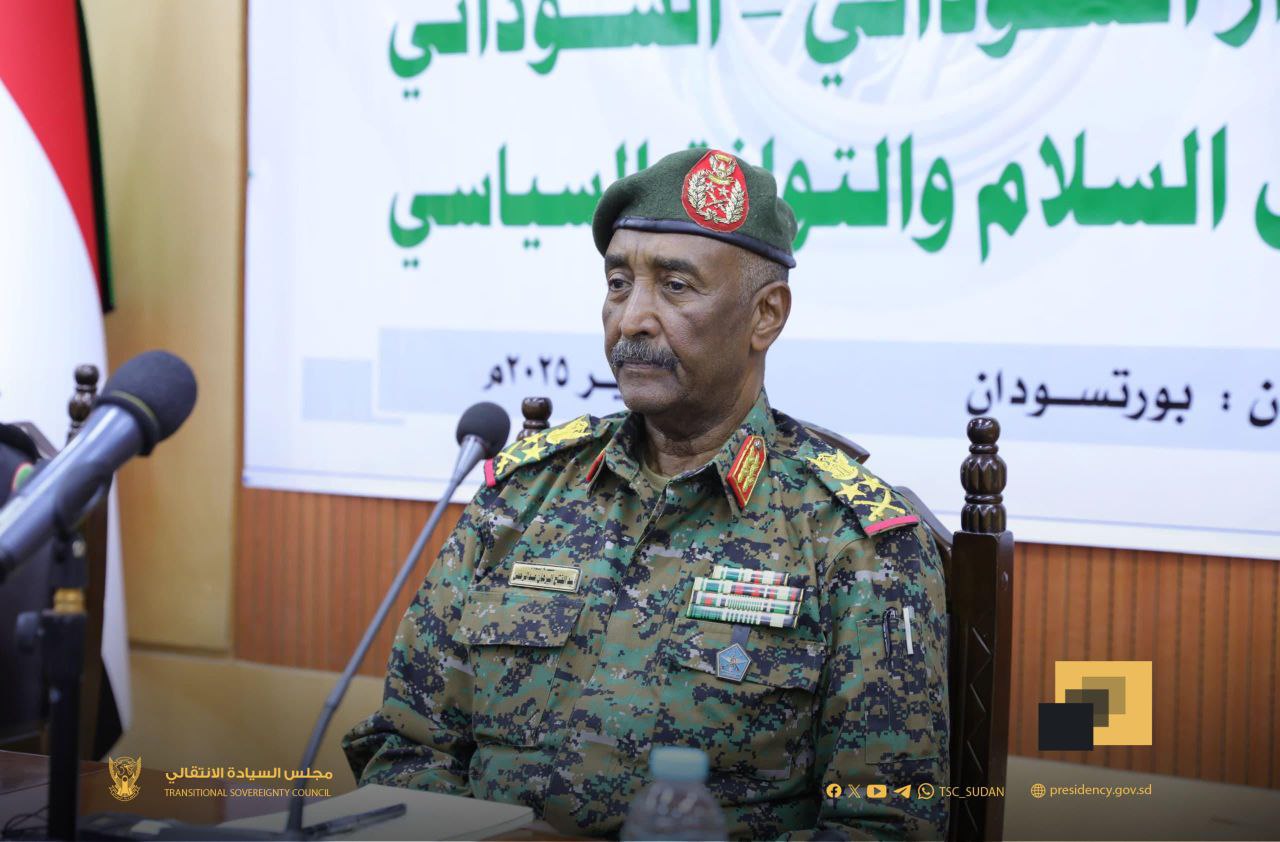
El Burhan: US-Backed UN Arms Embargo Extension Will Fail
Summary
- Lt Gen Abdelfattah El Burhan stated a US-backed proposal to extend the UN arms embargo on Darfur to all of Sudan will fail at the UN Security Council.
- El Burhan claimed the Sudanese army has arrangements to respond if the resolution is approved.
- The UN Security Council postponed its meeting on the draft resolution due to divisions and to allow for further consultations.
- El Burhan reiterated his opposition to armed militias and rejected any future role for the Rapid Support Forces, citing alleged atrocities.
- He defended the October 25, 2021, military takeover, calling it a "correction of the course of the revolution."
Sudan's Military Leader Defies Proposed UN Arms Embargo
Lieutenant General Abdelfattah El Burhan, who serves as both the Commander of the Sudanese Armed Forces (SAF) and President of the Sovereignty Council, has publicly stated his conviction that a United States-backed initiative to broaden the existing United Nations arms embargo on Darfur to encompass all of Sudan will ultimately fail.
Lieutenant General Abdelfattah El Burhan, who serves as both the Commander of the Sudanese Armed Forces (SAF) and President of the Sovereignty Council, has publicly stated his conviction that a United States-backed initiative to broaden the existing United Nations arms embargo on Darfur to encompass all of Sudan will ultimately fail. Speaking to journalists at the army’s General Command in Khartoum on Thursday, El Burhan expressed strong opposition to the proposed measure, asserting that the resolution would not gain approval within the Security Council in its current "American formula."
General El Burhan's remarks underscore a defiant stance from the Sudanese military leadership regarding international efforts to restrict arms flow into the country. He further indicated that the SAF has already made preparations to respond should the resolution, despite his prediction, be approved by the UN Security Council. This statement suggests a readiness to counter or mitigate the effects of such an embargo, signaling potential friction with international bodies.
UN Security Council Deliberations and Divisions
The proposed extension of the Darfur arms embargo to cover the entirety of Sudan has prompted significant discussion and division among member states within the UN Security Council. Originally scheduled for a vote on Thursday, the Security Council postponed its meeting on the draft resolution until Friday. This delay was specifically implemented to allow for additional consultations among members, highlighting the contentious nature of the proposal and the lack of immediate consensus.
The ongoing deliberations reflect the complex geopolitical landscape surrounding Sudan and the varying perspectives among global powers regarding the most effective approach to address the country's internal conflicts and stability. The outcome of this UN Security Council Sudan resolution will have significant implications for the future of military operations and international engagement with the nation, particularly concerning the El Burhan US arms embargo UN initiative.
Internal Political Stance and Rapid Support Forces Future
Beyond the international arms embargo, General El Burhan also used the opportunity to articulate his firm domestic political positions. He reiterated his unwavering opposition to armed militias operating within Sudan, declaring unequivocally that "there will be no militia inside the country until the war ends." This statement signals a clear intent to consolidate state control over armed forces and eliminate non-state actors.
Crucially, El Burhan explicitly rejected any future role for the paramilitary Rapid Support Forces (RSF), citing alleged violations and atrocities against civilians as the basis for his stance. This definitive statement on the Rapid Support Forces future underscores the deep rift between the SAF and the RSF. Furthermore, he defended the military takeover of October 25, 2021, characterizing it not as a coup but rather as a "correction of the course of the revolution," thereby framing the military's intervention as a necessary corrective action for the nation's political trajectory.
Why the Embargo Decision Matters
The potential extension of the UN arms embargo on Darfur to all of Sudan, as proposed by the US, represents a critical juncture for the nation's military and its international relations. Should the UN Security Council approve the measure, it would significantly alter the landscape for the Sudan military UN embargo, potentially restricting access to crucial defense equipment and technologies. General El Burhan's strong public statement, predicting the failure of the proposal and indicating a prepared response, highlights the high stakes involved for his administration.
The outcome of the Security Council's decision will not only shape Sudan's military capabilities but also influence the broader political and security environment within the country. It will also serve as a barometer of international consensus regarding the Sudanese government's actions and its ongoing internal conflicts, particularly in light of El Burhan's firm stance against militias and the RSF, and his defense of the 2021 power shift.
Practical Implications
Lawyers advising clients on trade or investment in Sudan, especially in defense or dual-use sectors, should closely monitor the UN Security Council's decision on the proposed arms embargo extension. Its outcome will dictate future compliance obligations and the risk landscape for international dealings with Sudan.
Source
Source: Original reporting via {source}
How does this affect you?
Get an AI analysis of this article grounded in your jurisdictions, practice areas, and any policy documents you've uploaded to Wansom.
Finish Reading the Full Story and the Expert Analysis.
Wansom is AI and can make mistakes.