
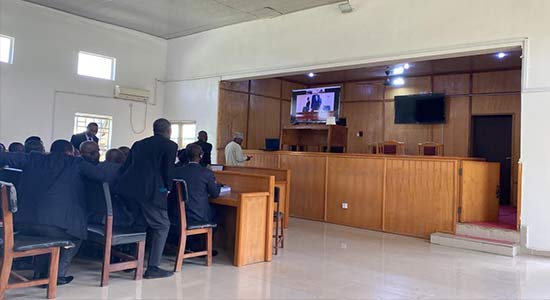
Ekiti Tribunal: Action Alliance Witness Failure Draws Final Ultimatum
Summary
- The Ekiti State Governorship Election Petition Tribunal expressed strong displeasure with the Action Alliance (AA) over its repeated failure to produce witnesses.
- The AA's petition challenges the outcome of the June 20, 2026 governorship election.
- Tribunal Chairman Justice Abubakar Kutigi voiced the panel's concern and issued a stern warning to the party.
- The tribunal granted the Action Alliance one final opportunity to present its witnesses.
- This action highlights the tribunal's firm stance on procedural compliance and timely adjudication of election petitions.
Tribunal Issues Stern Warning
The panel emphasized its commitment to a rigorous and timely adjudication process, signaling a clear intolerance for any further procedural missteps.
The Ekiti State Governorship Election Petition Tribunal has conveyed significant dissatisfaction with the Action Alliance (AA) due to the party's consistent inability to present witnesses in support of its petition. This petition specifically challenges the results of the governorship election held on June 20, 2026. The tribunal's chairman, Justice Abubakar Kutigi, articulated the three-member panel's profound concern regarding the repeated **Ekiti Tribunal Action Alliance witness failure**, underscoring the gravity of the situation.
Justice Kutigi delivered a pointed **Justice Abubakar Kutigi AA warning**, making it clear that the tribunal expects strict adherence to its directives. The panel's frustration stems from the Action Alliance's ongoing struggle to fulfill its evidentiary obligations, which are crucial for substantiating its claims. This persistent issue has led the tribunal to take a firm stance, emphasizing the need for all parties to respect the judicial process and its timelines.
In a decisive move, the tribunal issued a final ultimatum to the Action Alliance, granting the party one last opportunity to produce the necessary witnesses. This stern directive highlights the tribunal's diminishing patience with procedural delays and its commitment to moving the petition forward. The warning serves as a critical reminder to all litigants about the rigorous demands of election petition proceedings.
Adherence to Election Petition Procedures
In the context of the **Nigerian election petition procedure**, the presentation of witnesses and evidence is a cornerstone of challenging election outcomes. Tribunals are established to meticulously review claims of electoral malpractice or irregularities, and the burden of proof rests squarely on the petitioner. This necessitates a well-organized and timely presentation of all supporting documentation and, crucially, live testimony from witnesses who can corroborate the allegations.
**Tribunal procedural compliance** is not merely a formality; it is fundamental to ensuring the integrity and efficiency of the judicial process. Election petitions operate under strict timelines, designed to resolve disputes expeditiously and prevent prolonged uncertainty regarding electoral mandates. Any delay in producing witnesses, as seen with the **Action Alliance witness non-production**, can significantly impede the tribunal's ability to conduct a fair and timely hearing, potentially undermining public confidence in the system.
Legal teams advising political parties and candidates in such petitions are therefore expected to demonstrate meticulous planning and execution in their case presentation. The tribunal's firm stance in this instance underscores a broader judicial trend towards enforcing procedural rules rigorously, leaving little room for laxity or repeated non-compliance. This approach aims to streamline proceedings and ensure that justice is not only done but also seen to be done within the stipulated legal framework.
Implications of the Tribunal's Stance
The explicit displeasure voiced by the **Ekiti Governorship Election Tribunal** chairman, Justice Abubakar Kutigi, sends a clear message to all parties involved in election petitions across Nigeria. It signifies a judicial environment where tribunals are increasingly intolerant of procedural lapses and attempts to delay proceedings. Such warnings are not merely admonitions but indicators of the potential for severe consequences, including the possible striking out of petitions if parties fail to comply with court orders.
This development underscores the critical importance for legal practitioners to meticulously prepare and adhere to witness production schedules. The tribunal's decision to grant a 'last chance' to the Action Alliance, while offering a reprieve, simultaneously emphasizes the finality of its patience. It serves as a stark reminder that the judicial process is not a forum for indefinite postponements or unpreparedness, especially in time-sensitive matters like election petitions.
Ultimately, the tribunal's firm position reflects a commitment to upholding the sanctity of the electoral judicial process. By demanding strict adherence to procedural rules and timelines, the panel aims to ensure that all petitions are heard efficiently and fairly, preventing any party from exploiting procedural loopholes to their advantage or to the detriment of the overall administration of justice. The message is unequivocal: preparedness and compliance are paramount.
Practical Implications
Lawyers advising political parties or candidates in Nigerian election petitions must ensure meticulous adherence to witness production schedules, as tribunals are demonstrating a low tolerance for procedural delays and non-compliance.
Source
How does this affect you?
Get an AI analysis of this article grounded in your jurisdictions, practice areas, and any policy documents you've uploaded to Wansom.
Finish Reading the Full Story and the Expert Analysis.
Get the latest legal & regulatory intelligence in Nigeria
Wansom is AI and can make mistakes.