
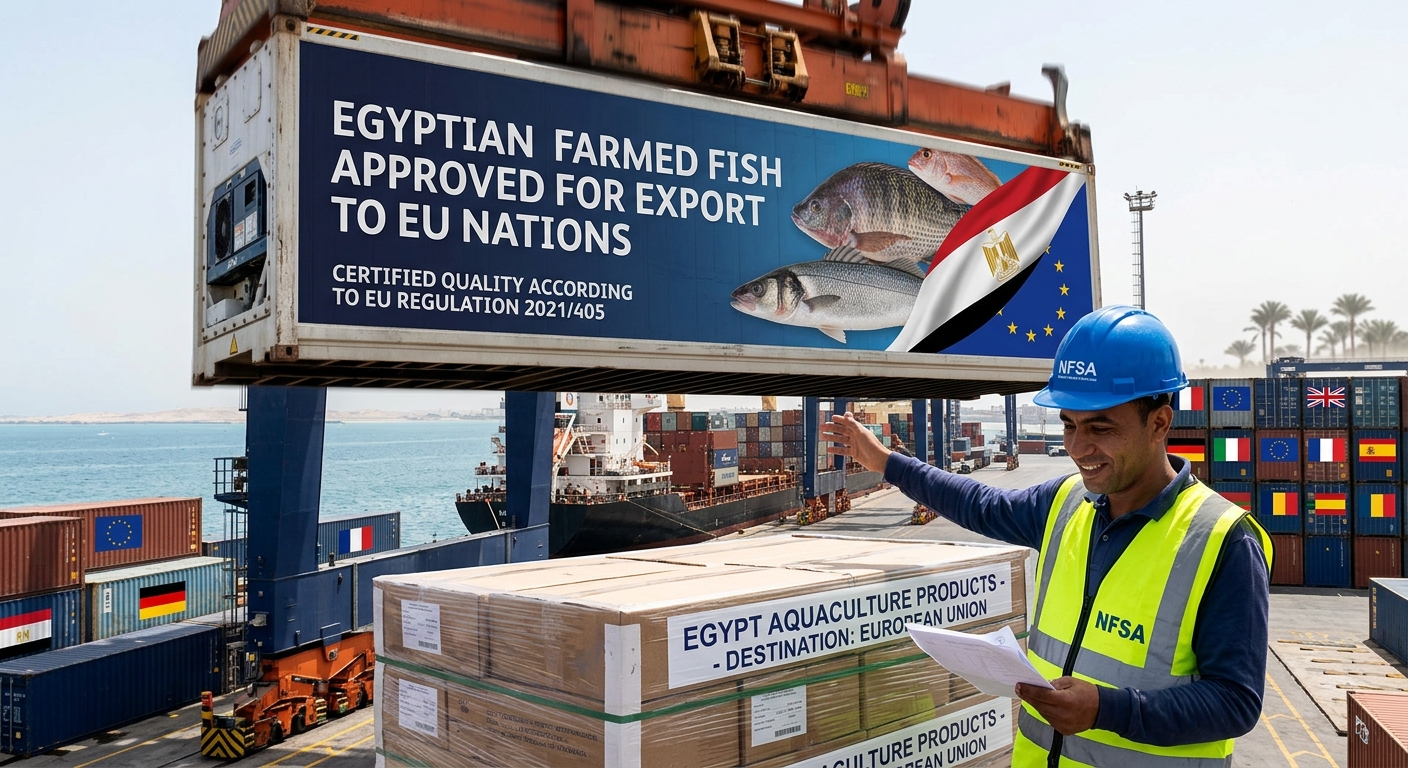
Egypt: Egyptian Farmed Fish Secures Full EU Export Approval
Summary
- Egyptian farmed fish has received full approval for export to all 27 European Union member states.
- This decision, published under Regulation (EU) 2021/405 in the EU’s Official Journal, represents a major breakthrough for Egypt's agricultural exports.
- The approval follows a rigorous two-year overhaul of Egypt's aquaculture sector to meet tough EU regulatory standards.
- This development significantly enhances Egypt's aquaculture EU market access and its broader agricultural export ambitions.
Significant Market Opening for Egyptian Aquaculture
Egyptian farmed fish has successfully navigated the stringent regulatory landscape of the European Union, securing full authorization for export to all 27 member states.
Egyptian farmed fish has successfully navigated the stringent regulatory landscape of the European Union, securing full authorization for export to all 27 member states. This development represents a pivotal moment for Egypt's agricultural sector, particularly its aquaculture industry, as it gains access to one of the most demanding and lucrative markets globally. The approval signifies a substantial achievement in overcoming complex international trade barriers and is a major breakthrough for the nation's export ambitions.
This landmark decision is expected to significantly bolster Egypt's overall agricultural export strategy, opening new avenues for economic growth and foreign exchange earnings. The ability to export farmed fish to the entire European bloc underscores the country's commitment to meeting high international standards for food production and safety, positioning its aquaculture products competitively on the world stage. This new market access is poised to create considerable opportunities for producers and the national economy.
Navigating EU Regulatory Frameworks
The official confirmation of this export approval was formally documented within the European Union's Official Journal, specifically under Regulation (EU) 2021/405. This regulatory act provides the legal framework for the import of certain animal products into the EU, and its application to Egyptian farmed fish follows an extensive period of assessment and adaptation. The process involved a comprehensive review of Egypt's aquaculture practices, health controls, and overall production systems to ensure full compliance.
Achieving compliance with Regulation (EU) 2021/405 for Egyptian fish was the culmination of a rigorous two-year program of reforms and upgrades within the nation's aquaculture sector. This intensive overhaul addressed various aspects of production, processing, and quality control, ensuring that Egyptian farmed fish products meet the exacting EU import regulations for farmed fish. This diligent effort was crucial in satisfying the EU's strict requirements for animal health and public safety, which are among the toughest globally.
Boosting Egypt's Export Ambitions
This recent approval is a testament to Egypt's persistent efforts to expand its agricultural exports and diversify its trade partners. The inclusion of Egyptian farmed fish in the list of approved imports for the EU market marks a significant step forward in realizing the country's broader ambitions for its agricultural sector. It demonstrates a successful strategy in penetrating highly regulated international markets and enhancing the global competitiveness of Egyptian products.
The long-term implications for Egypt aquaculture EU market access are considerable, offering producers a stable and high-value destination for their products. This success could also pave the way for other Egyptian agricultural exports to gain similar approvals, as it establishes a precedent for meeting rigorous international standards. The breakthrough is a clear indicator of the positive trajectory for Egypt's trade relations with the European Union and its commitment to economic development through exports.
Practical Implications
Lawyers advising Egyptian aquaculture businesses should inform clients of this new market opportunity and ensure their operations and products comply with all relevant EU import regulations, particularly those related to food safety, labeling, and animal health, to facilitate successful export.
Source
How does this affect you?
Get an AI analysis of this article grounded in your jurisdictions, practice areas, and any policy documents you've uploaded to Wansom.
Finish Reading the Full Story and the Expert Analysis.
Get the latest legal & regulatory intelligence in Egypt
Wansom is AI and can make mistakes.