
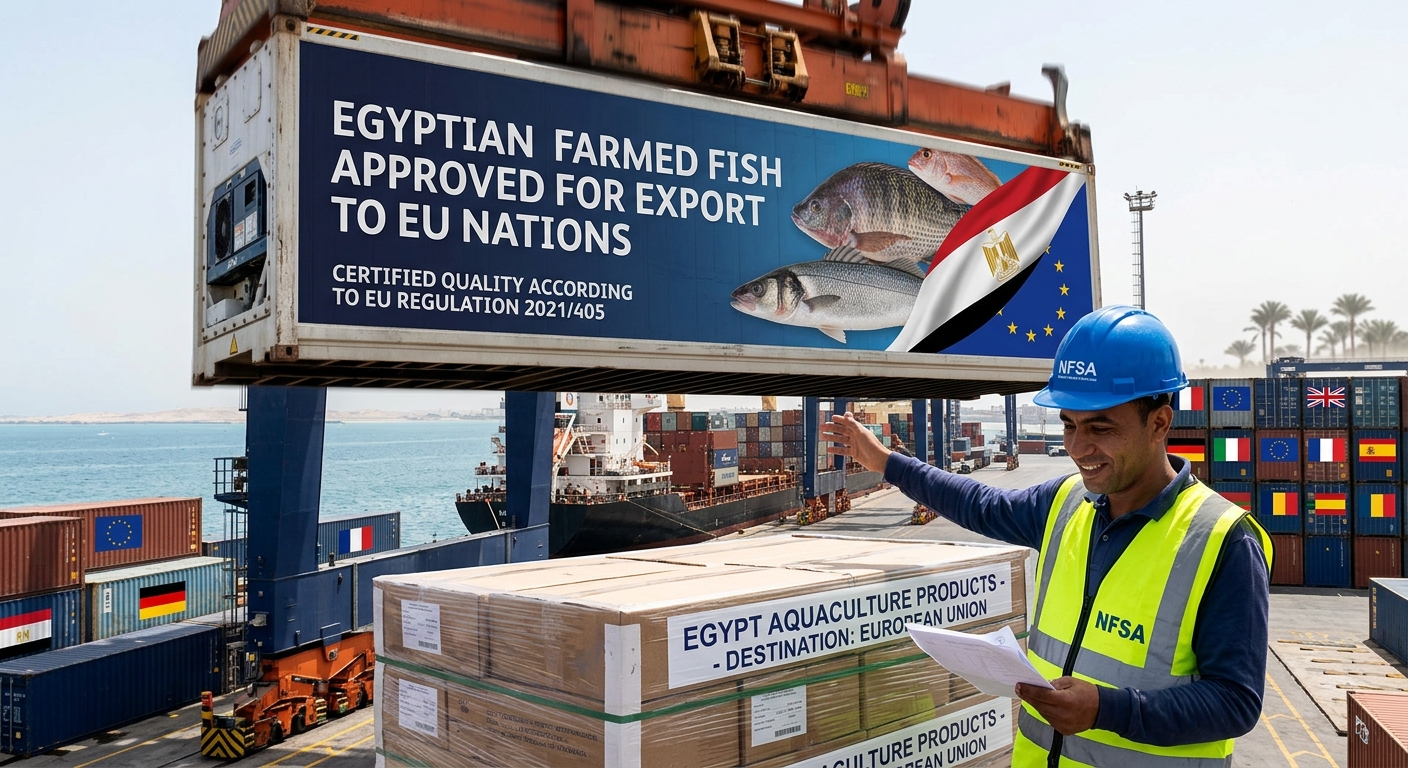
Egyptian Farmed Fish Approved for Export to 27 EU Nations
Egyptian farmed fish has received full approval for export across all 27 European Union member states, a significant regulatory breakthrough officially published in the EU’s Official Journal under Regulation (EU) 2021/405.
This landmark decision, following a rigorous two-year overhaul of Egypt's aquaculture sector, signifies that Egyptian farmed fish products now meet the stringent health, safety, and quality standards required by the European Union. The approval, formalized through an official publication, opens up a substantial new market for Egyptian producers, potentially boosting the country's agricultural exports and foreign currency earnings. This achievement reflects a concerted effort by Egyptian authorities and the aquaculture industry to align with international regulatory benchmarks, demonstrating a successful navigation of complex international trade requirements.
The legal significance for practitioners and businesses is immense, as it unlocks access to one of the world's largest and most lucrative consumer markets. For Egyptian aquaculture businesses, this means new export opportunities, potential for growth, and increased foreign investment, requiring careful legal structuring and compliance. For EU importers and distributors, it expands their sourcing options for farmed fish, but necessitates due diligence on supplier compliance. The key parties involved include the Egyptian government and its relevant regulatory bodies responsible for food safety and aquaculture standards, the Egyptian farmed fish industry, and the European Union, specifically its regulatory bodies responsible for food safety and import controls, which culminated in the publication of Regulation (EU) 2021/405.
The approval is rooted in the comprehensive regulatory framework of the European Union concerning food safety, animal health, and import controls. Regulation (EU) 2021/405, as cited, is a critical piece of legislation that likely lists third countries from which certain animal products are permitted for import into the Union, specifying conditions and requirements. This regulation is part of a broader body of EU law, including regulations on official controls, hygiene rules for food of animal origin, and traceability requirements. For Egypt to gain this approval, its national regulatory framework for aquaculture, including inspection, certification, and disease control, must have been deemed equivalent to EU standards, demonstrating a robust system for ensuring product safety and quality from farm to export.
Attorneys advising Egyptian aquaculture businesses should guide clients on navigating the specific requirements for exporting to the EU, including documentation, labeling, and ongoing compliance with EU health and hygiene standards. Businesses must ensure their production processes, quality control, and traceability systems remain fully compliant to maintain this approval, potentially requiring regular audits and updates to internal policies. For EU-based importers, this presents an opportunity to diversify their supply chains, but they must conduct thorough due diligence on Egyptian suppliers to ensure continued adherence to EU import regulations. Both sides should monitor any future amendments to Regulation (EU) 2021/405 or related EU food safety legislation, as well as any changes in bilateral trade relations that could impact this newfound market access.
How does this affect you?
Get an AI analysis of this article grounded in your jurisdictions, practice areas, and any policy documents you've uploaded to Wansom.
Finish Reading the Full Story and the Expert Analysis.
Get the latest legal & regulatory intelligence in Egypt
Wansom is AI and can make mistakes.