
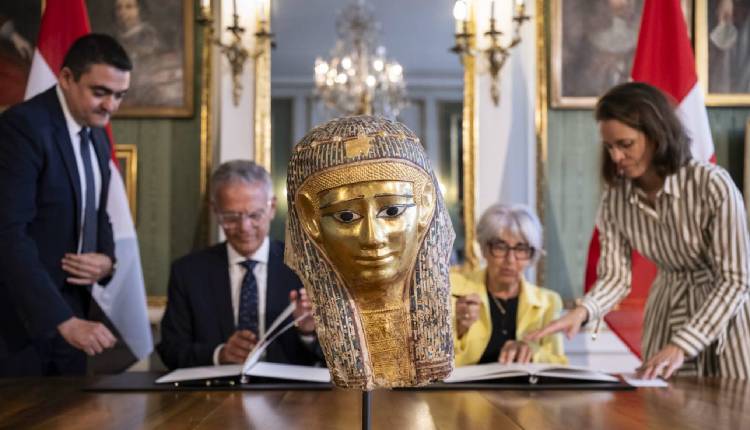
Egypt Switzerland Funerary Mask Return: Switzerland Repatriates Ancient Mask
Summary
- Switzerland recently returned an ancient Egyptian funerary mask from the Ptolemaic period to Egypt.
- Swiss customs intercepted the over 2,000-year-old mask in 2022, and it was later authenticated as an Egyptian antiquity.
- The official handover took place in Bern, with Federal Councillor Elisabeth Baume-Schneider presenting it to Egypt’s Ambassador Mohamed Negm.
- This repatriation is part of ongoing cooperation; Switzerland has returned approximately 80 cultural objects to Egypt since 2011.
Ancient Mask Returns to Egypt
This development underscores the continued enforcement of international cultural property laws and anti-trafficking agreements, signaling heightened scrutiny for art dealers, collectors, and institutions involved in cross-border transactions of antiquities.
The recent return of an ancient funerary mask from Switzerland to Egypt marks a significant moment in the ongoing efforts to repatriate cultural artifacts. This particular object, originating from the Ptolemaic period and estimated to be over two millennia old, was officially handed over during a ceremony in Bern. Federal Councillor Elisabeth Baume-Schneider represented Switzerland, formally presenting the antiquity to Egypt’s Ambassador to Switzerland, Mohamed Negm, on a Wednesday.
The journey of this valuable artifact back to its country of origin began in 2022 when Swiss customs authorities successfully intercepted it. Following its seizure, the mask underwent a rigorous authentication process, confirming its status as a genuine Egyptian antiquity. This interception and subsequent verification were crucial steps in facilitating the mask's eventual return, underscoring the vigilance required in combating illicit antiquities trafficking.
International Cooperation Against Illicit Trade
This specific Ptolemaic mask return serves as a further testament to the robust cultural heritage cooperation between Egypt and Switzerland. The repatriation event highlights a shared commitment to safeguarding historical treasures and actively combating the illicit trade of cultural property. Such collaborative efforts are vital in ensuring that artifacts illegally removed from their homelands are identified and returned, reinforcing international art law enforcement.
The recent handover is not an isolated incident but rather part of a sustained initiative. Since 2011, Switzerland has consistently demonstrated its dedication to this cause, having returned approximately 80 cultural objects to Egypt. This consistent pattern of cultural property repatriation underscores a long-term partnership aimed at preserving global heritage and deterring the trafficking of illicit antiquities.
Broader Implications for Cultural Heritage Protection
The successful return of the ancient funerary mask from Switzerland to Egypt carries significant weight beyond the immediate event, signaling heightened scrutiny for art dealers, collectors, and institutions involved in cross-border transactions of antiquities. This development underscores the continued enforcement of international cultural property laws and anti-trafficking agreements, reinforcing the global commitment to protecting cultural heritage. It sends a clear message that nations are increasingly vigilant in reclaiming their historical patrimony.
Such repatriations are critical for maintaining the integrity of cultural heritage worldwide. They not only restore invaluable artifacts to their rightful contexts but also strengthen the legal frameworks designed to prevent future illicit trafficking. The ongoing collaboration between countries like Egypt and Switzerland sets a precedent for international cooperation, emphasizing the collective responsibility to preserve and protect the world's shared history from exploitation.
Practical Implications
This development underscores the continued enforcement of international cultural property laws and anti-trafficking agreements, signaling heightened scrutiny for art dealers, collectors, and institutions involved in cross-border transactions of antiquities. Lawyers advising clients in the art market should reinforce due diligence procedures to mitigate risks associated with illicitly traded cultural artifacts.
Source
How does this affect you?
Get an AI analysis of this article grounded in your jurisdictions, practice areas, and any policy documents you've uploaded to Wansom.
Finish Reading the Full Story and the Expert Analysis.
Get the latest legal & regulatory intelligence in Egypt
Wansom is AI and can make mistakes.