
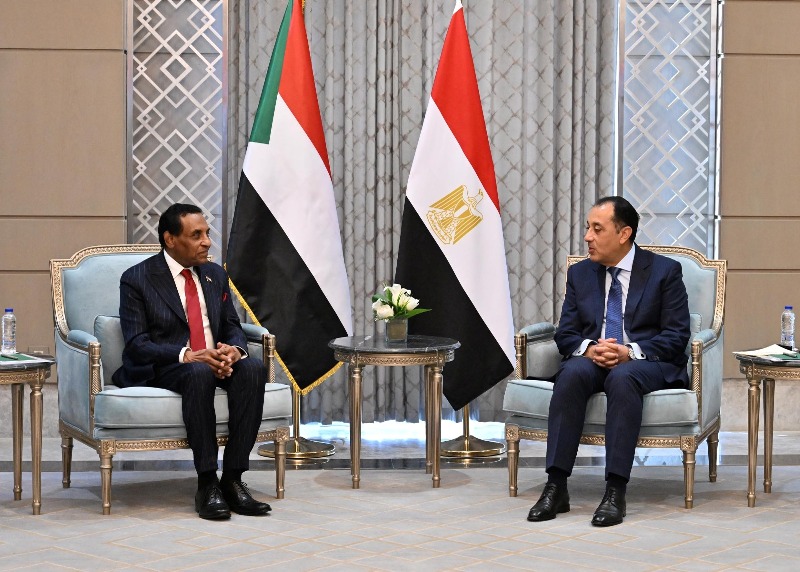
Egypt, Sudan: Reaffirm 1959 Nile Water Rights, Warn Against Infringement
Summary
- Egypt and Sudan have affirmed a united position on Nile water security.
- They declared their destinies regarding Nile water are inseparable.
- Both nations warned against any violation of water rights or allocations established by the 1959 agreement.
- This joint declaration followed a visit by Sudanese Transitional Council Prime Minister Kamil Al-Tayeb Idris and a senior delegation to Cairo.
Diplomatic Alignment on Nile Water
Both Egypt and Sudan unequivocally stated that they would not tolerate any actions that undermine the provisions of this crucial accord, which has historically governed the distribution and management of the Nile's flow between them.
Egypt and Sudan have recently solidified a unified stance concerning the critical issue of Nile water security, publicly declaring their shared destiny in this vital matter. This significant diplomatic alignment emerged following a high-level visit to Cairo by Sudanese Transitional Council Prime Minister Kamil Al-Tayeb Idris. He was accompanied by a senior delegation, underscoring the gravity and strategic importance of the discussions held between the two nations. The meeting aimed to reinforce their long-standing cooperation on shared regional challenges, particularly those pertaining to the Nile River.
The Tuesday visit culminated in a joint pledge from both nations, emphasizing their collective resolve to safeguard their respective interests in the Nile's waters. This declaration highlights a renewed commitment to cooperation and mutual support in managing the shared resource, signaling a strong message of solidarity between the two key riparian states. The discussions in Cairo served to reinforce the deep-seated historical and geographical ties that bind Egypt and Sudan, particularly concerning the lifeblood of the Nile, which is essential for the sustenance and development of both populations.
Upholding the 1959 Nile Waters Agreement
Central to the joint declaration was a firm warning against any infringement upon the established water rights or allocations, specifically referencing the foundational 1959 Nile Waters Agreement. Both Egypt and Sudan unequivocally stated that they would not tolerate any actions that undermine the provisions of this crucial accord, which has historically governed the distribution and management of the Nile's flow between them. This reiteration underscores the enduring relevance of the 1959 Nile Waters Agreement as a cornerstone of their bilateral relationship and regional water governance, emphasizing its continued legal and practical significance.
The commitment articulated by the Sudanese Prime Minister Kamil Al-Tayeb Idris in Cairo, alongside his Egyptian counterparts, signals a unified front in defending the principles enshrined within the 1959 agreement. This includes safeguarding the agreed-upon shares and preventing any unilateral alterations to the existing framework that could negatively impact either nation. The joint statement serves as a clear indication of their intent to uphold the integrity of the established legal and historical entitlements concerning the Nile's resources, reinforcing the importance of international water law and cooperative frameworks in the basin.
Implications for Regional Water Security
The recent joint declaration by Egypt and Sudan carries substantial implications for the broader context of Nile water security. By explicitly stating their indivisible fates and their intolerance for any encroachment on water rights or allocations under the 1959 agreement, the two nations are sending a powerful message to other states within the Nile basin. This unified position aims to reinforce the existing legal frameworks and deter any actions that could destabilize the delicate balance of water sharing in the region, promoting stability and adherence to established international norms.
This renewed commitment to the 1959 Nile Waters Agreement, articulated during the visit of Sudanese Transitional Council Prime Minister Kamil Al-Tayeb Idris to Cairo, highlights the ongoing strategic importance of this bilateral pact. It underscores that any future developments or projects impacting the Nile's flow must consider the established rights and allocations, as Egypt and Sudan are prepared to collectively defend these provisions. The declaration serves as a critical reminder of the complex interplay between historical agreements, national interests, and regional stability in the management of transboundary water resources, emphasizing the need for collaborative rather than unilateral approaches.
Practical Implications
Lawyers advising on international water law or infrastructure projects in the Nile basin should monitor the ongoing diplomatic and legal positions of Egypt and Sudan regarding the 1959 Nile Waters Agreement, as any unilateral actions by other riparian states could trigger significant international legal challenges or impact project viability.
Source
How does this affect you?
Get an AI analysis of this article grounded in your jurisdictions, practice areas, and any policy documents you've uploaded to Wansom.
Finish Reading the Full Story and the Expert Analysis.
Get the latest legal & regulatory intelligence in Egypt
Wansom is AI and can make mistakes.