
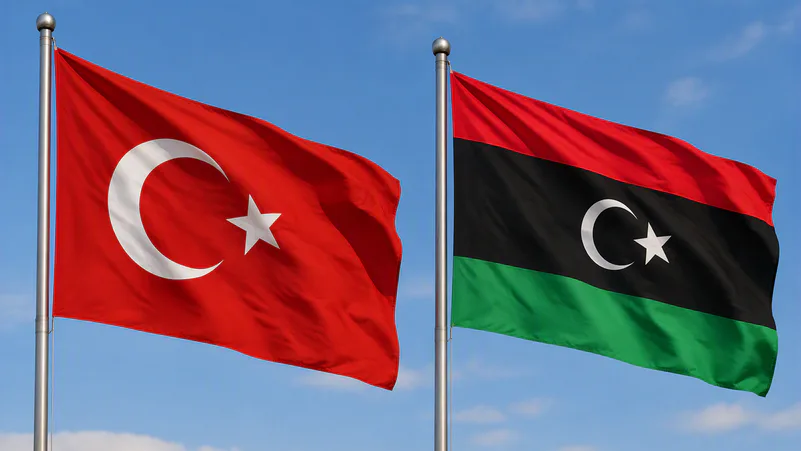
Egypt Rejects Libyan Parliament's Ratification of 2019 Maritime Deal
On Wednesday, Egypt officially rejected the Libyan House of Representatives’ ratification of a 2019 maritime memorandum with Türkiye, asserting that the move holds no legal effect on Cairo and reiterating its consistent opposition to any actions conflicting with Egypt’s declared maritime boundaries.
This rejection underscores a significant geopolitical and legal dispute concerning maritime boundaries and resource rights in the Eastern Mediterranean. For international law practitioners, it highlights the complexities of state sovereignty, treaty law, and the delimitation of exclusive economic zones (EEZs) in contested areas. The dispute has implications for energy exploration, regional stability, and the interpretation of international conventions like the United Nations Convention on the Law of the Sea (UNCLOS), even if not all parties are signatories, as states often adhere to customary international law principles.
Egypt's stance is rooted in its interpretation of international maritime law, particularly principles related to continental shelf and EEZ delimitation, which typically consider factors like coastlines, islands, and equitable principles. The 2019 memorandum between Türkiye and the former Libyan Government of National Accord (GNA) sought to establish a maritime boundary that Egypt, along with other regional actors like Greece and Cyprus, views as infringing upon their sovereign rights and established maritime zones. The legal validity of the Libyan House of Representatives' ratification is also a point of contention, given the ongoing political divisions within Libya regarding governmental authority and the legitimacy of various governmental bodies.
The primary parties involved in this specific rejection are the government of Egypt, specifically its Foreign Ministry, and the Libyan House of Representatives. Türkiye and the former Libyan Government of National Accord (GNA) are also central to the original 2019 memorandum. Other regional states with interests in the Eastern Mediterranean, such as Greece and Cyprus, are indirectly affected by this dispute, as their own maritime claims intersect with the contested areas.
Legal professionals advising governments, energy companies, or shipping firms operating in the Eastern Mediterranean should closely monitor developments in this ongoing maritime dispute. The lack of a universally recognized maritime boundary in parts of the region creates legal uncertainty for exploration, drilling, and navigation activities. Businesses should assess potential geopolitical risks and ensure their operations comply with the maritime claims of all relevant states, while attorneys should be prepared to advise on international law, treaty obligations, and potential dispute resolution mechanisms, including arbitration or litigation before international tribunals.
How does this affect you?
Get an AI analysis of this article grounded in your jurisdictions, practice areas, and any policy documents you've uploaded to Wansom.
Finish Reading the Full Story and the Expert Analysis.
Get the latest legal & regulatory intelligence in Egypt
Wansom is AI and can make mistakes.