
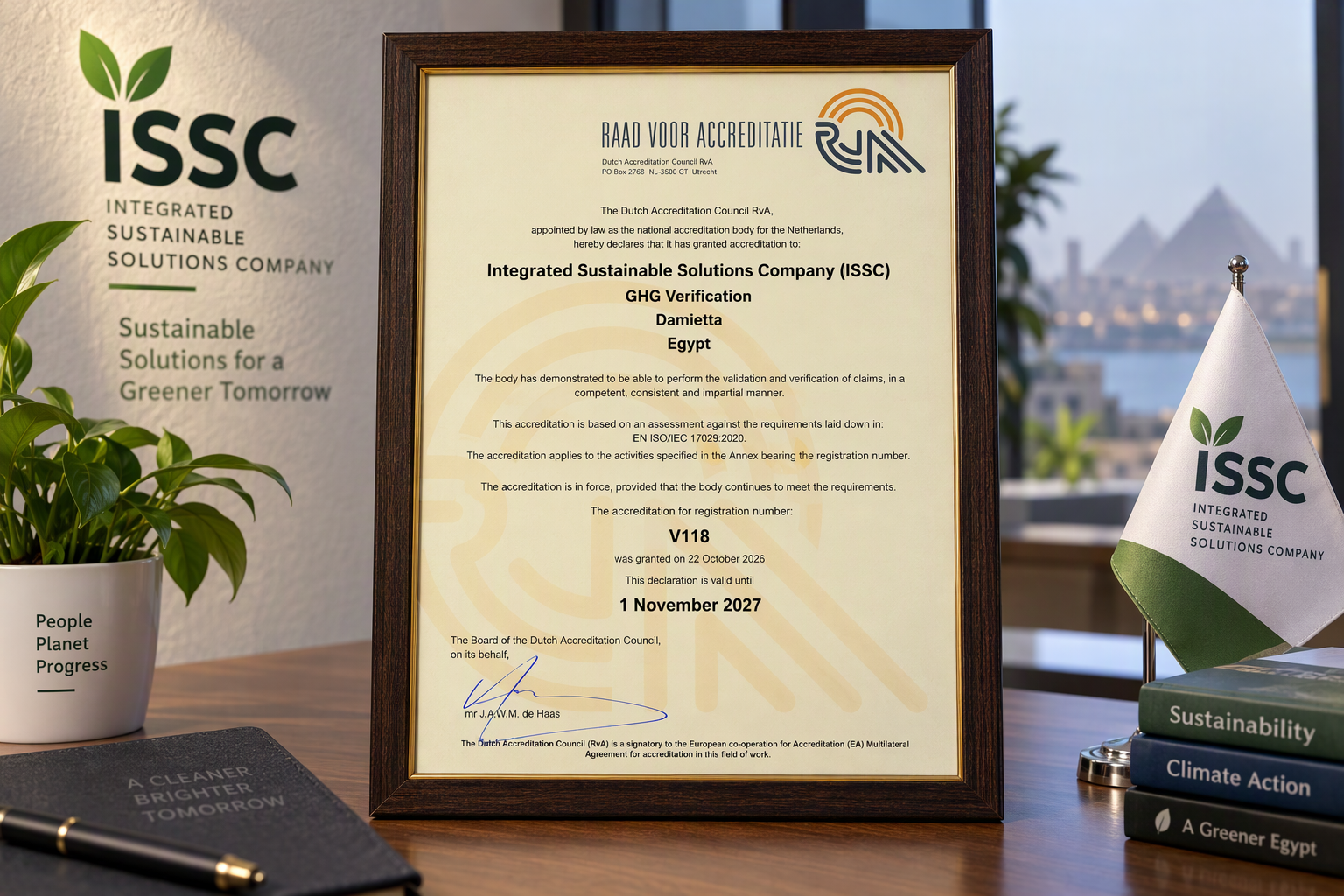
Egypt ISSC CBAM Accreditation: RvA Authorizes GHG Verification
Summary
- Egypt's Integrated Sustainable Solutions Company (ISSC) received accreditation from the Dutch Accreditation Council (RvA).
- This accreditation allows ISSC to verify greenhouse gas emissions for goods under the EU's Carbon Border Adjustment Mechanism (CBAM).
- The announcement was made by Egypt's Ministry of Industry on Tuesday.
- ISSC's accreditation provides a local, verified option for Egyptian exporters to comply with EU CBAM requirements.
- This development is crucial for ensuring compliance and avoiding penalties for Egyptian companies trading with the EU.
A New Local Option for CBAM Compliance
Lawyers advising Egyptian companies exporting to the EU should note that ISSC's accreditation provides a local, verified option for greenhouse gas emissions reporting under the CBAM, which is crucial for ensuring compliance and avoiding penalties.
The Egyptian firm, Integrated Sustainable Solutions Company (ISSC), has recently secured a significant accreditation from the Dutch Accreditation Council (RvA). This authorization empowers ISSC to undertake the crucial task of verifying greenhouse gas emissions, a requirement stipulated by the European Union's Carbon Border Adjustment Mechanism (CBAM). The development was officially announced by Egypt's Ministry of Industry on Tuesday, marking a notable step for Egyptian businesses engaged in trade with the EU.
This accreditation means that Egyptian exporters now have a locally accessible, recognized entity capable of providing the necessary verification services for their products destined for the European market. The Dutch Accreditation Council (RvA) is a respected body within the international accreditation landscape, lending significant weight to ISSC's newly acquired capabilities. The ability to verify greenhouse gas emissions locally is expected to streamline the compliance process for many companies, reducing potential logistical hurdles and costs associated with seeking international verification services.
Understanding the EU's Carbon Border Adjustment Mechanism
The European Union's Carbon Border Adjustment Mechanism (CBAM) represents a pivotal component of the bloc's broader climate strategy, designed to prevent 'carbon leakage' and ensure that the price of carbon emissions is reflected in imported goods. Essentially, CBAM requires importers of certain goods into the EU to declare the embedded greenhouse gas emissions of those products. This mechanism aims to level the playing field between EU producers, who face carbon pricing under the EU Emissions Trading System (ETS), and non-EU producers.
For companies exporting to the EU, compliance with CBAM necessitates accurate and verified reporting of their products' greenhouse gas emissions. Without proper verification, goods could face additional charges or administrative complications upon entry into the EU market. The system is designed to encourage global industries to reduce their carbon footprint, aligning with the EU's ambitious climate targets and promoting sustainable production practices worldwide.
Implications for Egyptian Exporters
The accreditation of Integrated Sustainable Solutions Company (ISSC) by the Dutch Accreditation Council (RvA) carries substantial implications for Egyptian businesses exporting to the European Union. With a local entity now authorized for Egyptian CBAM verification, companies can more readily meet the stringent reporting requirements for greenhouse gas emissions under the EU's Carbon Border Adjustment Mechanism. This localized service is poised to simplify the compliance journey, offering a familiar and accessible option for obtaining the necessary certifications.
Lawyers advising Egyptian companies exporting to the EU should note that ISSC's accreditation provides a local, verified option for greenhouse gas emissions reporting under the CBAM, which is crucial for ensuring compliance and avoiding penalties. This development is particularly relevant for compliance officers, who should integrate this information into their CBAM readiness strategies. The availability of an accredited Egyptian provider for greenhouse gas emissions verification is a strategic advantage, potentially reducing the administrative burden and financial outlay for Egyptian exporters, thereby facilitating smoother trade relations with the European Union.
Practical Implications
Lawyers advising Egyptian companies exporting to the EU should note that ISSC's accreditation provides a local, verified option for greenhouse gas emissions reporting under the CBAM, which is crucial for ensuring compliance and avoiding penalties. Compliance officers should integrate this information into their CBAM readiness strategies.
Source
How does this affect you?
Get an AI analysis of this article grounded in your jurisdictions, practice areas, and any policy documents you've uploaded to Wansom.
Finish Reading the Full Story and the Expert Analysis.
Get the latest legal & regulatory intelligence in Egypt
Wansom is AI and can make mistakes.