
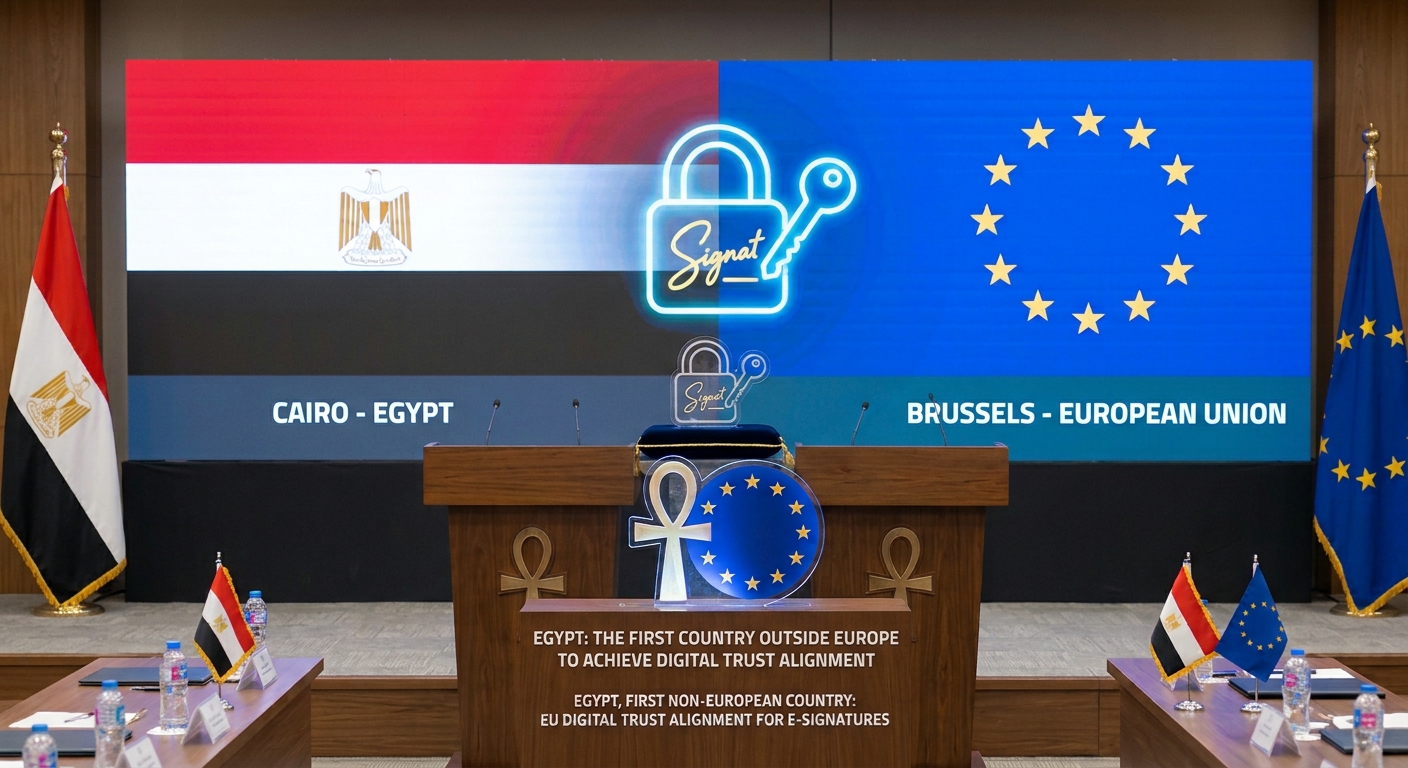
Egypt: EU Digital Signature Alignment Achieved, First Non-EU Nation
Summary
- Egypt has become the first non-European country to achieve full technical alignment with the European Union's electronic signature and seal framework.
- This milestone was secured through an administrative arrangement between Egypt's ITIDA and the European Commission.
- The alignment places Egypt onto the EU's trusted list of digital signature providers.
- Electronic signatures and seals from Egypt will now hold the same legal validity as those within the EU.
- This development is expected to significantly enhance digital trade and legal certainty for cross-border transactions between Egypt and the EU.
A Landmark Digital Agreement
For legal professionals advising on international transactions, this development underscores the enhanced legal validity and enforceability of electronic signatures and seals originating from Egypt when used in an EU context.
Egypt has achieved a significant milestone in international digital commerce, becoming the first nation outside of Europe to secure full technical alignment with the European Union's comprehensive framework for electronic signatures and seals. This groundbreaking development was formalized through a new administrative arrangement.
The agreement was officially signed between Egypt's Information Technology Industry Development Agency (ITIDA) and the European Commission. This collaborative effort signifies a major step forward in integrating Egypt's digital infrastructure with that of the European Union, fostering greater trust and interoperability in digital transactions.
This alignment effectively places Egypt onto the EU's official trusted list of digital signature providers. This inclusion means that electronic signatures and seals originating from Egypt will now be recognized and afforded the same legal weight and validity as those from within the European Union, streamlining cross-border digital interactions.
Understanding the Legal Framework
The European Union's framework for electronic signatures and seals, commonly known as eIDAS (electronic Identification, Authentication and trust Services), establishes a standardized and legally binding system for secure electronic transactions across its member states. Achieving technical alignment with this framework implies that Egypt's digital signature infrastructure now adheres to the stringent technical and legal requirements stipulated by the EU.
This **Egypt eIDAS framework** alignment ensures that the technical specifications and security protocols for digital signatures in Egypt are compatible with those used across the EU. Such compatibility is crucial for the seamless and legally sound exchange of digital documents, providing a foundation of trust for all parties involved in electronic communications.
The administrative arrangement, an **ITIDA European Commission agreement**, is a testament to Egypt's commitment to modernizing its digital economy and facilitating international trade. It provides a clear legal basis for the mutual recognition of digital identities and attestations, removing previous ambiguities that could hinder digital commerce.
Implications for Digital Trade
This groundbreaking **Egypt EU digital signature alignment** is poised to significantly streamline and secure digital trade between Egypt and the European Union. Businesses engaging in cross-border transactions will benefit from enhanced legal certainty regarding the authenticity and integrity of digitally signed documents, fostering greater trust and efficiency in commercial exchanges. The move is expected to reduce administrative burdens and accelerate the pace of digital commerce, marking a pivotal moment for **Egypt digital trade EU** relations.
The formal recognition of Egyptian electronic signatures under the **Egypt eIDAS framework** equivalent standards means that digital documents, contracts, and agreements executed with an Egyptian digital signature will now hold the same legal standing as those originating from within the EU. This mutual recognition is a critical step towards a more integrated digital economy, removing previous barriers related to the legal acceptance of digital identities and attestations across borders.
For legal professionals advising on international transactions, this development underscores the enhanced legal validity and enforceability of electronic signatures and seals originating from Egypt when used in an EU context. It necessitates a review of existing digital contract policies and compliance frameworks for companies involved in trade between these jurisdictions, ensuring they can fully leverage the new recognition of **EU electronic signature recognition Egypt**. This strategic move by the **Information Technology Industry Development Agency** and the European Commission sets a precedent for future digital cooperation.
Practical Implications
Lawyers advising on cross-border digital transactions between Egypt and the EU should note the enhanced legal validity and enforceability of electronic signatures and seals. This development requires a review of existing digital contract policies and compliance frameworks for businesses engaged in trade between these jurisdictions.
Source
How does this affect you?
Get an AI analysis of this article grounded in your jurisdictions, practice areas, and any policy documents you've uploaded to Wansom.
Finish Reading the Full Story and the Expert Analysis.
Get the latest legal & regulatory intelligence in Egypt
Wansom is AI and can make mistakes.