
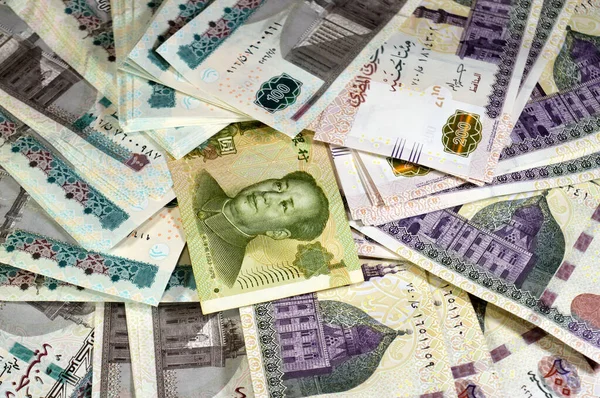
Egypt, China: Currency Swap Renewal Fuels Local Currency Trade Expansion
Summary
- Egypt and China have formally agreed to renew their existing currency swap arrangement.
- The agreement also includes a provision to expand the scope of the currency swap.
- Both nations are actively encouraging the wider use of local currencies in bilateral trade activities.
- The initiative extends to promoting local currency use for bilateral investment between Egypt and China.
- These decisions were communicated through a joint statement issued on Wednesday.
Key Development
The explicit encouragement of local currency trade means that companies may now have enhanced options for settling international invoices, potentially mitigating foreign exchange risk and reducing exposure to volatility associated with major global currencies.
Egypt and China have officially agreed to both renew and significantly expand their existing currency swap arrangement, a move detailed in a joint statement released on Wednesday. This pivotal decision underscores a mutual commitment to deepening economic cooperation and fostering greater financial stability between the two nations. The agreement is designed to facilitate more direct and efficient financial transactions, bypassing reliance on third-party currencies.
Crucially, the joint declaration also emphasized a shared objective to encourage the wider adoption of local currencies for both bilateral trade and investment activities. This strategic push for local currency trade between Egypt and China signals a deliberate effort to enhance financial autonomy and streamline cross-border commerce. The renewal and expansion of this Egypt China currency swap are anticipated to provide a more robust framework for economic engagement, offering businesses new avenues for managing their international dealings.
Strategic Economic Implications
This renewed Egyptian Chinese local currency deal represents a significant stride in the broader global movement towards de-dollarization. By actively promoting the use of the Egyptian pound and the Chinese yuan in their bilateral exchanges, Cairo and Beijing are working to strengthen their respective financial systems and reduce vulnerability to fluctuations in international reserve currencies. This initiative is particularly pertinent for Egypt's central bank currency swap strategy, as it seeks to diversify its foreign exchange toolkit and enhance its economic resilience.
The expansion of this bilateral currency agreement is set to profoundly influence Egypt China trade finance. It establishes a direct channel for businesses to settle transactions, eliminating the need for costly and time-consuming conversions into a third currency. This streamlined approach is expected to lower operational costs, improve transaction speed, and ultimately foster a more dynamic and integrated economic relationship between the two countries. The agreement reflects a strategic alignment aimed at building a more self-reliant and interconnected financial architecture.
Legal and Commercial Considerations
For legal professionals advising corporate clients engaged in the burgeoning Egypt-China trade and investment corridor, this renewed bilateral currency agreement presents critical considerations. Lawyers should proactively counsel their clients on the evolving landscape of payment mechanisms and the strategic advantages offered by increased local currency utilization. The explicit encouragement of local currency trade means that companies may now have enhanced options for settling international invoices, potentially mitigating foreign exchange risk and reducing exposure to volatility associated with major global currencies.
Furthermore, this development necessitates a thorough review of existing contractual agreements and a forward-looking approach to drafting new ones. Legal counsel will be instrumental in assessing how current payment clauses might be impacted and in advising on the incorporation of provisions that effectively leverage the Egyptian Chinese local currency deal. Understanding the practical and legal nuances of conducting trade and investment in local currencies will be paramount for optimizing financial flows, managing risks, and ensuring compliance for cross-border transactions between Egypt and China. This strategic pivot could fundamentally reshape how businesses structure their international operations and manage their financial exposures in this key bilateral relationship.
Practical Implications
Lawyers advising clients on Egypt-China trade or investment should note the renewed currency swap and push for local currency use, as it may impact payment mechanisms, foreign exchange risk, and contract drafting for cross-border transactions. This development could necessitate reviewing existing agreements and advising on new strategies to leverage local currency options.
Source
How does this affect you?
Get an AI analysis of this article grounded in your jurisdictions, practice areas, and any policy documents you've uploaded to Wansom.
Finish Reading the Full Story and the Expert Analysis.
Wansom is AI and can make mistakes.