
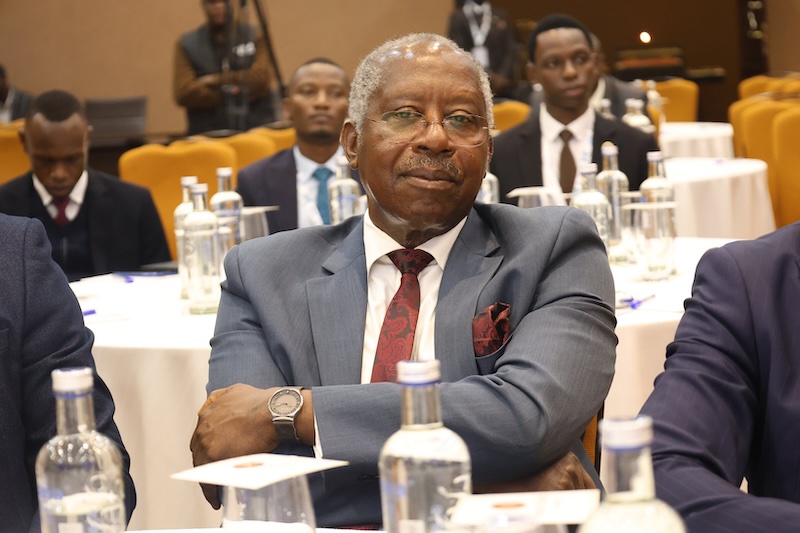
Egonda-Ntende Tasks Uganda Law Society: Confront Torture
Summary
- Retired Justice Fredrick Egonda-Ntende urged the Uganda Law Society (ULS) to uphold citizens' rights amid increasing threats to civil liberties.
- He specifically tasked lawyers with being more proactive in defending against abuses, including torture.
- The call was made during the Digital Transformation Festival at the Munyonyo Commonwealth Resort.
- Justice Egonda-Ntende's message emphasizes the critical role of legal professionals in Uganda human rights defense and torture prevention.
- The statement highlights the professional responsibility of lawyers to champion civil liberties and engage in robust advocacy.
Call for Renewed Vigilance
His message was clear: lawyers must not shy away from confronting abuses and must instead become more visible and vocal advocates for those whose rights are under threat.
Retired Justice Fredrick Egonda-Ntende, a distinguished former member of Uganda's Court of Appeal and Constitutional Court, recently delivered a significant address at the Digital Transformation Festival held at the Munyonyo Commonwealth Resort. His remarks centered on the crucial role of the Uganda Law Society (ULS) in safeguarding the fundamental rights of citizens, particularly in the face of escalating challenges.
During his intervention, Justice Egonda-Ntende underscored the increasing threats to civil liberties within the nation. He specifically highlighted the imperative for the ULS to reaffirm its commitment to its foundational duty: upholding the constitutional and human rights of all Ugandans. This call to action was a direct challenge to the legal fraternity to intensify its efforts in a challenging environment, emphasizing the need for lawyers to be more proactive.
Proactive Defense Against Torture
A central theme of Justice Egonda-Ntende's address was the urgent need for legal professionals to adopt a more proactive stance in defending individuals against various forms of abuse. He particularly emphasized the prevention of torture, urging lawyers to not merely react to violations but to actively work towards their pre-emption and robust defense of victims. This directive signals a heightened expectation for legal practitioners to engage directly in Uganda human rights defense.
The retired judge explicitly tasked the Uganda Law Society with stepping up its efforts, urging its members to be at the forefront of protecting civil liberties. His message was clear: lawyers must not shy away from confronting abuses and must instead become more visible and vocal advocates for those whose rights are under threat. This proactive engagement is seen as vital for maintaining the rule of law and ensuring accountability.
Legal Community's Mandate
Justice Fredrick Egonda-Ntende's remarks carry considerable weight, stemming from his distinguished career on Uganda's appellate courts. His direct appeal to the ULS underscores the professional responsibility of lawyers in Uganda to champion civil liberties. This includes not only providing legal representation but also engaging in broader advocacy for torture prevention Uganda and the protection of fundamental freedoms.
The call for increased proactivity suggests that the legal community, through the ULS, is expected to play a more assertive role in public interest litigation and human rights monitoring. It implies a need for lawyers civil liberties Uganda to be at the vanguard of defending constitutional principles, especially when citizens face abuses. This could influence future professional development and ethical guidelines for legal practitioners.
Significance of the Judicial Voice
The intervention by a respected retired jurist like Justice Egonda-Ntende serves as a powerful reminder of the enduring importance of an independent and vigilant legal profession in a democratic society. His challenge to the Uganda Law Society highlights the critical juncture at which civil liberties stand and the indispensable role lawyers must play in their preservation.
Such a public statement from a former high-ranking judge can galvanize the legal community, encouraging greater solidarity and concerted action in addressing human rights concerns. It also sends a signal to the wider public and state actors about the ongoing scrutiny of human rights practices and the expectation that legal bodies will actively uphold their mandate to protect citizens from abuses, including torture.
Practical Implications
Lawyers and compliance officers in Uganda should note the explicit call from a retired justice for increased proactivity in defending civil liberties and combating torture. This signals a heightened expectation for legal professionals to engage in human rights advocacy and potentially influences professional conduct standards or opportunities for public interest litigation.
Source
How does this affect you?
Get an AI analysis of this article grounded in your jurisdictions, practice areas, and any policy documents you've uploaded to Wansom.
Finish Reading the Full Story and the Expert Analysis.
Get the latest legal & regulatory intelligence in Uganda
Wansom is AI and can make mistakes.