
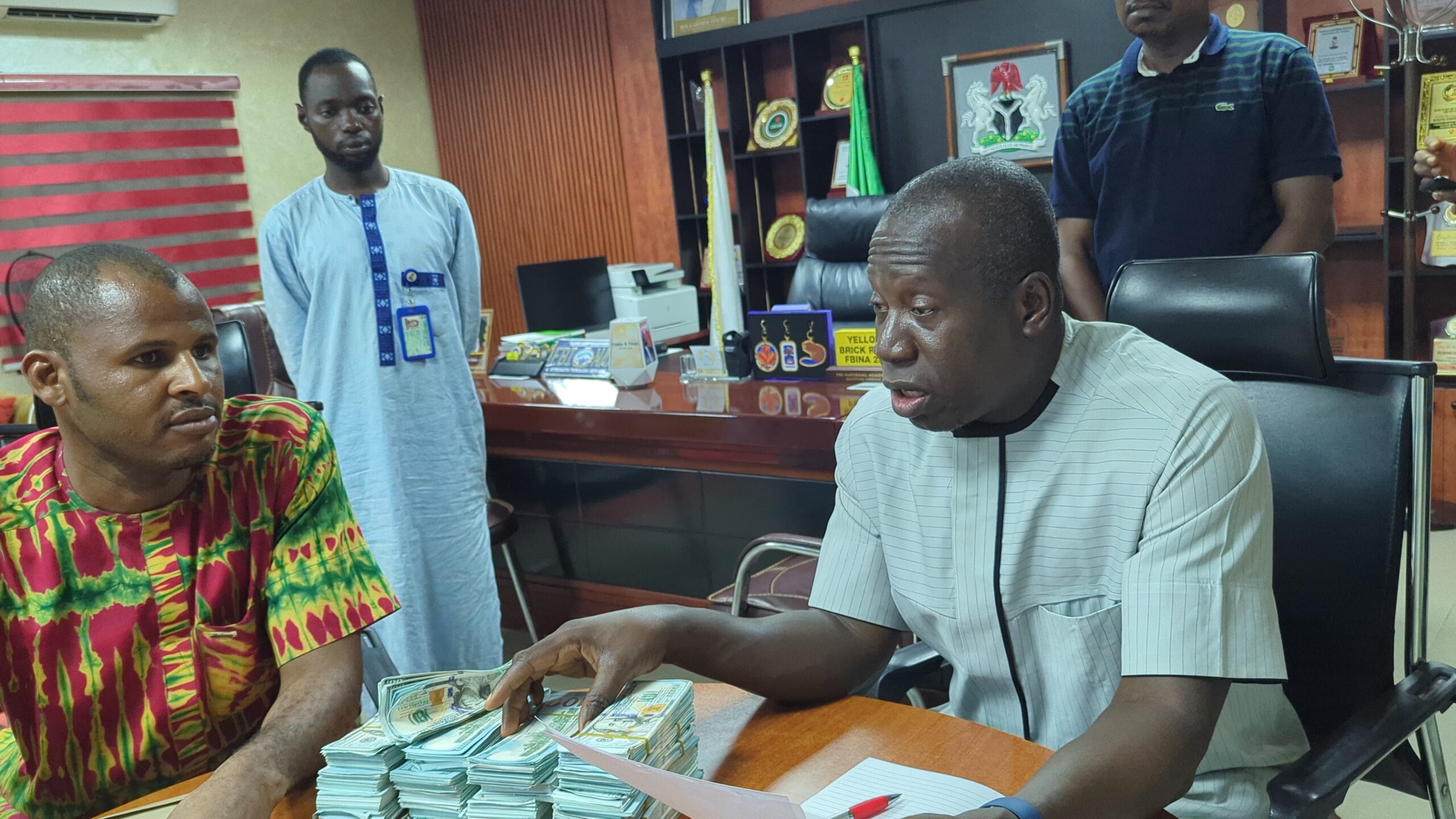
EFCC Investigates Fake $212,200 in Kano After NDLEA Handover
Summary
- The EFCC is investigating Mr. Ibrahim following his arrest with $212,200 in counterfeit currency in Kano.
- The National Drug Law Enforcement Agency (NDLEA) handed over Mr. Ibrahim and the fake dollars to the EFCC for further investigation.
- The handover signifies inter-agency cooperation in combating financial crimes and potential prosecution.
- The case highlights the severe penalties under Nigerian anti-counterfeiting laws for involvement in such offenses.
Ongoing Investigation into Counterfeit Currency in Kano
The EFCC's mandate specifically covers such economic offenses, making it the appropriate body to conduct further investigation and pursue potential prosecution in this matter.
The Economic and Financial Crimes Commission (EFCC) has commenced a thorough investigation into a case involving a substantial amount of counterfeit United States dollars. This probe follows the handover of a suspect, identified as Mr. Ibrahim, along with fake currency totaling $212,200, by the National Drug Law Enforcement Agency (NDLEA) to the EFCC. The incident, which underscores the persistent challenge of financial crimes in Nigeria, occurred within the jurisdiction of Kano.
Mr. Ibrahim was apprehended in connection with the fake $212,200, prompting the inter-agency transfer. The NDLEA's decision to transfer the case to the EFCC signifies a collaborative approach to combating financial illicit activities, particularly those involving counterfeit currency. The EFCC's mandate specifically covers such economic offenses, making it the appropriate body to conduct further investigation and pursue potential prosecution in this matter.
Inter-Agency Cooperation and Legal Framework
This development highlights the crucial inter-agency cooperation between the NDLEA and the EFCC in the fight against financial crimes across Nigeria. While the NDLEA primarily focuses on drug-related offenses, its operations often uncover ancillary crimes such as money laundering and counterfeiting, leading to strategic handovers to agencies like the EFCC, which possess specialized expertise in financial crime enforcement. The EFCC is now tasked with delving deeper into the origins of the counterfeit dollars and identifying any broader networks involved.
Nigerian anti-counterfeiting laws are stringent, imposing severe penalties on individuals involved in the production, distribution, or possession of fake currency. The prosecution of such offenses falls squarely within the EFCC's purview, which is empowered to investigate and prosecute financial crimes aimed at undermining the nation's economic stability. The presence of such a significant sum of counterfeit foreign currency in Kano raises concerns about its potential impact on local commerce and the broader financial system, necessitating a rigorous legal response.
Implications for Financial Crime Enforcement
The investigation into Mr. Ibrahim and the fake $212,200 in Kano serves as a stark reminder of the continuous efforts by Nigerian law enforcement agencies to curb economic sabotage. The successful handover from the NDLEA to the EFCC demonstrates a coordinated strategy to ensure that all aspects of financial criminality are addressed by the most appropriate authority. This collaborative enforcement mechanism is vital for presenting a united front against sophisticated criminal enterprises.
This case also underscores the heightened scrutiny surrounding foreign currency transactions within Nigeria, particularly in commercial hubs like Kano. The potential for a Kano financial crime prosecution in this instance sends a clear message about the government's resolve to maintain the integrity of its financial system and protect legitimate economic activities from the adverse effects of counterfeit currency. The outcome of the EFCC's investigation and any subsequent legal proceedings will be closely watched as a benchmark for anti-counterfeiting efforts.
Practical Implications
This case highlights the ongoing inter-agency cooperation between the NDLEA and EFCC in combating financial crimes, particularly counterfeit currency. Lawyers should advise clients on the heightened scrutiny of foreign currency transactions and the severe penalties for involvement in counterfeiting or related financial offenses in Nigeria.
Source
How does this affect you?
Get an AI analysis of this article grounded in your jurisdictions, practice areas, and any policy documents you've uploaded to Wansom.
Finish Reading the Full Story and the Expert Analysis.
Get the latest legal & regulatory intelligence in Nigeria
Wansom is AI and can make mistakes.