
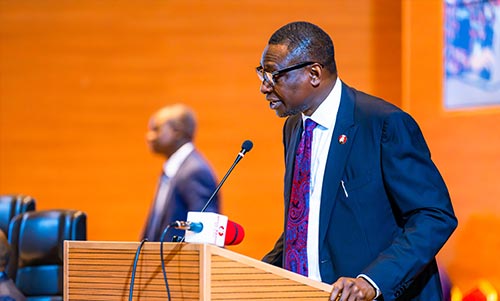
EFCC Olukoyede: Urges Speedy Corruption Trials in Nigeria
Summary
- EFCC Chairman Ola Olukoyede recently called for the speedy trial of corruption cases in Nigeria.
- He stated that prolonged trials lead to evidence deterioration and erode public confidence in the judiciary.
- Olukoyede clarified that his appeal is for efficiency within legal frameworks, not for judges to bend rules.
- This directive signals increased pressure for expedited proceedings in Economic and Financial Crimes Commission trials.
- The move aims to bolster Nigerian anti-corruption efforts and restore public trust in the justice system.
What Happened
When the public perceives that justice is delayed or that high-profile corruption cases are allowed to drift without resolution, it fosters cynicism and diminishes faith in state institutions.
The Executive Chairman of the Economic and Financial Crimes Commission (EFCC), Mr. Ola Olukoyede, recently issued a significant appeal for the expedited resolution of corruption cases across Nigeria. His call underscores a renewed focus on the efficiency of the judicial process in handling high-profile financial crimes. This directive from the EFCC chairman highlights the agency's commitment to strengthening Nigerian anti-corruption efforts through more timely prosecutions.
Mr. Olukoyede articulated several critical reasons behind his plea for EFCC Olukoyede speedy corruption trials. He emphasized that when corruption cases are allowed to languish indefinitely in the courts, the integrity of the evidence often suffers, leading to challenges in securing convictions. Furthermore, he pointed out that such prolonged judicial proceedings significantly erode public confidence in the judiciary's ability to deliver justice effectively and promptly.
Crucially, the EFCC chairman clarified that his request for faster trials was not an invitation for judges to circumvent established legal protocols or bend the rules. Instead, it was a call for greater diligence and efficiency within the existing legal framework to ensure that justice is not only served but also seen to be served without undue delay. This nuance is vital for understanding the nature of the EFCC's current stance on prosecuting Ola Olukoyede corruption cases.
Legal Context
The push for speedy trial criminal cases Nigeria is not new, but Mr. Olukoyede's recent statement injects fresh urgency into the discourse surrounding the prosecution of financial crimes. The Economic and Financial Crimes Commission trials are often complex, involving intricate financial networks and voluminous evidence, which can contribute to their protracted nature. However, the EFCC's leadership is now signaling a lower tolerance for such delays, advocating for more rigorous trials that move swiftly from charge to judgment.
This emphasis on accelerated proceedings has significant implications for legal practitioners involved in corruption cases. Lawyers defending clients in these matters should anticipate heightened pressure from the EFCC for expedited processes, potentially limiting the scope for traditional delay tactics. The EFCC chairman call for rigorous trials suggests that defense teams will need to prepare more thoroughly and efficiently for swift trial conclusions, adapting their strategies to this intensified pace.
The broader context of Nigerian anti-corruption efforts dictates that the effectiveness of agencies like the EFCC is often measured by their success in securing convictions and recovering illicit assets. Prolonged trials, regardless of their eventual outcome, can be perceived as a weakness in the system, undermining the deterrent effect of anti-corruption laws. Therefore, Olukoyede's intervention seeks to address a systemic issue that has long plagued the nation's fight against graft.
Why It Matters
The implications of the EFCC's renewed focus on speedy corruption trials extend beyond the courtroom, touching upon the very foundation of public trust in governance and the rule of law. When the public perceives that justice is delayed or that high-profile corruption cases are allowed to drift without resolution, it fosters cynicism and diminishes faith in state institutions. Olukoyede's concerns about eroding public confidence are thus central to the broader societal impact of judicial efficiency.
For the judiciary itself, the call for more rigorous trials presents both a challenge and an opportunity. It challenges the existing pace of proceedings in some instances while offering an an opportunity to demonstrate a robust commitment to justice delivery. By ensuring that Economic and Financial Crimes Commission trials are conducted with dispatch, the courts can reinforce their role as impartial arbiters and restore public belief in their capacity to hold powerful individuals accountable.
Ultimately, the EFCC chairman's plea serves as a clear signal of the agency's strategic direction: a move towards more assertive and efficient prosecution of corruption. This shift will likely demand greater collaboration between the EFCC and the judiciary, as well as a heightened sense of urgency from all parties involved in corruption cases, ensuring that the fight against financial crimes in Nigeria gains renewed momentum and credibility.
Practical Implications
Lawyers defending clients in corruption cases in Nigeria should anticipate increased pressure from the EFCC for expedited proceedings, potentially limiting opportunities for delay tactics and demanding more rigorous preparation for swift trial conclusion. Compliance officers should note the renewed focus on timely prosecution as an indicator of enforcement priorities.
Source
How does this affect you?
Get an AI analysis of this article grounded in your jurisdictions, practice areas, and any policy documents you've uploaded to Wansom.
Finish Reading the Full Story and the Expert Analysis.
Get the latest legal & regulatory intelligence in Nigeria
Wansom is AI and can make mistakes.