
ECOWAS Court of Justice: Balancing Judicial Needs, Political Realities
Summary
- An international conference in Dakar is addressing the future of West African integration amidst significant regional changes.
- Mali, Burkina Faso, and Niger's official withdrawal, effective January 29, 2025, has reduced ECOWAS to twelve states and created economic uncertainty.
- The ECOWAS Court of Justice faces a dilemma, needing to balance judicial impartiality with evolving political realities, according to legal expert Ernest Kofi Abotsi.
- Regional instability, including security crises and constitutional tensions, complicates the Court's role and the effectiveness of regional legal instruments.
Shifting Sands in West African Integration
The ECOWAS Court of Justice finds itself at a critical juncture, tasked with upholding its judicial principles amidst profound political shifts and regional instability, requiring a delicate balance between its judicial demands and the prevailing political constraints.
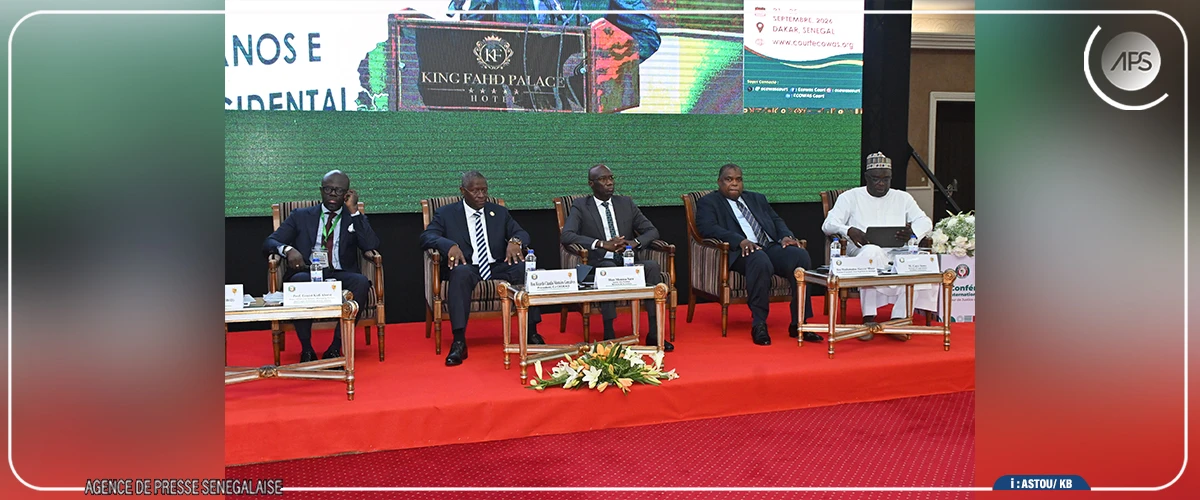
The future of West African integration is currently a central topic of discussion, highlighted by an international conference recently held in Dakar. This gathering takes place against a backdrop of significant regional upheaval and uncertainty, with the Economic Community of West African States (ECOWAS) now comprising just twelve member states under the presidency of Bassirou Diomaye Faye. A pivotal development has been the official withdrawal of Mali, Burkina Faso, and Niger, a decision set to become effective on January 29, 2025. This move fundamentally alters the political landscape of the organization.
The departure of these three Sahelian nations not only redefines the geographical and political scope of ECOWAS but also casts doubt on the practical efficacy of regional integration efforts. Despite the long-standing goal of fostering closer ties, intra-member trade within the bloc remains notably low, falling below 15%. Further complicating the economic cohesion of the community, the withdrawing states are reportedly exploring the launch of their own common currency by 2027, introducing additional layers of uncertainty regarding the region's economic future.
The ECOWAS Court's Balancing Act
At the heart of this complex regional reflection stands the ECOWAS Court of Justice. Its role and future effectiveness are under intense scrutiny as the political realities of West Africa evolve. Ernest Kofi Abotsi, who serves as the Dean of the Faculty of Law at the University of Professional Studies, Accra, offered critical insights at the Dakar conference, as reported by APS. He emphasized the imperative for the Court to strike a delicate balance between its inherent judicial requirements and the pressing political constraints it faces.
Professor Abotsi highlighted the inherent tensions that permeate the region, specifically citing the interplay between democracy, human rights, geopolitics, and the broader agenda of regional integration. He characterized the Court as an institution in a precarious position, tasked with safeguarding its neutrality and impartiality even as the foundational political and institutional framework of ECOWAS undergoes significant recomposition. The conference itself is designed, in part, to scrutinize the operational mechanisms of a judicial body that commenced its activities without the benefit of a pre-established operational model.
Regional Instability and Legal Frameworks
The challenges confronting the ECOWAS Court of Justice are further compounded by a broader regional environment marked by a proliferation of democratic transitions and constitutional tensions. Within this volatile context, common instruments designed to foster regional cohesion, such as the ECOWAS Common External Tariff, which came into force in 2015, must continue to exert their influence across a now-diminished regional expanse. The effectiveness of these shared legal and economic frameworks is increasingly tested by the shifting political landscape.
Ernest Kofi Abotsi also pointed to other significant destabilizing factors, including the mutually reinforcing crises of security and violent extremism prevalent across West Africa. He further noted that the dynamics of technological advancement and ongoing economic restructuring are actively reshaping regional balances, adding layers of complexity to the Court's operational environment. The five-day Dakar conference, whose theme is "The ECOWAS Court of Justice at a Crossroads: Justice, Innovation, Protection of Human Rights and the Future of Regional Integration in West Africa," underscores the profound challenges and critical decisions facing the institution. Abotsi also chairs the board of directors of Accra Technical University.
Practical Implications
Lawyers and compliance officers should closely monitor the evolving political landscape and its impact on the ECOWAS Court of Justice's jurisdiction and the enforceability of its decisions, especially for clients with cross-border interests in West Africa. The ongoing regional instability and member state withdrawals introduce significant uncertainty regarding the stability and effectiveness of regional legal frameworks, necessitating careful risk assessment in dispute resolution and compliance strategies.
Source
How does this affect you?
Get an AI analysis of this article grounded in your jurisdictions, practice areas, and any policy documents you've uploaded to Wansom.
Finish Reading the Full Story and the Expert Analysis.
Get the latest legal & regulatory intelligence in Senegal
Wansom is AI and can make mistakes.