
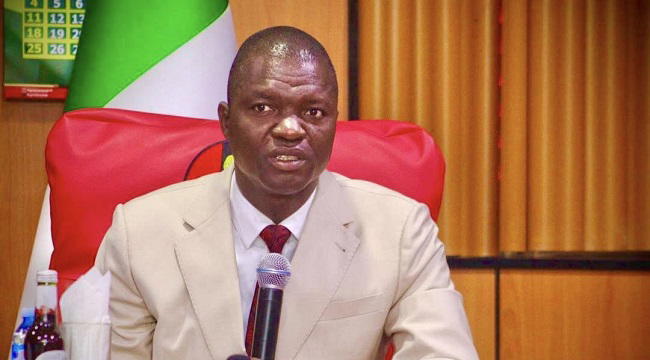
Ebonyi Gov Nwifuru Sacks Works Commissioner Stanley Mbam
Summary
- Governor Francis Ogbonna Nwifuru of Ebonyi State has removed Engr. Stanley Lebechi Mbam from his role as Commissioner for Works.
- The former commissioner was directed to immediately hand over all government property, including his official vehicle.
- These assets are to be surrendered to the Secretary to the State Government.
- This executive action signifies a leadership change within the Ebonyi State Ministry of Works.
What Happened
For legal professionals and entities engaged in contracts or partnerships with the Ebonyi State Ministry of Works, this development necessitates close monitoring.
Governor Francis Ogbonna Nwifuru of Ebonyi State has initiated a significant change within his administration, ordering the immediate dismissal of Engr. Stanley Lebechi Mbam from his position as Commissioner for Works. This executive directive, originating from Abakaliki, marks a swift leadership transition within a crucial state ministry. The decision underscores the governor's prerogative in managing his cabinet and ensuring alignment with his administrative objectives.
Following the directive for his removal, Engr. Mbam was explicitly instructed to promptly surrender all government property under his control. This mandate specifically included his official vehicle, a standard procedure in cases of public office termination. The handover process is to be completed by transferring these assets to the Secretary to the State Government, ensuring a seamless transition and accountability for state resources. This immediate action highlights the decisive nature of the governor's decision regarding the Ebonyi State Commissioner Works fired.
Executive Authority and Public Service
The removal of a cabinet member, such as the Commissioner for Works, falls squarely within the executive powers vested in state governors across Nigeria. Governor Francis Ogbonna Nwifuru's action reflects the inherent discretion political leaders possess in appointing and dismissing officials who serve at their pleasure. Such decisions are often made to realign administrative priorities, enhance efficiency, or address performance concerns, though specific reasons for this particular Stanley Lebechi Mbam removal were not detailed in the initial report.
This instance of Nigeria public office termination serves as a reminder of the dynamic nature of political appointments. Individuals holding such roles are typically aware that their tenure is subject to the governor's continued confidence. The swiftness of the directive for Engr. Mbam's departure and the immediate requirement for asset handover are characteristic of how such transitions are managed in the public sector, emphasizing accountability and the continuity of government operations despite leadership changes.
Administrative Protocols and Asset Management
A critical component of any public office termination, as seen in the case of the Ebonyi State Commissioner Works fired, is the meticulous process of asset recovery and handover. Governor Nwifuru's directive for Engr. Stanley Lebechi Mbam to return all government property, including his official vehicle, to the Secretary to the State Government, is a standard administrative protocol designed to safeguard public assets. This measure ensures that state resources are properly accounted for and remain within the government's control, preventing any potential misuse or loss during a leadership transition.
The Secretary to the State Government typically plays a pivotal role in overseeing such handovers, acting as the central point for receiving and reallocating government property. This structured approach is vital for maintaining transparency and integrity in governance, especially when there is an Ebonyi Ministry of Works leadership change. It underscores the principle that public officeholders are custodians, not owners, of the resources entrusted to them, and must relinquish them promptly upon the conclusion of their service.
Implications for Governance and Stakeholders
The Ebonyi Gov Nwifuru sacks Works Commissioner action carries immediate and potential long-term implications for the state's infrastructure development and governance. The Ministry of Works is a critical portfolio, responsible for planning, executing, and maintaining public infrastructure projects. A sudden change in leadership, such as the Stanley Lebechi Mbam removal, can lead to temporary disruptions as a new commissioner takes the helm and familiarizes themselves with ongoing projects and departmental priorities.
For legal professionals and entities engaged in contracts or partnerships with the Ebonyi State Ministry of Works, this development necessitates close monitoring. A new commissioner might introduce different policy directions, administrative procedures, or project management approaches. Therefore, stakeholders should be prepared for potential shifts in the ministry's operations and be ready to adapt to the new leadership's vision, ensuring continuity and compliance in their engagements with the state government.
Practical Implications
This executive action highlights the immediate implications of political appointments, including the requirement for prompt handover of government assets upon termination. Lawyers advising entities engaged with the Ebonyi State Ministry of Works should monitor for potential policy or administrative changes under new leadership.
Source
How does this affect you?
Get an AI analysis of this article grounded in your jurisdictions, practice areas, and any policy documents you've uploaded to Wansom.
Finish Reading the Full Story and the Expert Analysis.
Get the latest legal & regulatory intelligence in Nigeria
Wansom is AI and can make mistakes.