
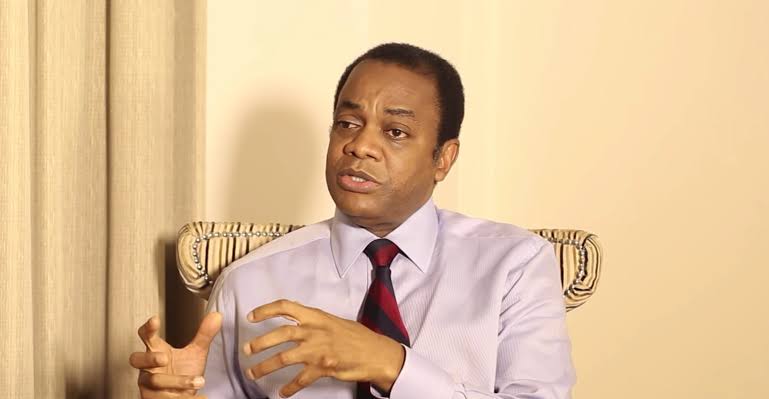
Donald Duke: Advocates State, Local Government Police Nigeria
Summary
- Donald Duke, Cross River state governor and PRP presidential candidate, has called for the establishment of state and local government police.
- He argues that Nigeria's current highly centralised security system is ineffective against terrorism, banditry, kidnapping, and other violent crimes.
- Duke believes there should be police forces operating at all levels of government across the country.
- His proposal aims to address the widespread security challenges currently faced by Nigeria.
Call for Decentralised Policing in Nigeria
Donald Duke's advocacy for police at all levels of government signifies a crucial moment in the state policing debate Nigeria.
Donald Duke, who serves as the Cross River state governor and is also a presidential candidate representing the Peoples Redemption Party (PRP), has publicly advocated for a significant overhaul of Nigeria's security architecture. His proposal centers on the establishment of police forces at both state and local government levels, a move that would fundamentally decentralise law enforcement responsibilities across the nation.
Duke's call for state and local government police stems from a critical assessment of the current security framework. He argues that Nigeria's existing, highly centralised security system is inherently ill-equipped to effectively combat the pervasive and escalating challenges posed by terrorism, banditry, kidnapping, and various other violent crimes that plague communities throughout the country. This perspective highlights a growing sentiment among some political figures regarding the need for more localized security responses.
The former governor's statement underscores a belief that a more distributed policing model, with forces accountable to different tiers of government, would be better positioned to address the diverse security threats facing Nigeria. This intervention by Donald Duke reignites the ongoing debate surrounding Nigeria police decentralisation, suggesting a potential pathway for comprehensive Nigerian security system reform to enhance public safety and order.
Context of Centralised Security Challenges
The current security apparatus in Nigeria operates under a highly centralised command structure, with the Nigeria Police Force primarily controlled by the federal government. This model, according to critics like Donald Duke, struggles to adapt to the unique and evolving security landscapes across Nigeria's diverse regions, leading to inefficiencies in crime prevention and response. The challenges cited, including widespread terrorism, rampant banditry, and an alarming rise in kidnapping incidents, are often attributed to the limitations of a one-size-fits-all approach to law enforcement.
These violent crimes are not confined to specific areas but are reported across the entire nation, placing immense pressure on the existing federal police structure. The argument for establishing local government police Nigeria and state police forces is predicated on the idea that local authorities possess a better understanding of their communities' specific security needs and can deploy resources more effectively. This would allow for tailored strategies to confront the various forms of violent crime that the centralised system currently struggles to contain.
Therefore, the call for police reform by figures like Donald Duke is not merely a political statement but a response to tangible security deficits. It reflects a broader recognition that the current framework, designed decades ago, may no longer be adequate for the complexities of modern Nigerian society and the sophisticated nature of contemporary criminal enterprises.
Implications for Nigeria's Security Future
Donald Duke's advocacy for police at all levels of government signifies a crucial moment in the state policing debate Nigeria. Should such proposals gain traction and lead to legislative action, the establishment of state and local government police would represent a monumental shift in the country's governance and security paradigms. This reform would necessitate significant constitutional amendments and legislative frameworks to delineate powers, responsibilities, and funding mechanisms for these new police entities, moving away from the current federal monopoly on law enforcement.
The implications of such a restructuring for Nigerian security system reform are profound. A decentralised police force could potentially lead to more responsive and community-oriented policing, fostering greater trust between law enforcement and citizens. However, it also raises complex questions regarding inter-agency cooperation, potential for abuse of power at local levels, and ensuring uniform standards of training and conduct across multiple police forces. The discussion initiated by Donald Duke police reform efforts highlights the urgent need for a comprehensive national dialogue on how best to secure Nigeria's future.
Ultimately, the debate over decentralising the Nigeria police is about finding the most effective means to protect lives and property from the myriad violent crimes currently afflicting the country. The proposition to have police at every tier of government — federal, state, and local — suggests a vision where security is a shared responsibility, tailored to local contexts, and more resilient against the widespread threats of terrorism, banditry, and kidnapping.
Practical Implications
While not immediately actionable, this statement signals a growing political discourse around police decentralisation in Nigeria. Lawyers should monitor future legislative proposals or constitutional amendments that may arise from this debate, as they could significantly alter the legal framework governing security, law enforcement, and corporate liability in the country.
Source
How does this affect you?
Get an AI analysis of this article grounded in your jurisdictions, practice areas, and any policy documents you've uploaded to Wansom.
Finish Reading the Full Story and the Expert Analysis.
Get the latest legal & regulatory intelligence in Nigeria
Wansom is AI and can make mistakes.