
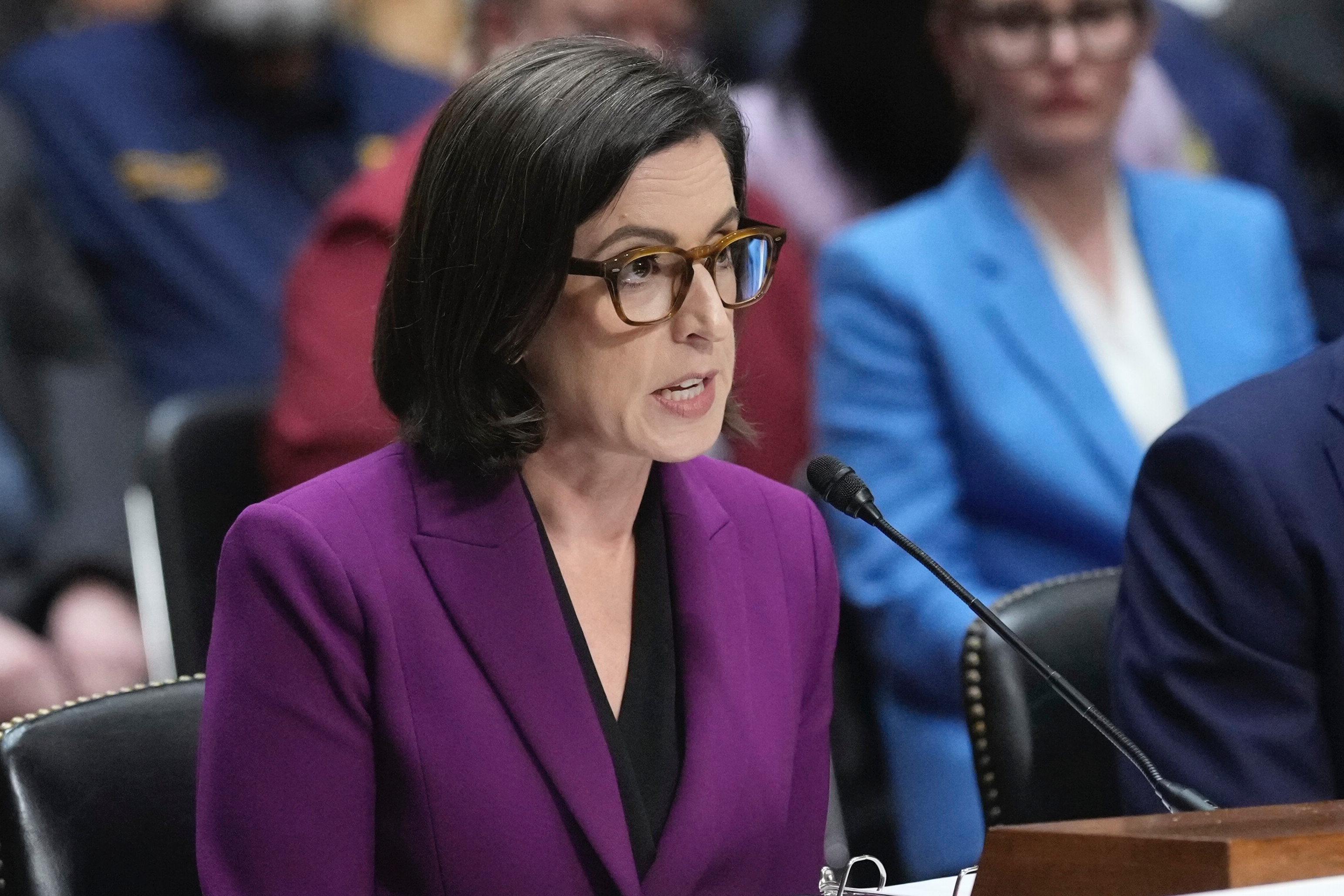
Elizabeth Oyer Mel Gibson Lawsuit: DOJ Attorney Alleges Wrongful Firing
Summary
- Former DOJ pardon attorney Elizabeth Oyer has filed a wrongful termination lawsuit against the U.S. Department of Justice and Attorney General Todd Blanche.
- Oyer alleges she was fired for refusing to facilitate the restoration of actor Mel Gibson's gun ownership rights, despite his domestic violence conviction, due to his relationship with then-President Trump.
- The lawsuit claims violations of Oyer's First Amendment and due process rights, as well as the Administrative Procedure Act and other constitutional provisions.
- Oyer's complaint details how she was pressured by Blanche's staff to add Gibson to a list of individuals recommended for gun rights restoration, but she declined to endorse the request.
- Todd Blanche, who was Deputy Attorney General at the time of Oyer's firing, is named as a defendant in the suit, which was filed in the U.S. District Court for the District of Columbia.
Allegations of Improper Influence
The lawsuit's core message, as articulated by Oyer, is that if career officials can be dismissed for refusing to compromise their principles to serve political interests, it sends a chilling message to all public servants: that loyalty to a politician might supersede loyalty to the law and public duty.
A former Department of Justice (DOJ) attorney, Elizabeth Oyer, has initiated a wrongful termination lawsuit, alleging she was dismissed for refusing to facilitate a political favor involving actor Mel Gibson. The complaint, filed in the U.S. District Court for the District of Columbia, names U.S. Attorney General Todd Blanche and the DOJ as defendants.
The lawsuit, brought by the Democracy Forward Foundation on Oyer's behalf, contends that shortly after President Trump assumed office, Oyer was pressured to disregard her professional duties. The alleged directive was to engineer the restoration of Mel Gibson's gun ownership rights, despite his past domestic violence conviction, by making it appear as an independent review had endorsed the move. This request was purportedly based on Gibson's personal relationship with the then-President.
Oyer, who served as the DOJ's pardon attorney from April 2022 to March 2025, reportedly declined to comply with this directive. According to the complaint, she was subsequently fired by Todd Blanche, who at the time held the position of Deputy Attorney General. This **Elizabeth Oyer Mel Gibson lawsuit** highlights significant concerns regarding political interference in federal agency operations.
The Events Leading to Termination
The complaint details a sequence of events beginning shortly after President Trump's inauguration. Elizabeth Oyer was assigned to a specialized working group tasked with identifying individuals who had lost their gun rights due to criminal convictions but were deemed deserving of restoration. This assignment was unusual for the pardon attorney's office, but Oyer accepted it. The initial list compiled by this group comprised individuals convicted of nonviolent offenses, described as "very old," who had sought to regain gun ownership through pardon applications, and whom the pardons office assessed as having a low risk of recidivism.
Todd Blanche’s staff subsequently reduced this list to nine individuals and instructed Oyer to draft a memorandum recommending their gun rights restoration, which she completed. However, the lawsuit alleges that Blanche’s staff then presented Oyer with an additional request: to include actor Mel Gibson on this list. Oyer expressed concerns via email to Blanche’s staff, citing Gibson’s history of domestic violence. Gibson had previously pleaded no contest to misdemeanor spousal battery, though his conviction was vacated in 2014 after he fulfilled the terms of his sentence.
Later the same day, a senior official from Blanche’s staff reportedly contacted Oyer, employing a "bullying tone" and urging her to recommend Gibson’s reinstatement, explicitly referencing his personal relationship with President Trump and suggesting it would be "wise" to comply. Instead of yielding, Oyer submitted a memo stating her lack of detailed knowledge regarding Gibson’s case and deferring the ultimate decision to the Attorney General. The lawsuit claims she was terminated just a few hours after submitting this memo, directly linking her refusal to the adverse employment action.
Legal and Constitutional Challenges
The **DOJ wrongful termination lawsuit** brought by Elizabeth Oyer asserts that the government's actions violated multiple legal and constitutional provisions. Specifically, the complaint alleges infringements upon her due process rights and First Amendment rights. Additionally, it cites violations of the Appointments Clause of the U.S. Constitution, the Administrative Procedure Act (APA), and the due process protections afforded by the Civil Service Reform Act. These claims underscore the serious nature of the allegations against the Department of Justice and its leadership.
The lawsuit positions Oyer's dismissal as a direct consequence of her refusal to comply with what she perceived as an improper political directive. By naming U.S. Attorney General **Todd Blanche Elizabeth Oyer** places accountability at a high level within the department, as Blanche was Deputy Attorney General at the time of her firing. The legal framework invoked aims to protect federal employees from arbitrary dismissal, particularly when such actions stem from a refusal to engage in potentially unethical or illegal conduct.
The invocation of the **Administrative Procedure Act DOJ** and **First Amendment due process claims** suggests a broad challenge to the government's employment practices, arguing that Oyer was denied fair process and retaliated against for exercising her freedom of speech and professional judgment. This legal battle could set important precedents for federal employees facing similar pressures.
Protecting Public Service Integrity
Beyond the specifics of the **Elizabeth Oyer Mel Gibson lawsuit**, this case carries broader implications for the integrity of federal service and the protection of whistleblowers. Oyer, whose career prior to becoming pardon attorney included roles as an assistant public defender and senior litigation counsel with the Maryland federal public defender’s office, had a distinguished background in public law. Her commitment to ethical conduct is further evidenced by her testimony in July to the U.S. Senate Judiciary Committee, where she urged against the confirmation of Todd Blanche as Attorney General.
**The lawsuit's core message, as articulated by Oyer, is that if career officials can be dismissed for refusing to compromise their principles to serve political interests, it sends a chilling message to all public servants: that loyalty to a politician might supersede loyalty to the law and public duty.** This perspective frames the lawsuit not merely as a personal grievance but as a defense of the non-partisan nature of federal administration.
The outcome of this litigation could significantly impact the legal protections available to federal employees who resist improper political influence. It highlights the critical role of legal mechanisms like the Administrative Procedure Act and First Amendment due process claims in safeguarding the independence and ethical standards of government agencies against perceived political overreach, particularly concerning matters like **Mel Gibson gun rights restoration**.
Practical Implications
This case highlights the legal protections available to federal employees who face adverse employment actions for refusing to comply with improper political directives. Lawyers advising federal employees or litigating against government agencies should monitor this lawsuit for precedents regarding whistleblower claims and the application of due process and First Amendment rights in such contexts.
Source
How does this affect you?
Get an AI analysis of this article grounded in your jurisdictions, practice areas, and any policy documents you've uploaded to Wansom.
Finish Reading the Full Story and the Expert Analysis.
Wansom is AI and can make mistakes.